Skip to content
Saturday 29 August 2026London --:--Frankfurt --:--Zurich --:--
NewslettersSearchEN · DE · FR
MorningWire

European business, markets and politics

FTSE 100
10,824.26
+0.29%
DAX
26,569.99
+0.77%
CAC 40
8,401.18
+0.98%
STOXX 50
6,485.67
+0.95%
  • Europe
  • Markets
  • Business
  • Economy
  • Regulation
  • Politics
  • Opinion
More
GermanyFranceEU InstitutionsCompetitionPublic AffairsBankingTechnologyEnergy
  • Germany
  • France
  • Europe
  • Markets
  • Business
  • Economy
  • Regulation
  • Politics
  • Opinion
  • DE
Tuesday 11 June 2019 7:30 am  |  Updated:  Monday 10 June 2019 6:30 pm

What the Four Horsemen of the Apocalypse can teach you about crisis communications

By: Chris Calland

Add as a preferred source on Google
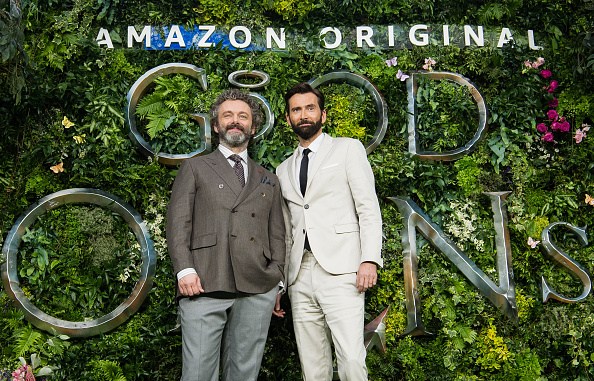
LONDON, ENGLAND - MAY 28: Michael Sheen (L) and David Tennant attend the Global premiere of Amazon Original "Good Omens" at Odeon Luxe Leicester Square on May 28, 2019 in London, England. (Photo by Jeff Spicer/Getty Images)

IF YOU know your biblical stories or are simply enjoying the joint BBC-Amazon TV adaptation of Terry Pratchett and Neil Gaiman’s Good Omens, then you will be familiar with the Four Horsemen of the Apocalypse: Pestilence, War, Famine, and Death.

But rather than heralding the end of the world, how could this quartet of characters help businesses with managing reputational risks?

The answer is that the Four Horsemen are a good mnemonic for knowing how to anticipate and deal with the types of crisis that an organisation can face.

Look after your health

Take the first Horseman, Pestilence. Think of that as anything that could go viral – for example, an outbreak of food poisoning or a communicable disease, which could well happen to large campus-based organisations, or those located in extreme environments. Alternatively, it could be a computer virus, or the rapid spread of false information online.

Interestingly, in Good Omens, Pestilence is renamed Pollution – a reminder of the potential for and salience of environmental crises.

Essentially, Pestilence represents something that you might not have much control over and will be playing catch-up on. So you need to have the right protocols and teams in place that can be activated quickly in order to make the right decisions.

Prepare for a fight

The second Horseman is War. Many organisations nowadays face the threat of cyber or even terrorist attacks. Businesses can also come up against protests and disruption from pressure groups.

That type of action is not just a communications issue, but an operational one. So organisations need to have holistic crisis plans in place.

For example, if your property is targeted, do front-of-house staff know to alert the press office? If all landlines and emails go down, do you have a way of contacting relevant teams? Are there protocols in place for how to handle the media door-stepping you?

Appropriately enough for the War analogy, the military provides a good point of reference. Armies not only plan for multiple eventualities, but they rehearse. There are two reasons for this: first, you get to stress-test your plans, and second you build organisational muscle memory so that when it happens for real, it’s familiar and you’re not thrown off course.

So if you’re an organisation for which the threat of some sort of attack is real, you need to do likewise – plan, but then rehearse.

Read more

Sorry Elon, universal basic income won’t solve the AI jobs apocalypse

Elon Musk smiling and waving from a podium with the Seal of the President of the United States.

Don’t starve

The third Horseman is Famine. By that I mean a lack of resources. Organisations should ask themselves honestly, “what are the things that we could run out of?”

Be it products, spare parts, electricity, water, parking spaces, entry passes for events, or on-call staff, businesses should plan accordingly.

Read more: Business lessons from Hargreaves Lansdown’s founder

The final destination

The fourth and final Horseman is, of course, Death.

This could be due to an industrial accident, but it could also be the death of a founder or leader of an organisation. Even if their passing was expected, it can raise questions about succession planning.

And even if the person who has died had already left the organisation, it can still focus the media’s attention on you. Have you thought about what you would say (and to whom) when that happens?

Critical to all these instances of crisis management is having the right people involved. In all the risk-assessing, planning and rehearsing, you need to include the people who would actually be the ones making decisions in a real-world crisis.

If you don’t, then you (and they) won’t be properly prepared.

And make no mistake, if you employ people and sell things, one day at least one of the Four Horsemen will pay you a visit.

So be ready for them.

Read more

Fifa crisis: Europe, North America and Asia unite to call for Infantino to quit

Gianni Infantino, FIFA President, raising both hands, wearing a suit with a World Cup pin.

Share this article

  • Facebook
  • X
  • LinkedIn
  • WhatsApp
  • Email

Similarly tagged content:

Sections

  • Jobs and Money
  • News

Categories

  • Business
  • Personal Development

Trending Articles

  • Pensioners to hand over bank statements in government benefits crackdown

  • Jamie Carragher: HMRC petitions for Sky Sports star to be declared bankrupt

  • Brewdog founder James Watt hits out at ‘total silence’ over new venture

  • Lloyds Bank and Halifax users unable to use app in latest outage

  • As it happened: FTSE 100 falls but Nasdaq soars after Nvidia sales boom

More from Morning Wire

  • Sorry Elon, universal basic income won’t solve the AI jobs apocalypse

    Opinion
    Elon Musk smiling and waving from a podium with the Seal of the President of the United States.
  • Fifa crisis: Europe, North America and Asia unite to call for Infantino to quit

    Sport Business
    Gianni Infantino, FIFA President, raising both hands, wearing a suit with a World Cup pin.
  • Affluent Big Four partners lack ‘fire in the belly’ to disrupt consulting market

    Advisory
    Businessman eating lunch outdoors in Canada financial district
  • Octopus boss Greg Jackson calls for ‘urgent reform’ on energy as bills rise

    Politics
    Octopus Energy, which was founded by Greg Jackson, is to spin-off Kraken. Chris Ratcliffe/Bloomberg via Getty Images
  • ‘We’d love an apprentice – but the government has made it too expensive’

    Economics
    Technician in blue shirt operating a large metal lathe machine, industrial manufacturing process
  • KPMG seeks financial support from parent group in wake of audit scandal

    Big Four
    KPMG Australia office building exterior with modern glass architecture and corporate signage in a bustling business district.
  • ‘Broken promises’: Burnham under fire on cost-of-living plans as energy bills set to surge

    Politics
    Man in glasses and maroon jacket speaking, with out-of-focus figures in the background.
  • As it happened: Miners fuel FTSE 100 recovery; oil jumps as Trump claims Strait of Hormuz

    FTSE 100 Live
    FTSE 100 stocks rise as Brent crude oil prices jump 1.8% to $104.98 amid Strait of Hormuz tensions and Trumps Iran stance
MorningWire

Independent European business, markets and political news for decision-makers.

Morning Briefing

Europe

  • Germany
  • France
  • EU Institutions
  • Europe

Business

  • Markets
  • Business
  • Economy
  • Regulation
  • Competition
  • Public Affairs

Editorial

  • Opinion
  • Editorial Policy
  • Corrections
  • Contact

Company

  • About Morning Wire
  • Privacy Policy
  • Terms of Use
  • Cookie Policy
© 2026 Morning Wire Ltd · Published by Morning Wire Media, Bahnhofstrasse 65, 8001 Zürich, Switzerland
Privacy · Terms · Cookies · Facebook