What the past can reveal about the future of money

Money is a technology. It may be cultural in nature, but its story is nonetheless one of relentless innovation leading to big changes in society.
Today we are in the midst of a change that is as significant as any of the great historical leaps, such as the advent of coins or paper banknotes.
The prospect of governments and corporations issuing programmable digital currency will have a profound impact on our lives.
Prediction is a mug’s game but history can offer useful tips about what might lie in store.
Who drove innovations in money, how did their ideas win adoption, and what was the consequence?
Paper money
The most relevant invention worth considering was paper money – a Chinese invention, just as today’s digital currency is likely to be pioneered by China.
Easily portable banknotes were initially the idea of guilds operating as early as the seventh century, with “flying cheques” an alternative to lugging around strings of coins, all of which were of low value. Paper banknotes might have remained confined to the wealthiest merchants had the emperors not discovered they too could print money – based purely on their station, rather than the collateral in their vaults.
Even so it was not until the Yuan Dynasty of the Mongol conquerors in the eleventh century that emperors like Kublai Khan decided to make their paper money the dominant currency in the land, paying salaries and demanding taxes in banknotes and confiscating private use of high-value coins – upon pain of death.
The government’s takeover of paper banknotes allowed this technology to scale, but it also transformed the underlying logic from business to political purposes.
Overprinting regularly debased paper currency and led to bouts of hyperinflation that destabilized the Chinese economy. The sixteenth-century Ming Dynasty so abused paper money that it lost all value and the economy grew addicted to imported silver, a critical weakness in the face of aggressive European mercantilism.
Going digital
Today the Chinese government is again adopting a variety of private-sector innovations to create a digital currency that will scale. Among its inspirations are bitcoin, the decentralized cryptocurrency introduced in 2009, and mobile money operators, as pioneered by Kenya’s M-Pesa in 2007.
Another factor – less inspiration than a threat to be squashed – was Facebook’s bid to launch its own cryptocurrency, to facilitate payments among the 2.5bn users of its various properties.
China’s plans for a digital yuan are not based on blockchain but are adopting some of cryptocurrency’s innovations such as “smart contracts” which enable money to be programmed to achieve certain goals. It will circulate this programmable money through the sort of mobile networks that are becoming common worldwide.
Beijing’s goals are different to those of private companies and entrepreneurs. A digital yuan will allow this new kind of money to scale, initially among China’s billion-plus population and presumably abroad as a means of trade settlement, among other uses.
But scale to what purpose? Money has always been tied to authority; the ancient Greek word for coin, nomos, is linked to its word for law. Authorities determine the rules for money, but those rules vary by culture: in the United States, for example, money in a democracy was a major political issue throughout the nineteenth century.
China is not interested in such arguments. It wants, first, to ensure domestic financial stability; second, to use fintech to bolster its economic competitiveness; third, to create international means of payments and reserves management independent of the US dollar; and fourth, to control its population.
In some respects we are back among earlier dynasties that saw paper banknotes as a technological edge both in supporting a growing economy as well as a way to finance military needs.
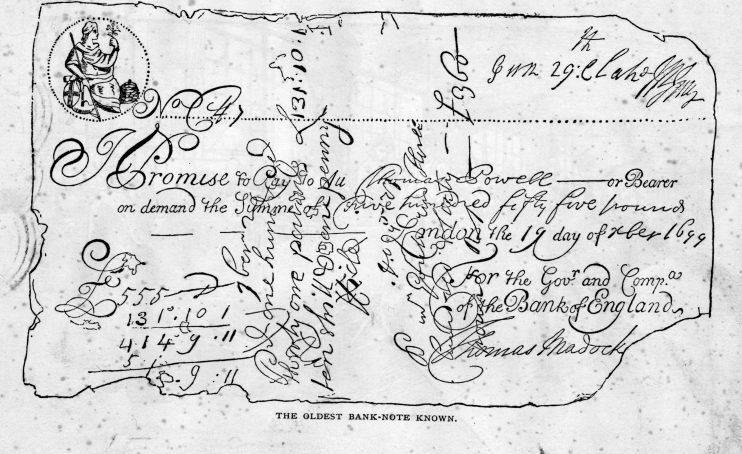
It would take Europeans until the late seventeenth century to experiment with paper money, with a few disasters until the Bank of England (founded in 1694), combined with a newly credible monetary link to gold, wove a sensible path as a partnership between the Crown and private City interests.
Simply put, China innovated paper money, but England worked out that imperial diktat was insufficient for an abstraction such as paper money: currency needed the trust of business too.
Most of the world’s central banks are researching or testing digital currencies of their own. Depending on their goals, these digital currencies can be designed in many ways, which opens both creative uses as well as new ways to get it wrong.
It took governments many attempts at paper banknotes to instill a sustainable, healthy regime. The same is likely to be true of digital money.
Cowries to Crypto: The History of Money, Currency and Wealth by Jame DiBiasio and illustrated by Harry Harrison is published by OANDA, a global leader in online multi-asset trading services. It is available now.