Skip to content
Thursday 13 August 2026London --:--Frankfurt --:--Zurich --:--
NewslettersSearchEN · DE
MorningWire

European business, markets and politics

FTSE 100
10,796.60
-0.34%
DAX
26,446.07
+0.44%
CAC 40
8,685.28
+0.12%
STOXX 50
6,564.12
+0.46%
  • Europe
  • Markets
  • Business
  • Economy
  • Technology
  • Politics
  • Opinion
More
GermanyFranceBankingAIEnergyFintechPropertyCapital Markets
  • Germany
  • France
  • Europe
  • Markets
  • Business
  • Economy
  • Technology
  • Politics
  • Opinion
  • DE
Wednesday 14 August 2019 4:02 am  |  Updated:  Tuesday 13 August 2019 6:23 pm

What was behind Friday’s National Grid outage? Network theory, not conspiracy

By: Paul Ormerod

Add as a preferred source on Google
Energy firm National Grid posted a 12 per cent decline in profit for the first half as the coronavirus pandemic increased the network owner’s costs.

National Grid is getting a kicking in the aftermath of last Friday’s electricity blackout.

Potential explanations swirl around both social and mainstream media. The system cannot cope with too much wind-generated electricity. The Russians hacked into the computers.

A puzzling aspect is that the initial shock to the National Grid was a very small one. The gas-fired station at Little Barford in Bedfordshire went down. Within minutes, a massive power outage had taken place.

Rebecca Long-Bailey, Labour’s energy secretary, has honed in on this. The fact that a small outage had such huge consequences is, to her, clear evidence of under-investment, and makes the case for public ownership. But scientific advances over the past 20 years provide a quite different perspective.  

The National Grid is, by definition, a network. Power stations receive supplies from various sources, and then the energy is transmitted from them to businesses and households via power lines.

A key discovery in the maths of how things spread across networks is that in any networked system, any shock, no matter how small, has the potential to create a cascade across the system as a whole.

Duncan Watts was at Columbia University when he published a groundbreaking paper on this in 2002 with the austere title “A simple model of global cascades on random networks”. He was subsequently snapped up by first Yahoo, then Microsoft. 

Watts set up a highly abstract model of nodes, all of equal importance, connected on a network. Initially, all of these were, putting it into the Grid context, working well. He investigated the consequences of what happens when a very small number of them malfunctioned.

Read more

Grid delays force Starmer-backed AI data centre to seek alternative power

Sir Keir Starmer's government has prioritised investment data centres as a major pillar of its plans to boost economic growth.

The results were surprising. Most of the time, the shocks – made deliberately small by assumption – were contained and the network continued to function well. But occasionally, a small shock triggered a system-wide collapse.

Watts coined the phrase “robust yet fragile” to describe this phenomenon. Most of the time, a network is robust when it is given a small shock. But a shock of the same size can, from time to time, percolate through the system.

In the mid-2000s, the academic Rich Colbaugh was commissioned by the Department of Defense to look into the US power grid. 

The physical connectivity of the network had increased substantially due to advances in communication and control technology.  

The total number of outages had fallen – when one plant failed, it was easier to activate a back-up. But the frequency of very large outages, while still rare, had increased.

I collaborated with Colbaugh on this seeming paradox. We showed that it is in fact an inherent property of networked systems. Increasing the number of connections causes an improvement in the performance of the system, yet at the same time, it makes it more vulnerable to catastrophic failures on a system-wide scale. 

There may still prove to be a simple explanation of the sort loved by decision-makers the world over. But the science of networks may shed more light than theories based on conspiracy and incompetence.

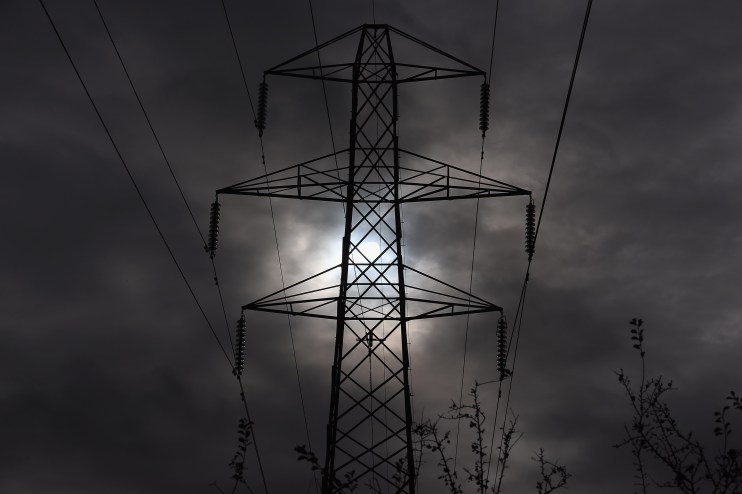
Main image credit: Getty

Read more

Grid operator issues fresh heatwave warning over power supplies

Air conditioning vents in a grid pattern, illustrating cooling solutions during a heatwave

Share this article

  • Facebook
  • X
  • LinkedIn
  • WhatsApp
  • Email

Similarly tagged content:

Sections

  • Markets & Economics
  • News
  • Opinion

Categories

  • Business
  • Economics
  • Opinion

Trending Articles

  • Five-star Mayfair hotel hit with HMRC winding-up petition

  • It’s not just Jason Arday, most of sociology is a scam

  • IT consultant ordered to pay £50,000 after being accused of stealing Soho House members’ personal details

  • As it happened: FTSE 100 falls as Iran and US clash over Strait of Hormuz; Oil stockpiles ‘rapidly depleting’

  • As it happened: Stocks jittery as oil nears $90; Trump ‘semi-negotiating’ with Iran

More from Morning Wire

  • Grid delays force Starmer-backed AI data centre to seek alternative power

    Tech
    Sir Keir Starmer's government has prioritised investment data centres as a major pillar of its plans to boost economic growth.
  • Grid operator issues fresh heatwave warning over power supplies

    Energy
    Air conditioning vents in a grid pattern, illustrating cooling solutions during a heatwave
  • Ofgem targets speculative AI data centres to free up Britain’s energy grid

    Tech
    2024 was a transformational year for GlobalData.
  • Energy minister says AI must ‘bring down bills’ as data centres squeeze the grid

    Tech
    National Grid has raised billions from investors for the energy transition
  • Energy operator ‘flying blind’ as net zero push threatens hiked bills and blackouts

    Energy
    Energy prices are high due to a range of factors including volatile gas prices and high net zero levies.
  • Energy discount scheme for homes near new pylons branded ‘bribe’ by Reform

    Energy
    Pylons standing tall against a clear sky following Engies acquisition of UK Power Networks, symbolizing energy sector growth.
  • Europe has made a ‘major mistake’ on slow electrification, IEA chief warns 

    Energy
    UK industrial electricity prices are the highest in the G7 and 46 per cent above the average of the International Energy Agency.
  • Ofgem data centre crackdown risks ‘driving AI investors away’ from UK

    Tech
    Sir Keir Starmer's government has prioritised investment data centres as a major pillar of its plans to boost economic growth.
MorningWire

Independent European business, markets and political news for decision-makers.

Morning Briefing

Europe

  • Germany
  • France
  • Europe
  • UK & Ireland

Business

  • Markets
  • Banking
  • Technology
  • Energy
  • Property
  • Fintech

Editorial

  • Opinion
  • Editorial Policy
  • Corrections
  • Contact

Company

  • About Morning Wire
  • Privacy Policy
  • Terms of Use
  • Cookie Policy
© 2026 Morning Wire Ltd · Published by Morning Wire Media, Bahnhofstrasse 65, 8001 Zürich, Switzerland
Privacy · Terms · Cookies · Facebook