Whatever Reeves announces today, Britain is still paying for lockdown

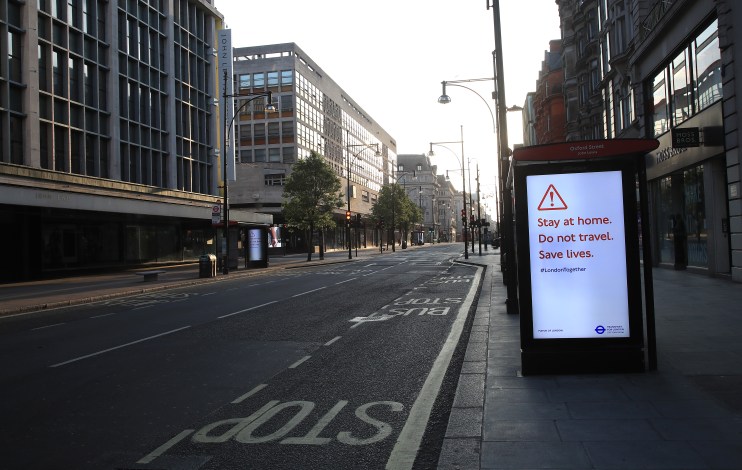
The Labour Party were great enthusiasts for lockdown, demanding longer and harsher restrictions. The costs of this folly have now caught up with them as the Budget today will demonstrate, says Paul Ormerod
Regardless of the precise measures brought in by the Chancellor, Rachel Reeves, in the Budget to be announced today, a fearful spectre haunts the public finances of the UK. Namely, the spectre of the costs of lockdown.
In the calendar years 2017-19, immediately before the pandemic, the UK government borrowed around £50bn each year. This soared to £273bn in 2020, followed by a further £166bn in 2021.
This massive increase in indebtedness continues to hold the public finances in a vice-like grip. It dominates the public policy discourse around the affordability of various schemes.
Incredibly, the second report of the Covid enquiry, chaired by Baroness Hallett, which was published last week focuses almost entirely on whether lockdown saved lives.
The conclusion that it did is questionable. But even if we accept it, the report does not estimate the costs involved in saving lives.
A key concept in economics is that of trade-offs. An obvious health-related one is road accidents. As a society, we trade-off the 1,800 deaths and 250,000 injuries a year against the benefits of using vehicles.
Trade-offs between alternatives have always been central to our economic policy and political debate. Lockdown was no different to any other policy. It had both benefits and costs.
Within economics, a broad consensus has been developed on the value of saving a single quality of life adjusted year. Macabre though it may seem, something like this simply has to be done in order to have any meaningful assessment of the costs and benefits of different decisions.
Trade-offs
Standard tools have been developed by the National Institute for Health and Care Excellence to guide health care decisions in the UK public health system.
To be fair, the Hallett report does acknowledge that “governments did not scrutinise sufficiently seriously the wider societal, workforce and economic impacts of lockdown”. But it does seem to take as given the idea that lockdown was essential and does not make the effort to quantify these costs itself.
Economists were in fact very active in the spring and summer of 2020, when the first lockdown was in place, in quantifying the trade-offs which the restrictions involved.
In a piece on 8 April 2020, I argued that “there is growing realisation of the huge costs being incurred economically. A consensus is emerging amongst economists that the British economy has shrunk by about 30 per cent. In money terms, this is a loss of over £2 billion a day. The costs are not just monetary. Stories of increases in domestic abuse proliferate, as families are obliged to remain cooped up together. Worries about general mental health are growing”.
Much more substantial evidence in the summer of 2020 was provided in major reports by top economists working in conjunction with health professionals. For example, by Bob Rowthorn, a former head of the Cambridge economics department and by David Miles, of Imperial College and now the Office for Budget Responsibility.
All these studies agreed that lockdown could not be justified using the standard cost-benefit analysis which is applied to almost all other areas of government policy.
The Miles study, for example, deliberately chose the estimate of lives saved to be at the very top end of the range of such estimates. This way, they could not be said to be underestimating the benefits of lockdown.
Even so, in the authors’ own words, “we find that having extended the lockdown for as long as three months consistently generates costs that are greater – and often dramatically greater – than likely benefits”.
The leadership of the Labour Party were of course great enthusiasts for lockdown, demanding longer and harsher restrictions. The costs of this folly have now caught up with them as the Budget today will demonstrate.
Paul Ormerod is an Honorary Professor at the Alliance Business School at the University of Manchester and author of Against the Grain: Insights of an Economic Contrarian, published by the IEA in conjunction with Morning Wire