Wheat and see: Farmers fear trade deal impact on bioethanol and beef markets

Ministers and commentators heralded the UK’s trade deal with the United States as a political coup that will save thousands of jobs at British automakers. But changes to beef and bioethanol trade rules have left an already bruised agricultural sector fearing the worst, writes Ali Lyon.
When he’s not slavishly editing clips for the hundreds of thousands of people that subscribe to his Youtube channel, Olly Harrison has the not insignificant job of running 1,500 acres of farmland.
But as his impressively regular feed of videos illustrates, tending to that land – and trying to eke out a semblance of profit from it – has become a difficult, bordering on impossible task, as headwind after headwind hit his arable holding near Liverpool.
“It’s been rubbish,” he tells Morning Wire, still dealing with the aftermath of what was England’s driest April on record. “We’ve had extremes of weather, which has been very wet or – like now – very dry.”
Added to recent years’ inhospitable climes, are the input costs for producing the wheat his family has grown for five generations. They have, he says, remained at the elevated prices sparked by Russia’s invasion of Ukraine. At the same time, the price he is able to secure for his end product has fallen by as much as 40 per cent since those 2022 supply-constraint-induced highs.
But it is another, more recent, external shock that has Harrison especially worried. One that, while niche and esoteric, could kibosh the safety net he and his fellow British arable farmers have traditionally fallen back on when the wholesale wheat price drops too low.
Bioethanol: The little-known safety net of arable farmers
“The bioethanol market in the UK – for wheat – is quite big,” Harrison says. “It’s basically the floor in the market.”
Opening up the UK and US’s agricultural markets to more trade was a key football in the frenzied negotiations that helped the Starmer administration become the first country in the world to secure a trade deal with America since 2 April’s ‘Liberation Day’.
And to spur the States’ capricious President into bringing down painful tariffs on Britain’s export industries like automakers and plane parts, the government agreed to lower its own levies on a selection of American agriculture products; namely beef and the fuel.
The beef tariffs were reduced only on imports that subscribed to the UK’s world-leading food standards, leading some in the farming community to breathe a partial sigh of relief. But the bioethanol concessions – which saw the UK’s 19 per cent tariff abolished completely – contained no such caveats to protect our sizeable domestic industry. That decision has already sparked warnings from key figures involved in domestic bioethanol production that their sector could be facing extinction.
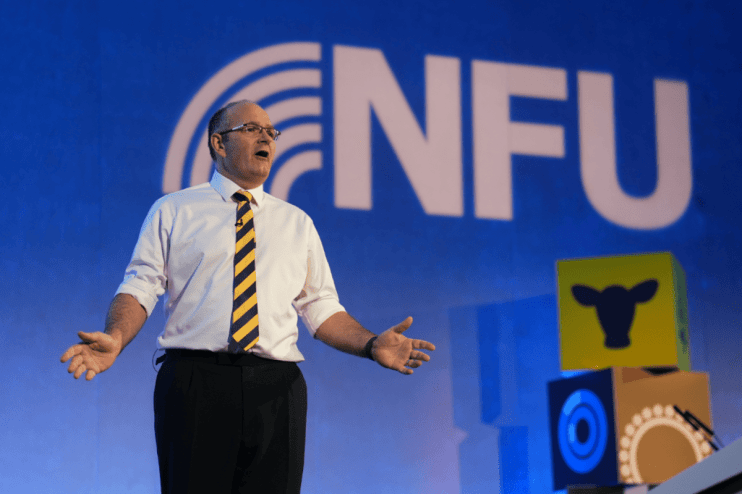
“Bioethanol, for me, is the watch area,” Tom Bradshaw, president of the National Farmers’ Union (NFU) tells Morning Wire. “I have been speaking to the bioethanol manufacturing sector… and we think [these changes] probably make it unviable.”
The prognosis from Bradshaw – whose assiduous campaigning around the recent inheritance tax reforms has already made him a regular thorn in the government’s side – was echoed by the UK’s two largest bioethanol producers over the weekend.
The chief executive of London-listed AB Foods’ sugar division, Paul Kenward, and Grand Pearson, the chairman of Ensus, both warned in a joint intervention their “strategically essential sector” was under an “existential threat”.
All of which has left Harrison worried about what it will do to demand for his product. “If they can now bring it [ethanol] in from the States – using wheat that’s grown a lot cheaper than we can because they get a lot more support off their government, using technologies that we can’t, from farms that have got scale that we haven’t – then that’s seriously undermining a sector that’s already on its knees,” he says.
A hollowed out bioethanol sector also poses the risk of some unsavoury knock-on effects for livestock farmers, the very area of agriculture that the government sought to protect during its negotiations.
Because just as Unilever sources its ingredients for Marmite from breweries – and the byproducts produced in the fermenting process – bioethanol producers sell one of their own high-protein outputs as feed for cows.
As Bradshaw summarises: “If they’re not making bioethanol, we won’t get that animal feed.”
Yet more farmer beef
The feed supply issue is just one of several fears that Joe Seels, a Yorkshire-based beef farmer, has for his livelihood as the dust settles on the trade deal.
The NFU’s Bradshaw went to lengths to praise the government for maintaining standards in the face of US pressure. But for Seels, who documented his attendance at the string of protests in London around the changes to inheritance tax on his own Youtube channel, the deal represents yet another example of British agriculture being the fall industry to fix problems elsewhere in the economy.
His primary concern is that there will now be a glut of beef supply in the UK, without the same opportunities to export to the US. Because while the deal ostensibly brings down barriers to trade both ways – both countries agreed to accept 13,000 metric tonnes of beef imports each other each year tariff free – Seels can’t imagine a world in which American food producers buy British.
“I’m really sceptical that it will open up new export avenues,” he says. “Being American is eating American beef, they won’t accept ours which will be at a premium to [the hormone-aided beef] in their market.”
While the challenging trade environment in the US will persist, British farmers, he adds, will now face stiff competition from the low-cost American beef that will now be available at home.
Consumers and supermarkets are likely to continue to prefer domestically produced beef. Despite other large beef producing nations having access to the UK market, shoppers overwhelmingly prefer meat produced domestically or in Ireland. Senior figures in retail believe that the ubiquity and salience of farm labelling – from the ‘red tractor’ signifier of food standards to the regular sight of union-jack adorned packaging – mean shoppers are unlikely to find American meat in supermarket aisles.
Where Seels and Bradshaw imagine the influx of American beef will be felt, however, is catering and hospitality, where choice is constricted and labelling is less prominent.
“They [the US] have got less red tape, fewer planning restrictions, and their farming operations are just on a huge scale, which all leads to being able to create a product that’s much cheaper,” says Seels.
“We won’t see that on shelves,” he adds, “but where this beef might have a market is food services.”
Ministers have been at pains to trumpet the deal’s positive impact on livestock farmers, many of whom have long feared the spectre of chlorinated chicken and hormone beef being a concession in wider UK-US trade talks. But years of feeling let down by successive governments, mean farmers remain fearful of what the future holds.
“I have no faith whatsoever that the government will protect our interests in future negotiations,” says Harrison. They’re just giving us another kick every time, and not realising how vulnerable the farming sector is.”
That scepticism is shared by Seels, who like Harrison is also a popular farming video blogger and has previous in using his channels to vent at political decision making. “This government has said things to us in the past that it wasn’t going to do then it’s turned around and changed its mind,” he says.
If it does so again, ministers can expect the vitriolic response comprising more than just a few fiercely worded Youtube videos.