Skip to content
Tuesday 11 August 2026London --:--Frankfurt --:--Zurich --:--
NewslettersSearchEN · DE
MorningWire

European business, markets and politics

FTSE 100
10,862.50
-0.35%
DAX
26,323.88
0.00%
CAC 40
8,726.03
0.00%
STOXX 50
6,535.62
0.00%
  • Europe
  • Markets
  • Business
  • Economy
  • Technology
  • Politics
  • Opinion
More
GermanyFranceBankingAIEnergyFintechPropertyCapital Markets
  • Germany
  • France
  • Europe
  • Markets
  • Business
  • Economy
  • Technology
  • Politics
  • Opinion
  • DE
Tuesday 30 December 2014 2:54 pm

Where did Ebola come from? Fruit bats in a Guinean tree, say scientists

By: Sarah Spickernell

Add as a preferred source on Google

The current outbreak of Ebola has already claimed the lives of over 7,000 people in west Africa, and there are few signs of the situation abating.

The virus first infected a young boy named Emile Ouamouno in Guinea in December 2013. It quickly spread throughout the country and into neighbouring Sierra Leone and Liberia, destroying lives, infrastructure and morale in its path.

There is still no cure for the disease and pharmaceutical companies are racing to develop a vaccine to successfully protect against the deadly disease. Until then, an end to the outbreak seems unlikely.

But how did Emile, who lived in the small village of Meliandou in southeastern Guinea, become infected to begin with? He didn’t catch it from a human, which means he must have been infected by contact with another species of animal.

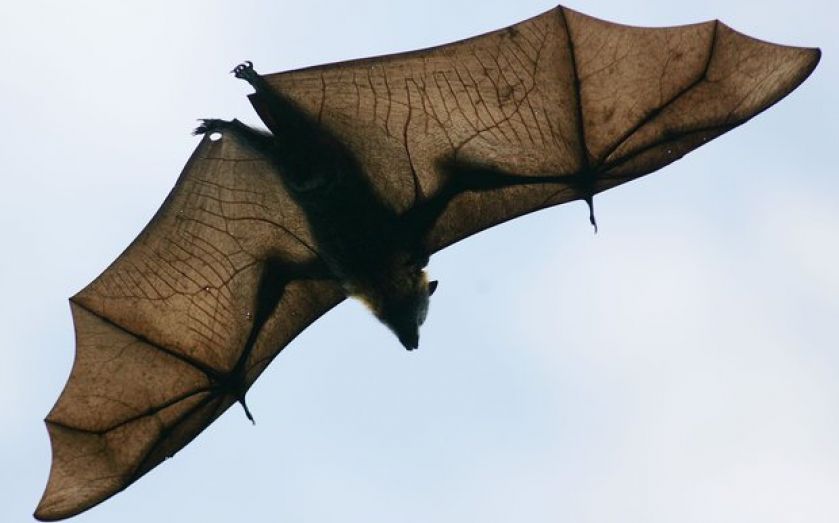
It has long been suspected that fruit bats were the culprit – previous studies have shown that they can carry the virus, and large numbers of them inhabit the region.

In fact, in March this year the Guinean health authorities put an immediate ban on bat bushmeat when they realised they had an epidemic on their hands. They suspected that it was the consumption of this meat that had given rise to the dire situation they were now dealing with.

Now, a group of scientists who carried out an investigation in Meliandou have come close to determining the exact source of infection – they believe that Emile came into contact with bat droppings while playing in a hollow tree containing large numbers of fruit bats.

Dr De Leendertz  and his team spent time talking to locals in the area and taking samples from the trees as well as the bats. Villagers described the tree, now just a stump, as being a popular playing place for the children in the village.

The tree was burnt down soon after the Ebola infection took place, and the locals said many bats flew into the air when it caught fire.

This, the researchers believe, is a strong indication that the bats inside the tree were responsible. The tree was also located just 50m from Emile’s house.

By taking ash samples from the tree and analysing them, they also found DNA strands that matched those of fruit bats. Their results are published in the journal EMBO Molecular Medicine.

They did not find any signs of Ebola in the bat samples they took, but according to one of the lead researchers in the study, the prevalence of the virus in bats would be extremely low.

Dr Leendertz of the Robert Koch Institute in Germany told the BBC that this was “obvious” when you think about how many tonnes of bat meat is consumed every year.

"If more bats carried the virus, we would see outbreaks all the time."

The next step for the research team will be to find out more about the bats and how they transmit the disease, since they have “moved into human settlements” and no longer just live in trees – they are also under the roofs of houses in the villages.

"The Ebola virus must jump through colonies from bat to bat, so we need to know more,” explained De Leendertz.

Share this article

  • Facebook
  • X
  • LinkedIn
  • WhatsApp
  • Email

Similarly tagged content:

Sections

  • News

Categories

  • Tech

Related Topics

  • Ebola

Trending Articles

  • Nottingham Forest owner Marinakis sues Crystal Palace for defamation

  • Back to basics: Sainsbury’s gradual retreat from the British high street

  • Hargreaves Lansdown orders staff back to office

  • As it happened: Intel, Arm shares slide; Oil climbs higher

  • Thames Water faces fresh threat to survival after pensions regulation breach

More from Morning Wire

  • As it happened: Stocks reach all-time high; US fires back at ‘surprise’ Iran attacks

    Markets
    LSEG logo on a large screen within a modern building displaying stock market data and world indices
  • Ryanair warns of ‘passport queue chaos’ with new EU border system

    Aviation
    Elon Musk and Ryanair CEO Michael O’Leary face off amid acquisition rumors in a business meeting setting
  • Almirall Announces EMA Acceptance for Filing of Paediatric Registration of Ebglyss (Lebrikizumab) in Atopic Dermatitis in Children 6 Months and Older

    Business Wire
  • Silence Therapeutics to Host Conference Call and Webcast to Discuss Topline Results from Phase 2 SANRECO Trial of Divesiran in Polycythemia Vera

    Business Wire
  • Manufacturers overcome gloomy economy as output surge continues

    Industrials
    Manufacturing sector faces mounting tribunal pressures amid economic uncertainty
  • Prothena Reports Second Quarter 2026 Financial Results and Business Highlights

    Business Wire
  • Businesses slam brakes on hiring over Burnham uncertainty

    Economics
    Andy Burnham speaking passionately at a public event, wearing a suit, highlighting his role as a prominent political figure.
  • Andy Burnham pressured to safeguard jury trials after legal backlash

    Legal
    Andy Burnham speaking at a press conference, addressing current events and regional developments, wearing a suit and tie.
MorningWire

Independent European business, markets and political news for decision-makers.

Morning Briefing

Europe

  • Germany
  • France
  • Europe
  • UK & Ireland

Business

  • Markets
  • Banking
  • Technology
  • Energy
  • Property
  • Fintech

Editorial

  • Opinion
  • Editorial Policy
  • Corrections
  • Contact

Company

  • About Morning Wire
  • Privacy Policy
  • Terms of Use
  • Cookie Policy
© 2026 Morning Wire Ltd · Published by Morning Wire Media, Bahnhofstrasse 65, 8001 Zürich, Switzerland
Privacy · Terms · Cookies · Facebook