Skip to content
Tuesday 11 August 2026London --:--Frankfurt --:--Zurich --:--
NewslettersSearchEN · DE
MorningWire

European business, markets and politics

FTSE 100
10,843.71
-0.17%
DAX
26,269.35
-0.21%
CAC 40
8,705.08
-0.24%
STOXX 50
6,538.23
+0.04%
  • Europe
  • Markets
  • Business
  • Economy
  • Technology
  • Politics
  • Opinion
More
GermanyFranceBankingAIEnergyFintechPropertyCapital Markets
  • Germany
  • France
  • Europe
  • Markets
  • Business
  • Economy
  • Technology
  • Politics
  • Opinion
  • DE
Tuesday 12 May 2015 11:04 am

How coalitions dominate Europe: David Cameron’s majority makes UK one of only three single party governments

By: Billy Ehrenberg

Add as a preferred source on Google

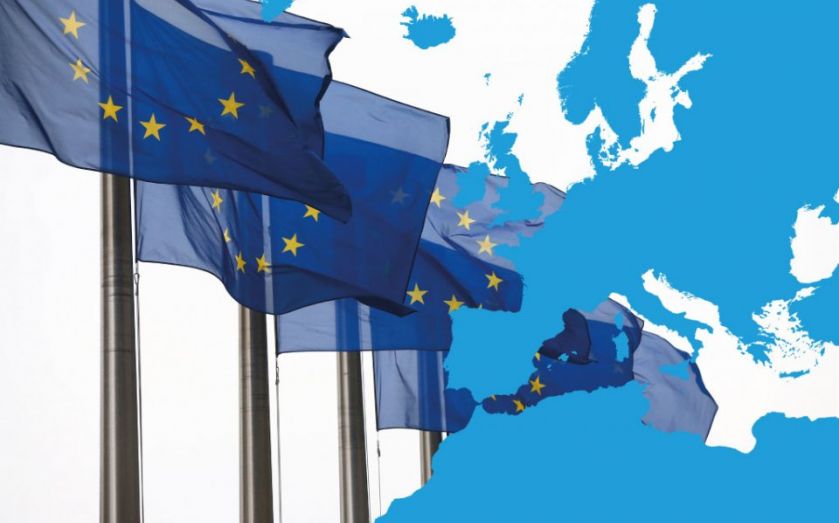
The UK may have what David Cameron would describe as a “strong and stable government”, led by one majority party, but the rest of the EU looks quite different.

Of the 28 countries in the EU, only the UK, Malta, and Spain have single parties in power, with the others being led by coalitions.

Some governments, such as Angela Merkel’s in Germany and Francois Hollande’s in France, have coalitions where the senior party is so strong that popular perception is that it rules alone.

France

Francois Hollande, the French President is often found in opinion polls to be the least popular in the nation’s history. Nevertheless, his party is the dominant force in the coalition with the Green party and he won the election handily. Remaining in power when the country goes to the polls in 2017 will be much harder with the polarising Nicolas Sarkozy preparing to run again.

Germany

Angela Merkel, often cited as the most powerful leader in Europe, is the head of the Christian Democratic Union, the senior party in a coalition. She came close to a majority in the 2013 election gaining 72 more seats than 2009, but fell five seats short of a majority, forcing her into a grand coalition with the SPD party.

The map makes no distinction between the degrees to which governments are left or right wing. Coalition governments are coloured by the political ideology of the senior coalition partner. 

Spain

Spain became a democracy in 1982 (the year the Spanish Socialist Workers' Party (PSOE) won the first election) after a dictatorship lasting back to the end of the Spanish Civil War in 1939. Since the transition, a single party has won every election. Spain has an election later this year and neither of the two main parties – the conservative Partido Popular and the socialist PSOE – is polling well. Podemos, a new populist anti-establishment party whose name means “we can” gained huge initial support in polls, but has faded slightly more recently.

Italy

Italy is ruled by a coalition of parties headed by the Democratic Party's Matteo Renzi.  Renzi was not initially the leader of the centre-left-led coalition, with Encrico Letta being the first prime minister. Letta lost the support of his party and then resigned, opening the way for Renzi who received a vote of confidence from parliament. The current executive cabinet is made up of ministers from four parties: the Democratic Party (10 cabinet members), New Centre Right (2) and the Union of the Centre (1). There are also four independents. 

Silvio Burlusconi, one of the most polarising figures in European politics, was initially involved in the coalition. However, he withdrew his support and created a new party, Forza Italia. 

Share this article

  • Facebook
  • X
  • LinkedIn
  • WhatsApp
  • Email

Similarly tagged content:

Sections

  • News

Categories

  • Business
  • Politics

Related Topics

  • David Cameron
  • People

Trending Articles

  • Nottingham Forest owner Marinakis sues Crystal Palace for defamation

  • Back to basics: Sainsbury’s gradual retreat from the British high street

  • Hargreaves Lansdown orders staff back to office

  • Five-star Mayfair hotel hit with HMRC winding-up petition

  • As it happened: Intel, Arm shares slide; Oil climbs higher

More from Morning Wire

  • Britain’s problem isn’t too much Thatcherism, but too little

    Opinion
    Margaret Thatcher smiling outside 10 Downing Street during her tenure as UKs longest-serving Prime Minister in the 20th ce...
  • Brits say Burnham should call an election

    Politics
    Number 10 Downing Street entrance with iconic black door, symbolizing British political power and leadership
  • Darktrace says Anthropic was right to pause Mythos on ‘security and safety’ grounds

    Tech
    Dario Amodei, CEO of Anthropic, speaking at a tech conference podium, wearing a suit and addressing the audience.
  • The debate: should voting be compulsory?

    Opinion
    Ipsos Mori is one of the largest polling companies operating in the UK.
  • On this day in 1940: Happy birthday Ken Clarke

    Opinion
    GettyImages 3261869 showcasing a significant moment in news, emphasizing key details relevant to the articles context.
  • Burnham accused of imposing ‘top–down’ devolution 

    Politics
    Andy Burnham speaking at 10 NORTH event, gesturing while discussing devolution plan.
  • On this day: the birth of Michael Foot

    Opinion
    Michael Foot speaking at a public rally in a city square with a large crowd and buildings in the background.
  • John Healey becomes Chancellor as Andy Burnham names top Cabinet appointments

    Politics
    Chancellor John Healey speaking at a professional event, likely a press conference or address.
MorningWire

Independent European business, markets and political news for decision-makers.

Morning Briefing

Europe

  • Germany
  • France
  • Europe
  • UK & Ireland

Business

  • Markets
  • Banking
  • Technology
  • Energy
  • Property
  • Fintech

Editorial

  • Opinion
  • Editorial Policy
  • Corrections
  • Contact

Company

  • About Morning Wire
  • Privacy Policy
  • Terms of Use
  • Cookie Policy
© 2026 Morning Wire Ltd · Published by Morning Wire Media, Bahnhofstrasse 65, 8001 Zürich, Switzerland
Privacy · Terms · Cookies · Facebook