While vaccine inequality is Johnson’s sad legacy, a new global Britain must do better

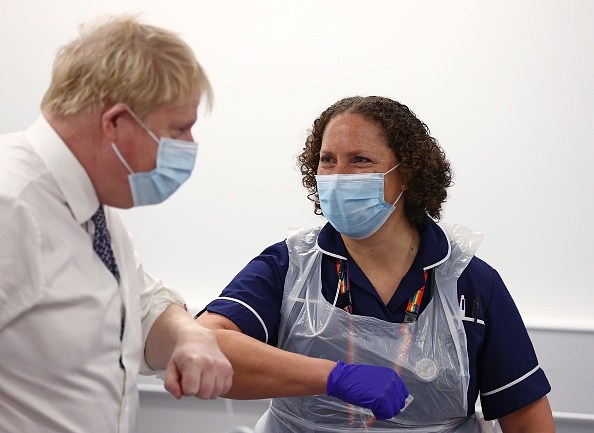
As we start looking back at the legacy of Boris Johnson’s leadership, his blocking of a global agreement to scale up vaccine production, at the height of the pandemic, ranks among his worst legacies.
Next week, World Health Organisation negotiations resume on a global accord which seeks to prevent and prepare the world for future pandemics. But over two years into Covid-19, it’s clear that global leaders have not learnt the important lessons.
Over 18 months since the vaccine roll-out began, 20 per cent of people in lower-income countries still haven’t received a single jab. Johnson’s failure to back an intellectual property waiver on Covid-19 vaccines, treatments and tests left billions of people unprotected.
The consequences of these failures were laid bare by a recent Lancet report, which found that 600,000 deaths could have been prevented if just 40 per cent of each country’s population had been vaccinated by the end of 2021. The UK provided some support to the COVAX market mechanism dreamt up to address vaccine inequality, but these haphazard donations were never going to be enough.
This isn’t a critique made in hindsight either. Dozens of low- and middle-income countries saw this coming.
In October 2020, just a month before any vaccines were administered, South Africa and India asked for the intellectual property on Covid-19 vaccines, treatments and tests to be suspended. This would have given many countries easier access to data needed to make generic versions of vaccines. It would have also stopped big pharma companies from trying to sue them if they were successful. But even as the US gave tentative support to a vaccine waiver, the UK, alongside the EU and Switzerland, blocked this vital effort, arguing that such measures would affect future innovation.
This argument is absurd, given that Covid-19 vaccines were often public inventions, funded by taxpayers and public research. The AstraZeneca vaccine developed at Oxford University was 97 per cent publicly funded, Moderna’s vaccine was almost entirely paid for by the US state and the Pfizer/BioNTech vaccine was built on €450m of support from Germany.
Meanwhile, vaccine inequality has prolonged the pandemic, increasing the risk of new and possibly more dangerous variants.
Big pharma corporations bumped their profit thanks to the vaccines. The NHS was charged £22 for a Pfizer jab, despite its estimated production cost of 76p. While these companies were simply doing what a business does – making profit – there is a question about wider responsibility when so much of the process of producing the vaccine involved taxpayers’ money. At the same time as putting immense strain on the NHS, the pandemic cost the UK economy over £250bn in just one year and is forecast to cost the global economy $12.5tn.
Not everything is lost, though. With discussions about the new pandemic accord resuming next week, the UK has an opportunity to embrace a more cooperative kind of “Global Britain” – one where the fruits of innovation are reaped by public and private actors, and shared with countries in need.
Scientists warn that similar global health crises are possible. We must support urgent measures to get us on a more collaborative path, or risk being critically unprepared once again.
We need a programme of wide-sweeping technology transfer that guarantees an immediate IP waiver in the event of another global pandemic. Crucially, where pharma companies receive tax-payer money, they should have a responsibility to use technology and know-how for the greater global good. Financing medicine manufacturing in the global south is also essential.
Of all the “big decisions” that Boris Johnson got wrong, perhaps none had more tragic consequences than his refusal to support countries that sought to protect their people and contribute to the global vaccine effort. Ensuring this never happens again in the future would be the first step to undo some of the damage done by his government.