British Steel: Why are MPs having an emergency session?

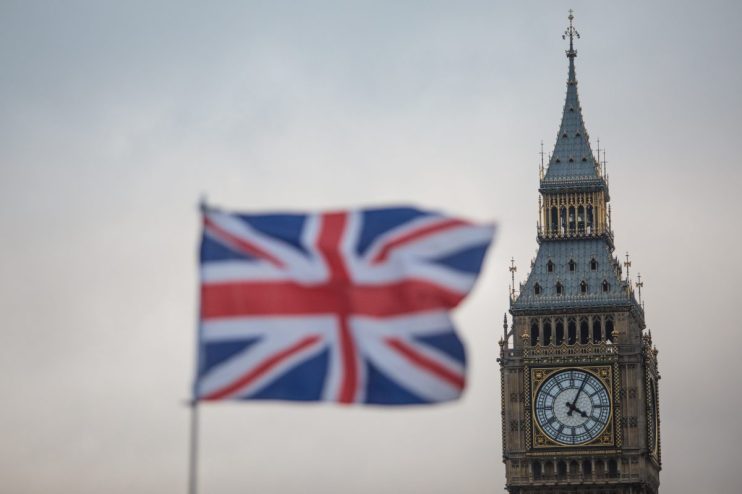
Westminster had begun to wind down gently on Friday afternoon. Parliament had concluded its formal business on Tuesday in advance of Easter. The news therefore came as jolt that the Speaker, Sir Lindsay Hoyle, had agreed to a request from the government to recall the House of Commons to sit from 11.00 am on Saturday; the House of Lords will begin at noon.
The reason is British Steel. The company’s Chinese owner, Jingye Group, has said that the blast furnaces at its Scunthorpe plant are “no longer financially sustainable” and had planned to replace them with electric arc furnaces. But the immediate priority is supplying raw materials like iron ore and coking coal to keep the old furnaces in operation, and talks between Jingye and the government have foundered. The plant is literally running out of fuel, and if the furnaces are turned off. They will be prohibitively expensive ever to restart.
The government wants to be able to act quickly. One way of stabilising the crisis, at least in the short term, would be to nationalise British Steel, and that is looking like the direction of travel. Sir Keir Starmer told the media that Parliament will be asked to agree to “emergency legislation” in a single day, and the government is publishing a Steel Industry (Special Measures) Bill: this will probably authorise the Business and Trade Secretary, Jonathan Reynolds, to take certain measures to ensure the steelworks remains in operation.
These are likely to include the ability to order the raw materials needed to maintain production capacity, and the power to direct the board and workers. The government may also assume the authority to retain or reinstate any employees laid off by Jingye. The Prime Minister announced grimly “we will keep all options on the table. Our future is in our hands.”
Recalling Parliament during a periodic adjournment is unusual but not shocking: since the relevant standing orders were introduced in 1947, there have been 34 recalls, most recently to consider the withdrawal of coalition forces from Afghanistan in August 2021. It is rarer that Parliament is assembled to deal with legislation, which has only happened eight times, and even rarer that it is recalled from adjournment to sit on a Saturday. That has only happened once, when the Commons met on 3 April 1982, the day after Argentinian forces had invaded the Falkland Islands.
Taking a bill through all its stages in both Houses in a single sitting day is perfectly achievable. The European Union (Future Relationship) Act 2020, which implemented the post-Brexit Trade and Cooperation Agreement, was shepherded all the way through Parliament on Wednesday 30 December 2020; it began in the Commons at 9.53 am and Royal Assent was notified in the House of Lords, making it an Act of Parliament, at 12.30 am the following morning.
An effective way to make laws?
No-one would pretend this is an effective way to legislate, however. Even if the Steel bill is short, only a handful of clauses, the time pressure and sense of drama can make MPs and peers hesitant: maybe a point is not worth raising, a question is not so important, an apparent ambiguity or lacuna will somehow resolve itself.
The worst manifestation of this was the series of regulations enacted during the Covid-19 pandemic. Reams of highly complex restrictions and sanctions were being given statutory force almost while the drafter’s ink was still wet; the police admitted they sometimes did not understand or had not read the rules they were responsible for enforcing and in some cases they had already been put into effect before they had been approved by Parliament.
The Steel Industry (Special Measures) Bill will be much more limited. The fate of Scunthorpe Steelworks is important: it employs 2,700 people and is the only facility in the UK which can produce virgin steel (from raw iron ore rather than recycled steel). If it closes, Britain will be alone in the G7 in being unable to produce virgin steel domestically.
But it is fair to ask the government why this process has become so urgent so quickly. The decommissioning of the obsolete, energy-ravenous blast furnaces was announced in November 2023, and British Steel said clearly that its future was “subject to appropriate support from the government”. It is nearly five weeks since Jingye rejected as inadequate an offer of assistance totalling £500 million of public money. On Monday, while Parliament was still sitting, the industry minister Sarah Jones told the Commons that talks with Jingye were continuing.
Perhaps the government did not want to reveal its hand before now, and instead let Jingye guess at what the worst-case scenario might be. The destiny of Britain’s steel industry will not be settled today. But compressing the two or three months it can take to scrutinise legislation into 12 hours or so should always be the last resort. Time will tell whether ministers had any alternative. A bill will become law on Saturday and I know my former colleagues in the House of Commons Service will perform brilliantly. The question is, did they have to?
Eliot Wilson is a Morning Wire columnist and former senior clerk in the House of Commons