Why are we all so obsessed by the moon?

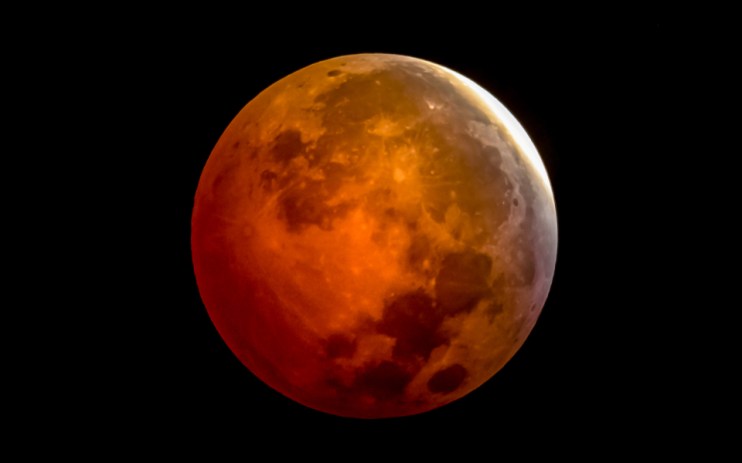
Monday will see the arrival of 2022’s wolf moon, the first full moon of the year. But what is it, more than 50 years since we first set foot on that barren, craggy rock, that continues to mystify us about our closest astral neighbour?
Last year saw Richard Branson and Jeff Bezos take to the skies to see the earth from space, upping the ante in the nascent space tourism industry and providing a chance for the ultra-rich to live out childhood fantasies of becoming astronauts.
Since the first Apollo landing in 1969, only twelve people have walked on the moon’s surface. The last time someone stepped onto its cratered face was 1972, and NASA now anticipates that the return of man to the moon will be pushed back to 2025. Perhaps it’s absence that’s made our hearts grow fonder.
But the moon has always enchanted us. Poets, playwrights, and philosophers have waxed lyrical about it since the dawn of recorded time. Shakespeare alludes to it in his plays, with the moon often turning characters towards madness or lust. In Othello he writes that the moon “comes more nearer earth than she was wont. And makes men mad.”
The belief that the full moon influences people’s behaviour, dubbed ‘The Lunar Effect’ has seeped into the cultural consciousness. The word lunatic is derived from the Latin word for the moon, describing an insanity that was believed to be caused by the lunar phases and their effect on water in the brain.
Our circadian rhythms are dictated by the turn to night, and if the moon shines brighter, we tend to notice it. According to a study by Uppsala University in Sweden, men slept worse than women during the first half of the lunar cycle, when the moon shines the brightest.
The moon, in short, is big business. Kirsty Gallagher’s book, Lunar Living: Working with the Magic of the Moon Cycles, has reached the Sunday Times Bestseller list three times since its publication in April 2020.
Gallagher says the moon provides a way to “mark the passage of time” by incorporating ritual into our daily lives. Her book promises a lifestyle overhaul, with the stages of the moon offering a chance to live with intention. “We as humans are in a constant flux of rhythm and flow, just like the moon,” she says. “The moon gives us permission to live a more peaceful and cyclical life.”
Gallagher says new and full moon days are a monthly opportunity to make resolutions, “to pause and check in with yourself, to say ‘Am I going in the direction I want to be going? And if not, why not? And what can I do about it?’”
There is something reassuring about the way the moon can, in a technology-driven world, continue to teach and inspire. Astrophysicist Ziri Younsi, a Stephen Hawking Fellow at UCL, says it holds the answers to some of life’s great questions.
“What’s not understood is its genesis and history, what happened millions of years ago,” he says. “There are some things which can only be studied by sending people there to perform longer term experiments.”
In the new frontier of space travel, Younsi believes the moon is a stepping stone to Mars and beyond. “It’s seen as a good place to build a base and test the effects of a low gravity environment on the human body. And it’s a warm-up exercise to going somewhere like Mars, which I think is the ultimate goal of a lot of this.”
Younsi acknowledges cynics could see the moon as a predominantly financial resource, to be mined for alternative energy sources and perhaps relieve global overpopulation, but he says NASA’s return there is important to encourage the next generation: “Stuff like that is wonderful for the general public to see because it inspires people. [We see] increased interest and engagement and in science and the pursuit of scientific careers when you have big events like this”.
He also sees the moon’s artistic appeal. “Moonlight is beautiful, there’s something very romantic about it. And it’s always different – sometimes it changes over the course of an evening. You have the atmosphere, you have the clouds and all of the dust and it can change colour, it can be fuzzy, it can be very sharp, and it can appear very large.”
Perhaps the moon reduces us to our pre-evolved selves, the orb in the sky representing the promise of sunrise as we fended off the elements. It’s also something to blame when things go wrong. A lack of direction in life? The moon. Mood-swings? The moon. An unhealthy bank balance at the end of the month? Definitely the moon.
What’s sure is that this space rock will continue to influence our lives for the foreseeable future.