Why can the Faroe Islands build faster than Britain?

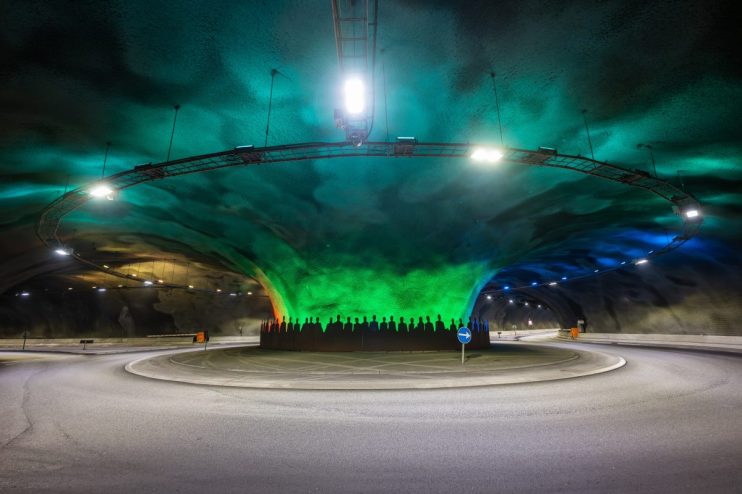
The Faroe Islands has built miles of undersea tunnels for less than a third of what Britain has spent on a consultation for one, says Joe Cawley
Every day, tens of thousands of vehicles crawl across the Dartford Crossing, one of the UK’s key economic arteries. Relief is on the way. Work has begun on the Lower Thames Crossing, a new tunnel several miles east of Dartford designed to ease pressure on the existing route. But the timeline tells its own story: it will not open until the 2030s.
By then, it will have taken around 25 years from initial proposal to completion. More than £1bn has been spent before construction has even begun and total costs are expected to exceed £10bn.
Usually, what follows statements like this is a comparison with China and its speed of delivery, but we need not look as far. The Faroe Islands, a self-governing nation in between Scotland and Iceland of about 50,000, has delivered a series of subsea tunnels over roughly the same period. These have connected communities that were once separated by mountains and the Atlantic.
Two tunnels announced in the mid-2010s, Eysturoy and Sandoy, were delivered in four to five years at a combined cost of around £300m. Eysturoy alone, featuring the world’s first subsea roundabout in a tunnel, cut journey times between key towns from over an hour to around 15 minutes. The UK, meanwhile, is still nearly a decade away from delivering a much-needed crossing first proposed in 2009.
A tale of two systems
The comparison is not perfect. Britain is larger, busier and faces more competing pressures. But the contrast is still hard to ignore and much more closely aligned than comparisons with China. The Faroes, with a population similar to Scarborough, have largely connected their country for a fraction of what the UK has spent preparing to build a single, albeit significant, crossing.
This is not about engineering but national confidence, how decisions are made and how they are explained. Britain has made it harder not just to build infrastructure, but to explain why it builds at all.
In the Faroe Islands, infrastructure is framed as a clear national necessity, with consistent and concrete benefits. In the UK, the case is often more complex and shifts over time, leaving space for the story to drift and for opposition to fix on disruption rather than long-term gain.
Faroes’ clarity of narrative is matched by a simpler process. There is no UK-style Development Consent Order regime, with its layers of consultation, examination and legal risk. Instead, major projects are typically approved through a combination of municipal planning decisions, permits and, where necessary, project-specific legislation passed by the Faroese parliament.
There is also a different balance between national and local interests. In a country of 50,000, infrastructure is treated as a shared national project and trade-offs are accepted more readily. Objection exists, but it is less formalised and less prolonged. In the UK, by contrast, the planning system gives significant weight to local impact, often before a clear and widely understood national case has been established. The result is that opposition can organise around disruption and environmental concerns, while the broader benefits remain abstract.
With no stake in the Lower Thames Crossing but a strong interest in delivering major infrastructure, the UK often struggles to explain clearly why it builds at all. Everyone understands that a new crossing between Essex and Kent matters, but the broader economic case is rarely set out in simple terms and with confidence.
When the story falters
The UK has built a detailed system of consultation, rightly designed to give communities a voice and test proposals thoroughly. But this often begins before there is a settled and clearly communicated sense of purpose for the proposals.
This has predictable consequences. When the needs case is not well established, local impacts carry more weight. When the dominant narrative is disruption, opposition becomes easier to organise and sustain. Concentrated costs outweigh dispersed gains, even if those gains are far more significant.
What looks like a planning problem is a confidence problem. Uncertainty about purpose leads to uncertainty in delivery.
On the banks of the Thames, this has played out over more than a decade. Proposals have been refined, challenged and revisited. Each stage has its justification, but the cumulative effect has been to extend timelines and increase costs long before construction begins. It has taken longer to decide what to build than it will take to build it.
The Faroe Islands offer a different approach. Not because they avoid trade-offs, but because they are clearer about them. The case for infrastructure is defined early and maintained throughout. Communication sits alongside decision-making rather than following it. That does not remove disagreement, but it gives the debate a clearer frame. The focus stays on delivery.
From drift to delivery
None of this is an argument for sidelining local voices. They matter. But there is a difference between meaningful engagement and prolonged uncertainty, and the UK too often drifts into the latter.
The lesson is not that Britain should replicate a smaller nation’s model, but that infrastructure needs a clearer starting point: a defined purpose, a consistent case and the confidence to hold to it.
Joe Cawley is head of planning and infrastructure at Grayling UK