Skip to content
Tuesday 11 August 2026London --:--Frankfurt --:--Zurich --:--
NewslettersSearchEN · DE
MorningWire

European business, markets and politics

FTSE 100
10,863.82
+0.01%
DAX
26,461.97
+0.52%
CAC 40
8,740.19
+0.16%
STOXX 50
6,570.20
+0.53%
  • Europe
  • Markets
  • Business
  • Economy
  • Technology
  • Politics
  • Opinion
More
GermanyFranceBankingAIEnergyFintechPropertyCapital Markets
  • Germany
  • France
  • Europe
  • Markets
  • Business
  • Economy
  • Technology
  • Politics
  • Opinion
  • DE
Monday 03 November 2014 8:08 pm  |  Updated:  Friday 07 June 2019 3:32 pm

Why Draghi may opt against full QE – CNBC Comment

By: Catherine Boyle

Add as a preferred source on Google

As one major central bank – the US Federal Reserve – closes the quantitative easing door, markets are hoping that another – the European Central Bank (ECB) – will throw it wide open again.

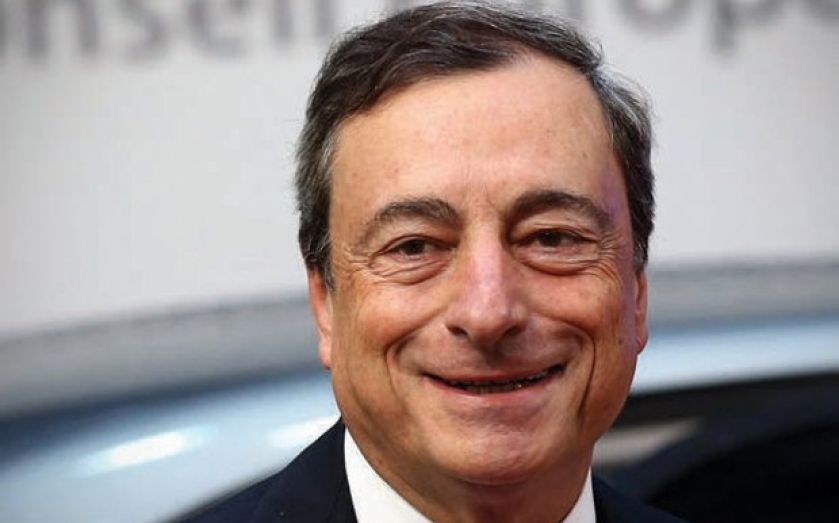
Many economists now expect that ECB president Mario Draghi will usher in a quantitative easing policy, involving buying up countries’ debt, early in the New Year.

There is definitely an air that something needs to be done in the Eurozone. Unemployment remains stubbornly high at 11.5 per cent and inflation, at 0.4 per cent, doesn’t look that far away from the deflation danger zone. Two of the currency bloc’s biggest economies, France and Italy, are going to need extra wriggle room to meet their budgetary targets – and even Germany, the stalwart of recent years, looks less confident than for some time.

Yet is QE that something? The most obvious problem with a quantitative easing programme, particularly when it involves buying up sovereign bonds, is the potential political fallout. How can you make sure that you’re not giving some Eurozone countries an unfair advantage, particularly if they have already been helped out with tens of billions of euros in bailout aid during the financial crisis? No wonder Germany’s anti-euro party, Alternative für Deutschland, is causing Angela Merkel almost as much trouble as Ukip is David Cameron.

And can QE really be that effective? In the UK and US, effectively printing money has helped to reduce credit spreads and, therefore, the cost of borrowing. Yet the Eurozone already has low credit spreads and borrowing rates, after a series of actions by the ECB. The gap between the cost of short and long-term borrowing for Germany, for example, is already much smaller than it was in the US before QE was introduced there. If funding does not seem to be filtering through to the real economy, how could the ECB ensure that, by pumping more money into the system, it reached the right places?

Those in favour of adopting QE would argue that, by spreading the risk around in a way that is allowed under the ECB regulations (as QE appears to be), and in ensuring the survival of the euro project, the region as a whole will be better off, no matter what some Germans may think. And frankly, there doesn’t seem much else left to do to stimulate the region’s recovery.

Whether Draghi chooses to nudge the door open for QE this Thursday or not, his task of steering the Eurozone through its recovery looks trickier than ever.

Share this article

  • Facebook
  • X
  • LinkedIn
  • WhatsApp
  • Email

Similarly tagged content:

Sections

  • News

Categories

  • Morning Wire Content

Related Topics

  • Mario Draghi
  • People
  • Quantitative easing

Trending Articles

  • Five-star Mayfair hotel hit with HMRC winding-up petition

  • Nottingham Forest owner Marinakis sues Crystal Palace for defamation

  • Back to basics: Sainsbury’s gradual retreat from the British high street

  • Hargreaves Lansdown orders staff back to office

  • As it happened: Intel, Arm shares slide; Oil climbs higher

More from Morning Wire

  • Revolut lands fresh banking licence after wrestling with Europe friction

    Fintech
    Revolut Banque Française ad on a Morris column in Paris, with the July Column and blurred traffic in the background.
  • Will Britain follow Japan’s great growth gamble?

    Opinion
    Japan Prime Minister Sanae Takaichi speaking at a press conference, highlighting her leadership and political agenda
  • Rupert Lowe axes pensions triple lock and pledges tax cuts in economic plan

    Politics
    Rupert Lowe, former Southampton FC chairman, smiles while holding files on a city street, wearing a suit and pink tie
  • ‘Moron premium’ – Westminster turmoil has ‘cost taxpayers £35bn’ since 2022

    Politics
    Westminster Houses of Parliament under clear sky, iconic London landmark representing UK government and politics
  • RS2 Financial Services GmbH Selected to Participate in ECB Digital Euro Pilot

    Business Wire
  • Oil prices return to crisis levels

    Markets
    Close-up of a petrol pump nozzle dispensing fuel at a gas station, highlighting rising fuel costs and economic impact.
  • Surely Gary Stevenson is smart enough to know a wealth tax won’t work?

    Opinion
    Gary Stevenson speaking at a Patriotic Millionaires event, addressing wealth inequality and economic reform proposals.
  • Politicians call for easing of private school stranglehold on elite rugby

    Sport Business
    Getty Images logo on a digital screen, representing the renowned stock photo agency in a business news context.
MorningWire

Independent European business, markets and political news for decision-makers.

Morning Briefing

Europe

  • Germany
  • France
  • Europe
  • UK & Ireland

Business

  • Markets
  • Banking
  • Technology
  • Energy
  • Property
  • Fintech

Editorial

  • Opinion
  • Editorial Policy
  • Corrections
  • Contact

Company

  • About Morning Wire
  • Privacy Policy
  • Terms of Use
  • Cookie Policy
© 2026 Morning Wire Ltd · Published by Morning Wire Media, Bahnhofstrasse 65, 8001 Zürich, Switzerland
Privacy · Terms · Cookies · Facebook