Why hasn’t the UK signed more trade deals?

On leaving the EU, the UK lost access to the European Union’s trade deals with countries including Israel, Mexico and South Korea.
But the UK has since negotiated a host of new free trade agreements (FTAs) with Australia, Japan and New Zealand, giving British businesses tariff free access to markets abroad, and agreed to join the Comprehensive and Progressive Agreement for Trans-Pacific Partnership.
We’ve ‘rolled over’ around 70 FTAs, meaning we copied the deal we had before Brexit, as an EU member, and, crucially, signed a UK-EU Trade and Cooperation Agreement.
But it hasn’t all been plain sailing.
Talks with India have been dragging on since January 2022, and are unlikely to be concluded before the next UK election.
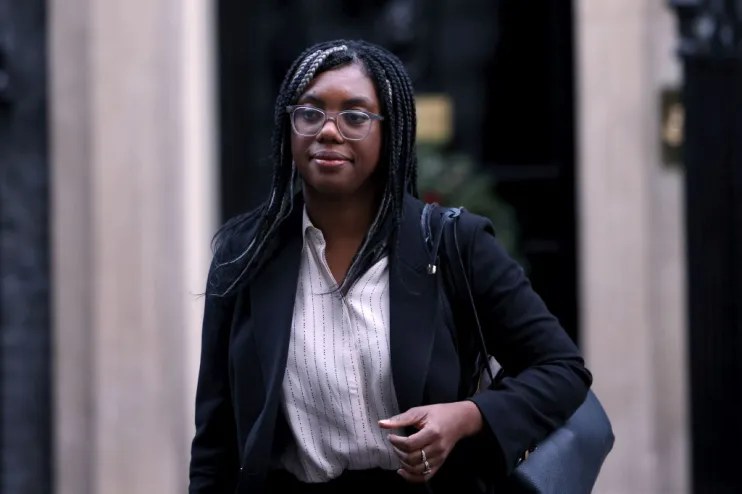
Discussions with Canada were put on ice after hitting key sticking points on cheese imports and beef hormones. Despite Kemi Badenoch’s insistence that talks had been restarted, Ottawa has challenged that account, with reports late last night stating that Canada’s high commissioner to the UK has told MPs that negotiations have not picked up again.
Meanwhile, a deal with the United States remains a faraway dream.
So, how is the UK doing on trade then?
While it may not quite be that countries are “queuing up” to sign on the dotted line, as Boris Johnson famously promised, Marco Forgione, from the Institute of Export & International Trade, said we can “congratulate the government” on the number of deals it’s reached so far.
But trade expert Dr Rebecca Harding stressed that the UK’s new FTAs, excluding the new agreement with the EU, “capture relatively little of our international trade-based GDP”. Since leaving the bloc, we’ve become “a less trade intensive” economy, she added.
Trade deals aren’t easy to negotiate, especially in the current climate.
“Modern trade deals are incredibly complicated. They run to well over 1000 pages with lots and lots of different chapters… a huge amount of things, and complex things, to negotiate,” Michael Gasiorek, from the UK Trade Policy Observatory, said.
Harding warned that, in the post-Covid world, states have become “more protective” of their interests, approaching deals “in a more strategic way”. Trade deals have always been about national interests, but are now even more so, she added.
However, one of the key issues, Forgione said, is whether businesses are able to, and want to, use the trade deals the government is reaching around the world.
“Government needs to do more to engage with businesses, to encourage them to exploit the opportunities that exist,” he added.
Engaging more businesses in international trade is vital if we want to grow the UK economy.
To help our trade deals have more impact, Gasiorek argued we need to stop thinking in terms of symbolic deals, and instead focus on the underlying trade strategy.
“I think it’s a mistake to think of trade policy as just about signing FTAs,” he said. “You need to have a trade strategy that should reflect what your domestic priorities and concerns are.
“That might be higher growth and productivity. It might be because you want to encourage certain industries; it might be economic security and all the worries that we have about that.”
While for Rosa Crawford, trade policy officer at the Trades Union Congress, it’s all about quality over quantity.
She stressed: “For us, it’s about getting the right trade agreements and trade policy which obviously promotes good jobs, high standards of workers rights, decent pay protection for public services, and protection for workers data.”
While ministers should be a bit more transparent about the state of UK trade negotiations, perhaps we should remember that it is more important to get a deal right than to rush it.