Skip to content
Friday 14 August 2026London --:--Frankfurt --:--Zurich --:--
NewslettersSearchEN · DE
MorningWire

European business, markets and politics

FTSE 100
10,772.67
-0.56%
DAX
26,299.74
0.00%
CAC 40
8,650.56
0.00%
STOXX 50
6,545.47
0.00%
  • Europe
  • Markets
  • Business
  • Economy
  • Technology
  • Politics
  • Opinion
More
GermanyFranceBankingAIEnergyFintechPropertyCapital Markets
  • Germany
  • France
  • Europe
  • Markets
  • Business
  • Economy
  • Technology
  • Politics
  • Opinion
  • DE
Sunday 21 December 2014 6:10 pm

Why have oil prices dropped? Gulf states blame non-Opec members

By: Sarah Spickernell

Add as a preferred source on Google

Arab Gulf ministers have argued that tumbling oil prices are not the fault of the Organization of the Petroleum Exporting Countries (Opec), and maintain that their countries will not cut oil production to counteract the fall. 

The permanent, intergovernmental organisation comprises 12 member states, many of which are in the Middle East.
 
The group describes its purpose as being to "coordinate and unify” the nations' policies on oil to “ensure the stabilization of oil markets in order to secure an efficient, economic and regular supply of petroleum to consumers”.
 
According to the United States Energy Information Administration (EIA), Opec crude oil production is an important factor affecting global oil prices. It sets production targets for its member nations and generally, when Opec production targets are reduced, oil prices increase. 
 
As a result, the 12 members have faced increasing pressure to cut their production targets in light of falling prices.
 
But at a meeting to address the problem in Vienna last month, the Opec members decided to keep output targets at their current levels of 30m barrels per day.
 
Now, the oil-rich states claim that the ensuing fall in oil prices was not because of this decision, and that it was in fact the result of comments made by speculators and producers outside of Opec. 
 
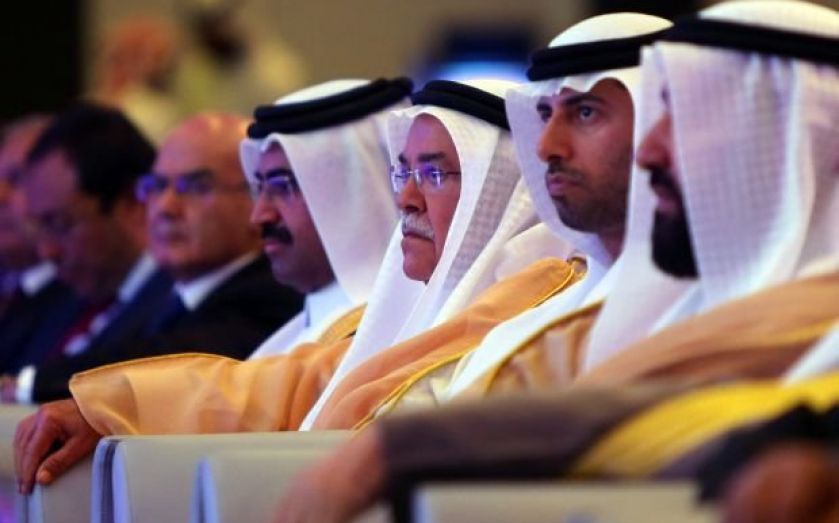
In Abu Dhabi earlier today, Saudi Arabia's Oil Minister Ali al-Naimi said "the spread of misleading information and speculation" had contributed to the 40 per cent price fall. He added that if producer countries outside Opec wish to restrict output, “they are welcome”. 
 
"We are not going to cut, certainly Saudi Arabia is not going to cut,” he said. 
 
His comments were backed by those of Kuwaiti and UAE ministers, who also said no to possible cuts. 
 
"I don't think we need to cut. We gave a chance to others (and) they were not willing to do so," said Kuwait's Oil Minister Ali al-Omair, adding that Opec would not consider an emergency meeting. 
 

Share this article

  • Facebook
  • X
  • LinkedIn
  • WhatsApp
  • Email

Similarly tagged content:

Sections

  • News

Categories

  • Business

Related Topics

  • Oil prices

Trending Articles

  • Revolut takes flight with launch of new airport lounges

  • It’s not just Jason Arday, most of sociology is a scam

  • IT consultant ordered to pay £50,000 after being accused of stealing Soho House members’ personal details

  • Grandparents fund university degrees to avoid inheritance tax net

  • Five-star Mayfair hotel hit with HMRC winding-up petition

More from Morning Wire

  • As it happened: Stocks slide despite tech and data boost; Oil falls after OPEC+ ups output

    Markets
    Samsung has missed earnings expectations
  • UK borrowing costs surge as Trump declares Iran ceasefire over

    Economics
    Breaking news event coverage with diverse group of people engaging in discussion at a business meeting or conference.
  • North Sea is not competitive, says BP boss days after exit

    Markets
    British Petroleum BP forecourt with fuel pumps and company signage visible in a business setting, highlighting energy serv...
  • As it happened: Stocks reverse losses after Trump threatens harder strikes on Iran; Oil at four-week high

    Markets
    Donald Trump has threatened to sue the BBC for $1bn
  • Shell launches bumper buyback after earnings more than double on Middle East turmoil

    Energy
    Shell CEO Wael Sawan in a boardroom setting, highlighting his reported £4.5m pay boost under new remuneration policy.
  • As it happened: Stocks rally after US jobs report; Oil tumbles to pre-Iran war levels

    Markets
    The UK could enjoy a 50 per cent production boost without breaking its net-zero pledges
  • Kuwait Oil Company Signs US$ 16.0 Billion Infrastructure Partnership Involving Its Crude Oil Pipeline Network With a Consortium Comprising Blackstone, Brookfield and KKR

    Business Wire
  • Strait of Hormuz ‘closed’ as Iran and US exchange strikes

    Economics
    Bustling shipping activity in the Strait of Hormuz with tankers and cargo ships navigating Iranian waters.
MorningWire

Independent European business, markets and political news for decision-makers.

Morning Briefing

Europe

  • Germany
  • France
  • Europe
  • UK & Ireland

Business

  • Markets
  • Banking
  • Technology
  • Energy
  • Property
  • Fintech

Editorial

  • Opinion
  • Editorial Policy
  • Corrections
  • Contact

Company

  • About Morning Wire
  • Privacy Policy
  • Terms of Use
  • Cookie Policy
© 2026 Morning Wire Ltd · Published by Morning Wire Media, Bahnhofstrasse 65, 8001 Zürich, Switzerland
Privacy · Terms · Cookies · Facebook