Why now is the perfect time to visit Cyprus

There are many reasons why Brits love holidaying in Cyprus. The weather, of course, but then there is the driving on the same side of the road, the plugs are the same and communication is easy. “As my mother used to say” says Mario, my excellent guide, “even our cat speaks English”.
Competition may come from flashier Greek islands but the expanding Cypriot luxury hotel scene, and the growing food and wine culture, means that the island has completely re-invented itself in recent years and the cost of living still undercuts much of southern Europe.
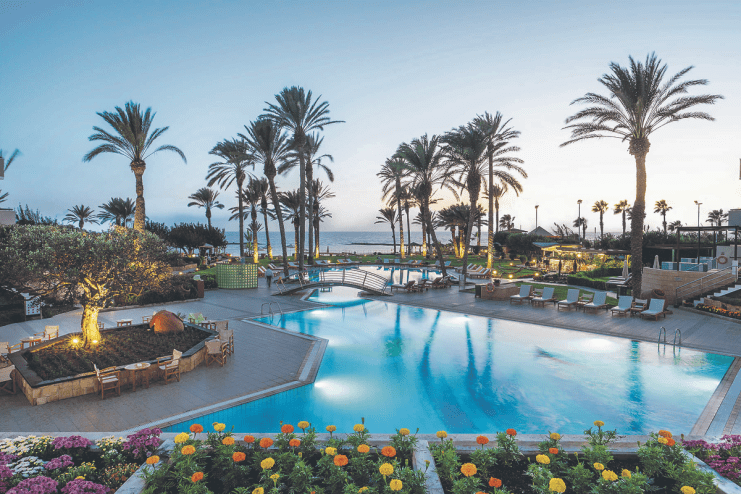
I am staying in the coastal city of Paphos, in the Constantinou Brother’s Asimina Suites Hotel, a newly refurbished five-star seafront property outside the centre of town. It has just opened a roof terrace which turns out to be a great location to witness some of the island’s dramatic sunsets, complete with cocktail in hand.
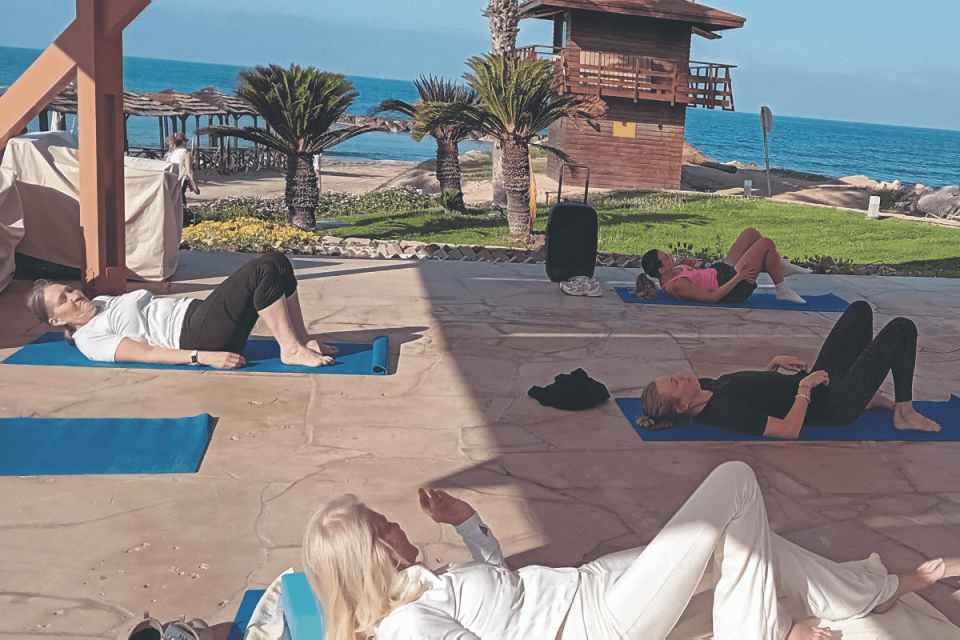
The next day starts with a yoga session by the sea. Excellent for both the mind and body and followed up with something quite more serious and cerebral: a visit to the Tomb of the Kings, a designated UNESCO World Heritage Site in 1980 a little further up the coast.
Despite the name, no kings were actually buried here. Instead these monumental underground graves are the resting places of wealthy aristocrats from the 4th century BC to the 3rd century AD. Each is carved directly into solid rock, with courtyards and chambers designed to resemble the homes of the living.
Access involves climbing down deep staircases, so I was pleased to be wearing solid walking shoes.
What to see, drink and experience in Cyprus
As I peered into the dark openings, I couldn’t help wondering who had stood there two thousand years before. Some must have been grave robbers as virtually all the transportable treasures have disappeared.
Perhaps the main culprit was Luigi Palma di Cesnola, the American consul to Cyprus in the mid-19th century. He conducted extensive excavations across the island and approximately 6,000 objects are now displayed from the region in the Metropolitan Museum in New York. It was the Met’s first major acquisition after it opened in the 1870s.
I went on to the nearby bustling port, with its many popular restaurants. My traditional Meze lunch at Theo’s restaurant cost around €25 for a continuous flow of small fresh dishes, that included appetizers, grilled mains, and dessert. Of course there was wine too.
An interesting wine culture is happening in Cyprus at the moment. For years visitors associated the island mainly with cheap holiday wine or sweet Commandaria, but today there is a growing scene of quality-focused boutique wineries, indigenous grapes, wine tourism, and pride in local identity.
Of course, wine has been made in Cyprus for thousands of years. It isn’t just a product, it’s part of rural life, hospitality, religion, and village culture. But the modern scene is more dynamic, with younger producers improving viticulture, experimenting with styles, and exporting better bottles.
Confidence in wine making
Instead of copying France or Italy, Cyprus is leaning into native grapes. The names to know are Xynisteri – crisp, fresh white; citrus, herbs, mineral notes, Maratheftiko – bold red, spicy, dark fruit, Yiannoudi, an elegant red and Mavro, the traditional red grape, which is often blended.
This shift toward native grapes is a big sign of confidence. Most production occurs in the southern regions of Paphos and Limassol, with a growing focus on high-altitude vineyards (up to 1,150m) for better acidity. There are seven designated wine routes for visitors to explore.
Small family wineries and estate producers now offer tastings, tours, lunches, vineyard walks, and stylish cellar doors. Commandaria remains culturally important. It’s more than everyday table wine for most people: it’s a symbol of Cyprus. Many people drink it after meals, at celebrations, or bring it as a gift. Small wineries are trying to reposition it as a premium heritage wine.
You’ll often drink carafes of local wine with meze. Homemade ‘village wine’ in rural homes or tavernas. Long lunches with shared bottles. Current Cyprus wine culture feels like Portugal 20 years ago or Greece 10 years ago: underrated, authentic, increasingly quality-driven, and still not over-commercialised.
We shook off the bottles with a morning visit to the Kato Paphos Archaeological Park. A collection of very impressive and well-preserved Greek and Roman ruins, they date from prehistoric times through to the Middle Ages. Among the most significant remains are four large and elaborate Roman villas.
The birthplace of the goddess of love
In my opinion the very best is the House of Dionysos, a sprawling 2,000-square-metre villa famous for its exceptionally preserved mosaic floor covering roughly 556 square metres. Intricate panels illustrate famous Greek myths, including Pyramus and Thisbe: The tragic lovers who inspired Shakespeare’s Romeo and Juliet.
Paphos is best known for being the birthplace of the goddess of love, Aphrodite, who rose from the foam of the sea. Her Roman name is Venus, as depicted by Botticelli’s famous painting. I visited the pretty beach where this momentous occasion is supposed to have happened.
Out to sea is a large rock that is rumoured to have produced the foam leading to her birth. The local legend has it that if you swim around it, you will be blessed with eternal beauty.
That evening, before a dinner at friendly family-run Pagkratios Tavern, I met the Deputy Minister of Tourism, Mr Kostas Koumis, who added another reason for tourists to come to Cyprus: safety. “My parents,” he explained “have never locked their door at night.”
On my final day, while friends went touring the Troodos mountains, I decided to visit the villages in the north and the community-run turtle museum in the high village of Innia. Perched above the Akamas coast, at first glance the museum appears to have misunderstood its subject entirely.
A thoughtful local testament
Why place a shrine to marine life in a stone village better known for mountain views than breaking waves? Yet that seeming contradiction is precisely the point.
Below the village is Lara Bay, one of Cyprus’s most important nesting beaches for loggerhead and green turtles, where summer nights still belong to creatures seemingly older than history. Build the museum on the sand and you invite lights, engines and flip-flops; place it up the hill and you create distance, perspective, and protection.
The museum educates people before they reach the beach, while nudging tourist euros into village cafés and family-run shops rather than letting them vanish straight into the sea breeze. It is conservation by geography, the turtles keep their shoreline, while the humans learn from a distance.
Inside, the museum is refreshingly modest: less blockbuster attraction than thoughtful local testament. Exhibits trace the life cycle of loggerhead and green turtles, from fragile eggs buried in warm sand to hatchlings making their perilous first dash to the surf, while explaining the decades-long work required to keep those beaches safe.
There are shells, models, maps and the kind of earnest displays that feel increasingly rare in an age of immersive gimmickry. What it lacks in spectacle, it makes up for in sincerity — and in the quiet reminder that some of the most important stories are best told softly.
Visit Cyprus
Prices from £1,319 per person for a Junior Suite in the Asimina Suites Hotel. Book online through Jet2Holidays jet2holidays.com. For further information go to asimina-cbh.com