
Why Opec matters

Whether we like it or not oil prices matter, as they affect everything connected with a modern economy, from movement of goods and services, to the amount of disposable incomes for ordinary consumers.
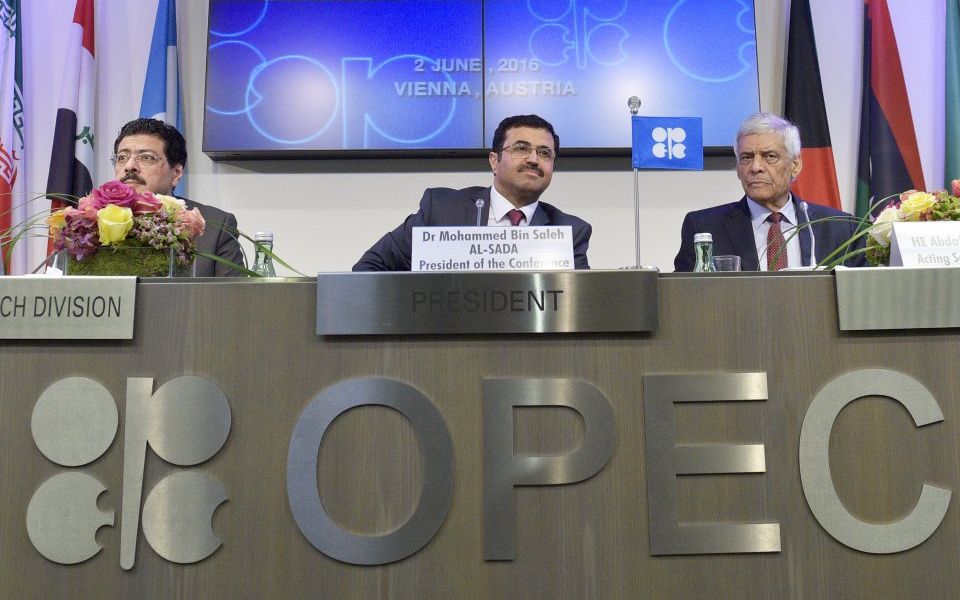
That is why this week’s Opec meeting is important in the context of future direction for oil prices, which have risen over 60% since this time last year. For years Opec acted as a cartel in setting global oil prices, fixing an optimal level for prices that the global economy could withstand, while making a decent margin for themselves.
There are 14 member countries in Opec of which Saudi Arabia, Iraq, Iran, UAE, Kuwait and Qatar make up nearly 50% of that production, and throughout 2014 production levels steadily increased from levels of 30m barrels a day to peak at 34m barrels a day in November 2016.
These levels dropped sharply at the beginning of 2017 as 2m barrels a day were lopped off Opec’s daily output, helping anchor prices well above their January 2016 lows of $27 a barrel.
Global events derail oil cartel
Over the last few years this cartel has found itself disrupted by global events, including Russia’s invasion of Crimea and the US shale revolution, which put global production levels through the roof.
In 2014, oil prices were sitting above $100 a barrel against the backdrop of a global economy that was showing signs of slowing down, with particular concerns about the Chinese economy.
At around that same time the US shale revolution was beginning to take hold, while Russia was starting to ramp up production in order to raise currency, to help offset economic sanctions as a result of its actions in Crimea. With US shale output increasing, total US demand for global oil came down, leaving Opec with a massive oversupply problem, which they doubled down on, hoping to drive US shale producers out of business with lower prices.
Iraqi production also started to increase sharply as terrorist group ISIS was driven out, while Iranian oil was returning to the market after years of sanctions were lifted.
As a result of this rising production, prices – which had spent most of 2013 and 2014 trading between $100 and $115 a barrel – started to fall sharply. This turned out to be extremely uncomfortable for those Opec producers who had high break-even prices, as a result of an increased level of welfare funding programmes brought in to pacify their restless populations as a result of the Arab Spring.
For example, Saudi Arabia, which produces over 10m barrels a day, has an extraction price of about $10 a barrel; however with welfare and government spending included that price rises to in excess of $90 a barrel. This made the slide in prices to lows of $30 a barrel extraordinarily painful, not only for Saudi Arabia but for other Opec nations, especially as Russia, who is not an OPEC member, was increasing output to levels of 10m barrels a day.
A boon for consumers
While the slide in oil prices was bad news for oil producers, it was a boon to consumer-driven economies like the US, Europe and the UK as fuel costs plunged, putting more money into pockets of ordinary consumers as well as businesses.
Over the course of the next few months from the lows in 2016, prices edged back to form a floor just above $45 a barrel; better than they were, but still at a painfully low level for Opec producers and Russia alike. The eventual Opec agreement in November 2016 helped put in a floor at about $40.
In June last year, Brent crude oil prices were steady at $45 a barrel and Opec members were just over six months into the agreement to cap production levels, in an attempt to put a floor under prices following the slump from those 2014 peaks of $115 a barrel.
Since then we’ve seen prices surge to peaks above $80 amid speculation that we could see further gains towards $100 a barrel in the coming months. Not surprisingly, this surge in prices has started to affect consumer demand, as well as appearing to have a slowing effect on the global economy.
Central banks fail to react
For some reason this appears to have escaped the attention of central bankers across the globe, though to be fair to the US Federal Reserve, they are taking steps to arrest the effects of this inflationary spike by pushing interest rates higher, something they have done seven times since 2015 with no significant negative effect on the US economy.
Sadly, the Bank of England appears to be asleep at the wheel with a reluctance to follow suit, despite the effect a weaker pound tends to have on domestic inflation. This week we will once again see an impotent central bank wracked by indecision, having last month missed another opportunity to build in a safety buffer for the next slowdown.
Since the beginning of the year petrol prices have risen from levels of £1.20 a gallon to £1.30 a gallon, and from £1.15 a year ago, yet we are being told by central bankers that headline inflation is starting to slow down.
This will be cold comfort to a lot of consumers who have a lot less disposable income, and businesses whose transport costs have gone up as a result, which means that this week’s Opec meeting is likely to be more important than normal.
Last week US president Donald Trump broke with convention by saying that Opec should stop manipulating prices higher and increase production in an effort to help prevent this income squeeze hurting US consumers, where prices of gasoline have pushed well above $3 a gallon in most of the country.
Production caps set to end
Putting to one side the fact that it is some of President Trump‘s policies that have helped fuel this rise in prices – pulling out of the Iran nuclear deal being one – this week Opec members and Russia will sit down and discuss a proposal to increase production levels by as little as 300,000 barrels a day up to to as much as 1.5m barrels a day. Whatever happens, it seems likely that we will see a slight increase in production levels, and in so doing draw to a close production caps that have lasted since late 2016.
If this does happen there is an element of self-preservation in seeking to do this, as while most oil producers prefer higher prices, they will also want to avoid a scenario where soaring prices lead to a sharp drop in demand. This could trigger a global slowdown as well as accelerating the push for renewables.
Oil producers will also need to factor in the possible ripple-out effects of accelerating the risk of a full-blown trade war between the US and China, as well as a rising US dollar causing an economic slowdown in emerging markets, which could see a global economic slowdown crimping demand.
For now oil prices appear to have found a short-term top at $80 a barrel, which means consumers as well as businesses will be hoping this week’s Opec meeting succeeds in keeping a lid on prices, and in so doing calling a halt to a period which has seen a steady rise in fuel costs, and a slide in disposable incomes.
Trade with us today at cmcmarkets.com
Losses can exceed deposits.
CMC Markets is an execution-only service provider. Personal circumstances not considered. Content is not advice.