
Why raising awareness in remote areas saves sight

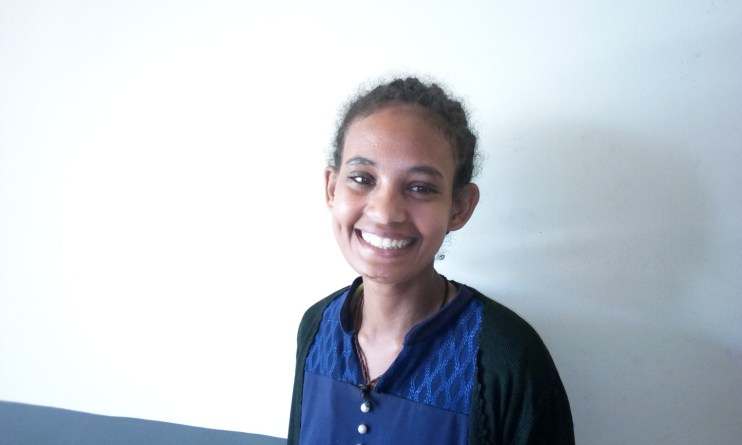
Andrew Wardle – Programmes Team at Orbis UK
I was wearing my Orbis cap and shirt when Lemlem stopped me on the stairs of my hotel and asked if I knew what was wrong with her milky white eye. Immediately, I could see she had a cataract, one that had been developing for a long time.
Unlike most people with cataracts, Lemlem was young and working. She stopped us because she recognised Orbis from radio announcements about our support for eye care at the local Dilla University Referral Hospital in the Gedeo zone in Ethiopia. Later, Lemlem told us about a childhood accident that damaged her eye – a common enough cause of cataracts in younger people.
Cataracts are one of the leading causes of avoidable blindness in Ethiopia. A staggering 1.1 billion people live with avoidable blindness, 4 million in Ethiopia, and 90% of those cases are treatable with straightforward surgery or medicine.
Orbis is an international NGO working to bring eye care to everyone, everywhere. We’ve been doing that in Gedeo since 2018, at first supported by the British government’s UK Aid Direct fund. Thanks to this project, we were able to send Lemlem to the eye care unit at the hospital where she had cataract surgery.
When we started work in Dilla four years ago the hospital lacked the staff, equipment and referral system to provide regular, quality eye care services.
Now it has a fully staffed and equipped unit which provides eye care to local people referred from community and primary care centres. Surgeons have done 1,300 cataract operations, including the surgery for Lemlem.
The change is the result of our local staff working with government colleagues from the hospital and beyond. We paid for the refurbishment of the unit and the equipment and supplies it needed. The hospital made sure the unit has the staff it needs and is a good size – including a much-needed waiting area and recovery ward which were not in the original plan. We also used our connections with the community and primary care health workers to set up a referral system so that the eye care unit has patients to treat.
We focus on cataracts because it is the most common cause of avoidable blindness in Ethiopia affecting 1.7 million people.
In the UK cataracts are dealt with early on, but in poorer countries, limited eye care services mean cataracts can develop to the point that people lose their sight. This is what happened to Lemlem.
Many cataract patients stop working and need care from family (often from a girl, who then does not attend school). After surgery, most patients can quickly return to social and economically productive roles. Carers can go back to education or work.
Patients who come to the hospital are referred by a local health worker otherwise they may not be aware the hospital is there. We raise awareness of services in community meetings and radio messages from traditional elders, known as Abagedas. Abagedas have great influence and their radio announcements seem to have increased the number of people seeking eye care.
Our volunteer case finders primarily look for adults with trachoma, a common eye disease in the area, but they also look for people with cataracts. This is no extra work because the cataract is most common among older adults, the same group most at risk of trachoma.
Case finders are part of the referral network we created with the Hospital and local health offices. Also involved in this system are government community health workers and primary care nurses.
As both cataracts and disability increase with age, people with cataracts may struggle to use public transport to get to the Hospital. We offer transport for patients, so everyone with cataracts can access surgery. Twice a year we provide surgery at another hospital in the zone, taking surgery closer to communities far from Dilla.
An important element of the project is asking patients for feedback. Most patients are happy with the service. Not everyone is so happy – patients’ suggestions have helped us to reduce waiting times and make sure that every patient receives the same information about their surgery.
Without Orbis, Lemlem and many others would not have had surgery but would have continued to live with sight loss that is avoidable. Meeting her helped me understand the positive impact of our work and the surprising importance of wearing my Orbis cap and shirt.
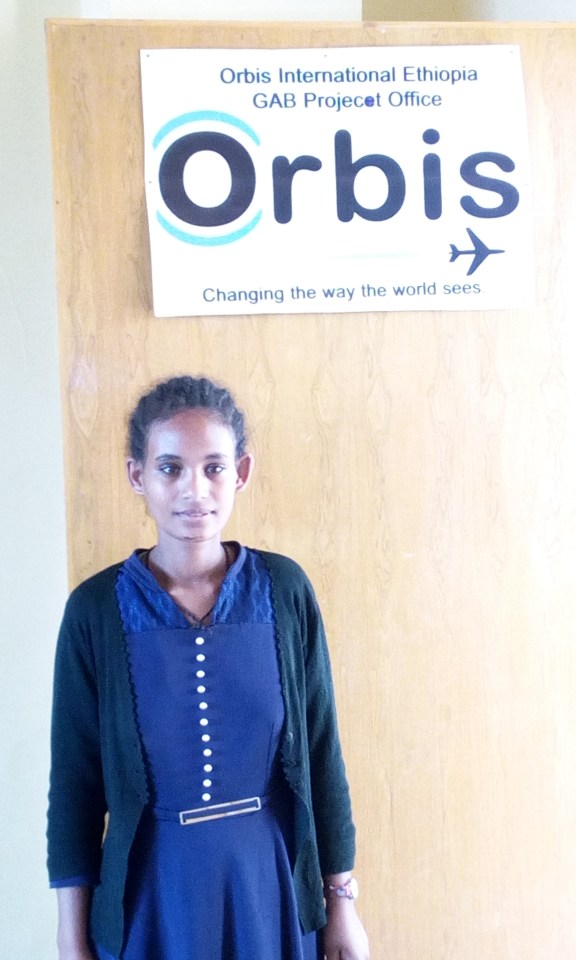
A sight-saving cataract operation costs just £24 and takes minutes to perform. To donate to our work visit https://eyegive.orbis.org/.
To find out more about Orbis UK’s work in Ethiopia visit HTTPS://GBR.ORBIS.ORG/EN/WHERE-WE-WORK/AFRICA/ETHIOPIA