Why raising the minimum wage is not the best way to help Britain’s poorest

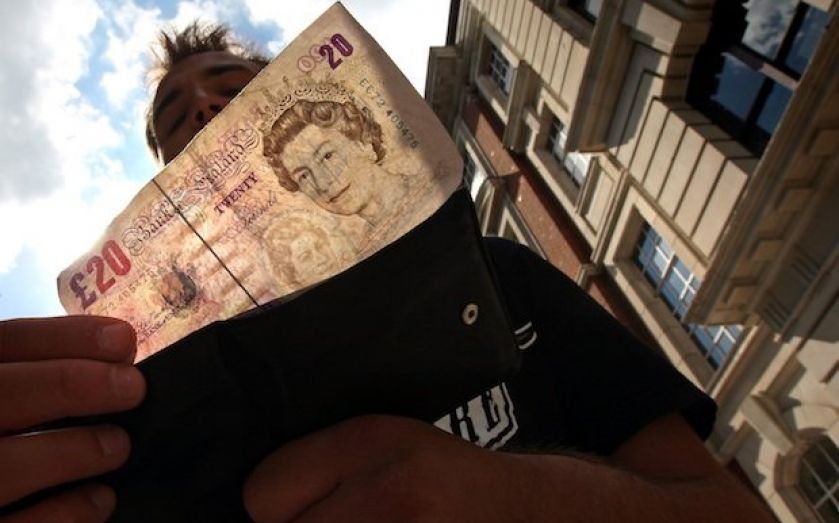
IT IS widely rumoured that the government is moving towards a commitment to increase the national minimum wage (NMW) well above levels suggested by the – usually fairly sensible – Low Pay Commission.
This may be good news for some workers, but I’m not convinced that it is sensible policy. Temporarily recognising the constraints on the public finances, politicians are trying to pass on to business the costs of helping the poorest-paid. But business does not ultimately bear the cost of government-mandated wage hikes. That falls on consumers, to the extent that cost increases are passed on, and more importantly on certain employees or potential employees – some of the very people the policy is meant to help.
While we must recognise the difficulties they face, low-paid workers are paid badly largely because their productivity is very low. If their wage rate rises arbitrarily, employers look for ways of substituting overseas workers for UK employees if output can be produced elsewhere (mostly manufacturing), using capital equipment instead of people (think self-check-outs in supermarkets), or reducing coverage in service fields (early closing in pubs and restaurants on slack nights).
The result is that fewer hours of work are offered by profit-seeking businesses – but also by revenue-constrained public and voluntary sector employers. This may not mean existing low-paid workers lose their jobs: there is not much evidence of that happening as a result of minimum wage increases either here or in the US. But hours may be reduced, employees may find their workload increased, or non-pay benefits (such as training or subsidised accommodation) may be trimmed.
The real impact falls on those seeking jobs. Rather than sacking existing workers (which can be costly and distressing), employers prefer to reduce new hiring and ask for more experience and qualifications. As a result, young people find it harder to get a toehold in the labour market. Among them, ethnic minorities typically get the toughest deal. Thomas Sowell, the prominent African-American economist, has argued against minimum wages in the US because any negative employment effects fall disproportionately on young black workers; the same is almost certainly true here.
Bear in mind, too, that the minimum wage is national, which means it has very different effects across the UK. In London, the NMW is only around 35 per cent of the median hourly wage; in regions like Wales, Northern Ireland, the North East and the North West, it is over 50 per cent. So following a significant increase in the minimum wage, you would not want to be a young job-seeker with few qualifications in Newcastle or Swansea.
The poorest-paid are also not necessarily in poverty. Well over half of minimum wage workers are part-time. Many are students, others are secondary earners in otherwise reasonably well-off households. So as an anti-poverty policy, it is poorly directed. Nor is it likely that the government will save much on in-work benefits like tax credits. Most of those on minimum wages do not access them. Those on housing benefit are likely to stay on it. And if job-seekers spend longer finding work as a consequence, other benefit spending is likely to increase.
Len Shackleton is professor of economics at the University of Buckingham, and economics fellow at the Institute of Economic Affairs.