Skip to content
Friday 14 August 2026London --:--Frankfurt --:--Zurich --:--
NewslettersSearchEN · DE
MorningWire

European business, markets and politics

FTSE 100
10,765.78
-0.06%
DAX
26,500.36
+0.76%
CAC 40
8,659.09
+0.10%
STOXX 50
6,565.32
+0.30%
  • Europe
  • Markets
  • Business
  • Economy
  • Technology
  • Politics
  • Opinion
More
GermanyFranceBankingAIEnergyFintechPropertyCapital Markets
  • Germany
  • France
  • Europe
  • Markets
  • Business
  • Economy
  • Technology
  • Politics
  • Opinion
  • DE
Wednesday 15 November 2023 9:20 am  |  Updated:  Wednesday 15 November 2023 11:00 am

Why the UK should not get carried away by the largest fall in inflation since 1992

By: Chris Dorrell

Add as a preferred source on Google
Could the Bank of England cut rates interest rates sooner than expected?

This morning’s larger than expected fall in inflation is not as important as you might expect, although it does confirm that the battle against price rises has entered a new phase.

The headline rate of inflation fell at its fastest pace since 1992 in October, mainly because a rapid increase in energy prices this time last year has fallen out of the annual comparison.

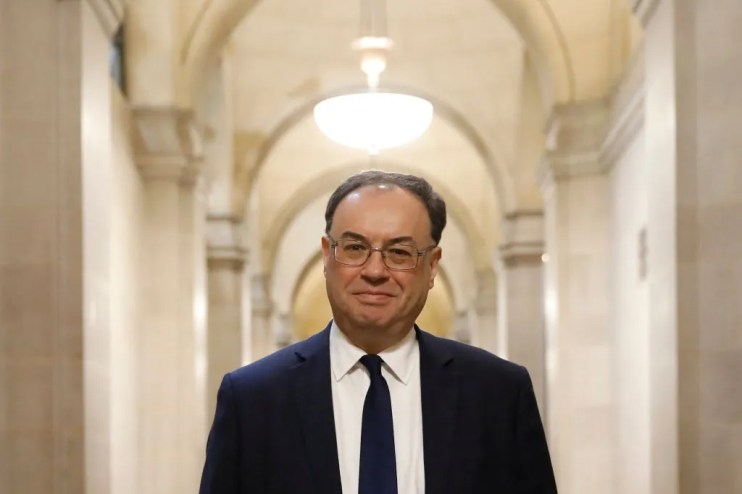
In other words the significant drop in inflation – from 6.7 per cent to 4.6 per cent – was more of a mechanical effect, largely predicted by economists and the Bank of England, headed by Andrew Bailey.

So how important are this morning’s figures?

The Bank’s current thinking on the direction of inflation and interest rates was set out in its November Monetary Policy Report.

A brief recap: Although inflation would fall fairly quickly between now and the end of the year, it would likely remain above target until the end of 2025 due to a tight labour market.

It suggested that while interest rates are unlikely to have to go any higher, persistent inflation would force the Bank to leave rates in restrictive territory for most, if not all, of 2024.

Put another way, central banks are no longer playing catch-up with a rapid increase in inflation driven by international energy markets. Instead they are slowly grinding down the spillover effects from the original price shock.

October’s figures do not dramatically change this fundamental narrative, although they may refine it. Especially as it gives a big check to Rishi Sunak, who has hit a major goal of halving inflation by the end of the year, in double-quick time.

Between September and October this year, prices did not rise at all. This compared to a 0.5 per cent increase last month.

“We knew big base effects were going to drag down the annual comparison, but now starting to see monthly prints (cautiously) consistent with two per cent inflation,” Simon French, head of research at Panmure Gordon, noted on Twitter.

Read more

As it happened: Stocks rise but oil tops $95; inflation eases

Man in suit and red tie speaking at a podium to an audience in a modern building.

More relevant that the headline 4.6% annual rate for U.K. CPI is the flat monthly rate in October. We knew big base effects were going to drag down the annual comparison, but now starting to see monthly prints (cautiously) consistent with 2% inflation.

— Simon French (@Frencheconomics) November 15, 2023

The large drop in headline inflation was also accompanied by meaningful progress on underlying measures of inflation, such as core inflation and services inflation. Both fell faster than the November report had forecast.

So, what will happen next?

Some analysts argued that this would allow the Bank to start cutting rates in the first half of next year.

“The latest inflation numbers should continue to assuage earlier concerns about the stubbornness of UK inflation,” Martin Beck, chief economic advisor to the EY Item Club said, predicting rate cuts would begin in spring.

Samuel Tombs, chief UK economist at Pantheon Macroeconomics, said “October’s consumer prices report should entrench expectations that the MPC will be able to start to reduce Bank Rate in about six months’ time”.

The Bank will want to see much more progress over the coming months to contemplate cutting rates however. Despite falling faster than expected, core inflation remains at 5.7 per cent while services inflation stands at 6.6 per cent.

Wage growth also remains too strong.

Excluding bonuses, annual wage growth fell to 7.7 per cent, down marginally from 7.8 per cent. Although this was in line with expectations the ONS noted it was still among the highest growth rate since records began in 2001.

“Unless wage growth softens sharply from here, and/or companies accept a major squeeze on their profit margins, inflation is not going to get back to the Bank of England’s two per cent target,” Chris Hare, senior economist at HSBC said.

And so it all comes back to the labour market, which remains tight despite the Bank’s rate hikes.

This suggests further progress will be slow. “The restrictions on labour supply and the stickiness of inflation expectations will mean that inflation fades slowly rather than suddenly,” Paul Dales, chief UK economist at Capital Economics said.

Today’s figures are a step in the right direction, but there’s still a long way to go.

Read more

Temporary inflation slowdown set to boost Burnham

Rising inflation graph with increasing percentage symbols, highlighting economic trends and financial market impact

Share this article

  • Facebook
  • X
  • LinkedIn
  • WhatsApp
  • Email

Similarly tagged content:

Sections

  • News

Categories

  • Economics

Related Topics

  • Bank of England
  • UK inflation
  • UK interest rates

Trending Articles

  • Revolut takes flight with launch of new airport lounges

  • Grandparents fund university degrees to avoid inheritance tax net

  • It’s not just Jason Arday, most of sociology is a scam

  • IT consultant ordered to pay £50,000 after being accused of stealing Soho House members’ personal details

  • Brompton Bicycle sues former adviser for ‘professional negligence’

More from Morning Wire

  • As it happened: Stocks rise but oil tops $95; inflation eases

    Markets
    Man in suit and red tie speaking at a podium to an audience in a modern building.
  • Temporary inflation slowdown set to boost Burnham

    Economics
    Rising inflation graph with increasing percentage symbols, highlighting economic trends and financial market impact
  • Bank of England holds interest rates but warns of rises to come

    Economics
    Bank of England headquarters in 2025, showcasing modern architecture and iconic London skyline in the background.
  • Hold interest rates but ‘sound hawkish’, Morning Wire Shadow MPC tells Bank of England

    Economics
    Andrew Bailey, Governor of the Bank of England, with the Bank of England building and Union Jack flag in the background
  • El Nino heatwaves to ‘fuel inflation next year’

    Economics
    Firefighter in helmet and uniform watching a blazing forest fire at night, red glow in the sky
  • Bank of England may set the stage for interest rate hikes this year

    Economics
    Bank of England recession warning
  • Bank of England to hold interest rates as oil price surge threatens UK economy

    Economics
    Bank of England building on Threadneedle Street, London, showcasing its historic architecture and financial significance
  • Interest rate cut is ‘off the table’, says Bank of England governor

    Economics
    Governor Andrew Bailey has launched a defence of the Federal Reserve's independence.
MorningWire

Independent European business, markets and political news for decision-makers.

Morning Briefing

Europe

  • Germany
  • France
  • Europe
  • UK & Ireland

Business

  • Markets
  • Banking
  • Technology
  • Energy
  • Property
  • Fintech

Editorial

  • Opinion
  • Editorial Policy
  • Corrections
  • Contact

Company

  • About Morning Wire
  • Privacy Policy
  • Terms of Use
  • Cookie Policy
© 2026 Morning Wire Ltd · Published by Morning Wire Media, Bahnhofstrasse 65, 8001 Zürich, Switzerland
Privacy · Terms · Cookies · Facebook