Why technology won’t transform every brand’s Fashion Week

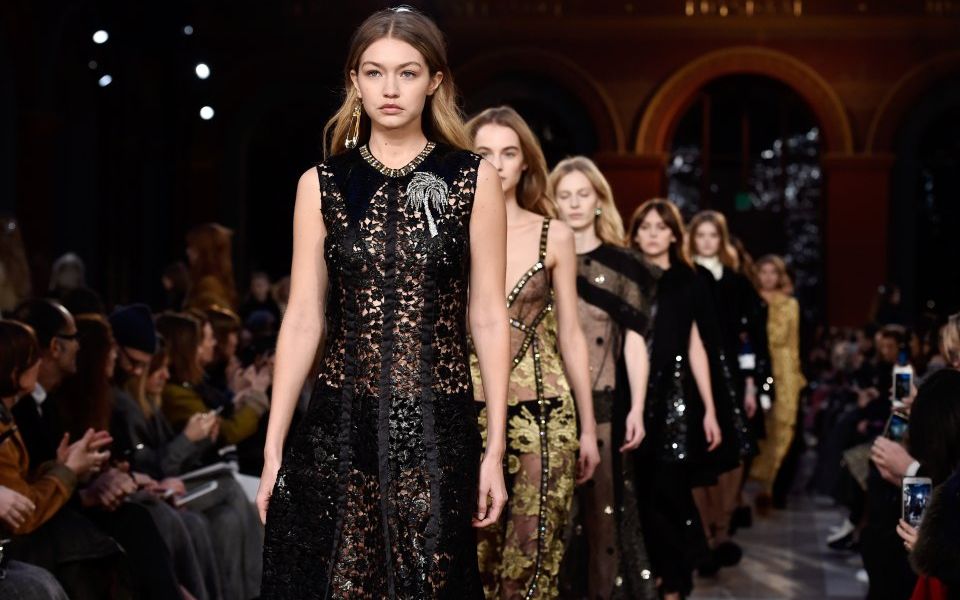
Now that this year’s Fashion Weeks in London, Milan, New York, and Paris have all come to a close, many people are questioning the role of a runway show in today’s age, and whether it could be brought into the twenty-first century.
Some brands are embracing the latest technology to satisfy modern consumer demands by making runway products immediately available to customers. For others, this goes against the very purpose of a runway show, and they vow never to break the traditions of their industry.
Most brands have already broken down some of the traditional exclusivity of runway events by live-blogging and live-streaming events – 35m users engaged with Paris Fashion Week 2017 via Instagram.
This provides a sharp contrast to the idea that a runway show is exclusively for press, buyers, and selected VIPs.
Seasonal disorder
A key challenge facing brands is the traditional lag between a runway show and the collection being made available, which is seen to be at odds with the “see it, buy it now” culture pervading online fashion.
The challenge for brands is keeping their customers engaged – a task made more difficult by the rise in pure play retailers recreating catwalk looks and making them available far sooner.
We have already seen fashion brands react to new service standards set by online retailers, such as ASOS and Net-a-Porter. But could this be the next shift for brands to make in order to stay current?
Some brands – like Burberry, Tommy Hilfiger, and Ralph Lauren – are tackling this issue head-on by making some products immediately available for purchase themselves.
This allows them to capitalise on the buzz and hype of a show to sell more of these products at full price than they might normally, leaving them with less stock to sell at a discount during sale.
Luxury brands and retailers are becoming increasingly reliant on discounts to attract and retain customers, which is a slippery slope for margins and brand perception – so a runway show would appear to be an invaluable asset to capitalise on.
However, not all brands have seen success from these tactics – Tom Ford has experimented and reverted to the traditional runway approach.
Shopping showdown
There’s also the question of whether a shoppable runway collection is really a true runway?
If a runway show demonstrates themes and trends, more than specific products, then anything immediately available has already gone through that process behind closed doors.
In some cases, shoppable runway products have already had an ad campaign to promote them before they even appear in a show.
Some people might think that this approach is actually diminishing the importance of a runway show for brands. It’s therefore no surprise to see that some brands are placing less emphasis on a few large seasonal collections, and instead launching smaller and more frequent collections.
Not only does this spread the risk of collections not delivering expected sales, but it can also increase repeat visits and engagement throughout a season, flattening out difficult periods.
Life of luxury
Of course, some brands will never alter their approach. These are the brands for which a traditional runway show is vital to their sense of heritage and exclusivity.
But while they would not challenge the traditional runway format, that doesn’t mean they aren’t innovating with new platforms and technology.
Chanel is the most followed luxury brand on Instagram, using social media effectively to engage followers. It can use its shows and the buzz generated to bring customers and aspirational shoppers into the brand experience.
Even if it only leads to the sale of a fragrance or make-up product, instead of purchasing the latest collection, shoppers are nonetheless developing a deep, long-term connection with the luxury brand.
Model standard
Finally, if everybody had shoppable runways, it simply wouldn’t be Fashion Week anymore.
While some brands will continue to test and innovate with real-time e-commerce, these are ones whose appeal is based on their willingness to take risks and push the boundaries within the collections themselves.
For other brands, whose appeal is in time-honoured heritage, a runway show will always be about a brand vision, immersion, and exclusivity – which is something far more important than just selling products.