Skip to content
Saturday 29 August 2026London --:--Frankfurt --:--Zurich --:--
NewslettersSearchEN · DE · FR
MorningWire

European business, markets and politics

FTSE 100
10,824.26
+0.29%
DAX
26,569.99
+0.77%
CAC 40
8,401.18
+0.98%
STOXX 50
6,485.67
+0.95%
  • Europe
  • Markets
  • Business
  • Economy
  • Regulation
  • Politics
  • Opinion
More
GermanyFranceEU InstitutionsCompetitionPublic AffairsBankingTechnologyEnergy
  • Germany
  • France
  • Europe
  • Markets
  • Business
  • Economy
  • Regulation
  • Politics
  • Opinion
  • DE
Tuesday 16 July 2019 12:28 pm  |  Updated:  Tuesday 16 July 2019 1:01 pm

Why the big supermarkets can’t deliver food in a sustainable, plastic-free way

By: Ben Patten

Add as a preferred source on Google
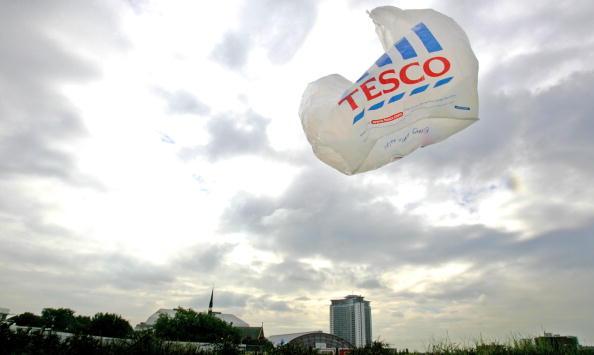
London, UNITED KINGDOM: A Tesco plastic bag blows in the wind on a supermarket parking lot in west London 20 September 2005. Tesco, the biggest British supermarket chain, posted an 18.7 percent increase in interim profits and gave an upbeat outlook, but warned about the impact of higher oil costs. Tesco -- whose tills ring up one pound in every eight spent by shoppers in Britain -- said it had delivered a strong performance in a challenging trading environment. Pre-tax profit before one-off charges and goodwill items jumped to 908 million pounds (1.349 billion euros, 1.639 billion dollars) in the 24 weeks to August 13, from the same period of the previous year. AFP PHOTO/ODD ANDERSEN (Photo credit should read ODD ANDERSEN/AFP/Getty Images)

The big four grocers have protected their dominance well over the last 40 years, using their control of the supply chain and access to customers to create untouchable economies of scale. 

However, the digital revolution is changing the rules for the food and drink market.

While the initial changes created by digital seemed to be all about the efficiency of a different operational model and the extra convenience on offer to customers, what’s emerged is more interesting.

The effect is not just about big online retailers taking offline business, though there is some of that going on, but more about the fragmentation of the entire food and drink market. 

Now, new businesses can create specific propositions for customer types and meal occasions. They can do this for three reasons.

The first is advertising through social media, which has made it possible to target and cheaply acquire customers with a specific interest. The second reason is that a new business can now ship cheaply to every household in the UK, mainly because of the rapid growth of the courier networks to meet e-commerce demand. And the third reason is that by selling a focused range or proposition, these companies reach buying economies of scale quickly.

The big brick and mortar retailers mainly compete on price, but they’re finding that smaller and nimbler companies can access similar buying economies. The new businesses are also offering a lot more value to their audiences by building a relationship founded on their understanding and passion for the things their customers love.  

Read more

‘Cheers to Beer’ Celebrates the Drink at the Heart of Life’s Meaningful Moments

So as the big grocers’ market share diminishes, so do their economies of scale and the control they’ve exerted for so long.

This makes it a difficult time for them to respond to the other big drivers of change. Let’s take the example of one of the multiple environmental concerns that are confronting the industry: the scourge of single-use plastic. 

For established retailers, the task of removing plastic from the value chain presents some tough obstacles. Plastic is ingrained in their business and operational model, helping them control the quantities products are bought in, meeting now established logistical and operational needs, and extending shelf lives.

The same is true for the brands, and so much of their brand equity is tied up in their plastic packaging. To remove plastic therefore requires a root and branch change of the grocery value chain.

This is scary for the big grocers. They can see a legislative wave is coming right behind the current wave of consumer interest, but it is hard for them to justify making a change that only a percentage of their customers will value or pay more for initially. 

Just as the auto industry was slow to embrace the electric car, the established food industry is not keen to risk change.

It’s new businesses that are able to tackle the plastic problem from scratch, and with people becoming increasingly passionate about minimising waste, these nimble retailers will increase their market share in the process.

Read more

We take a food and drink Odyssey through the Square Mile

Libby in a warrior costume with a helmet, holding a glass of red wine, with an ancient ship and people in background.

Share this article

  • Facebook
  • X
  • LinkedIn
  • WhatsApp
  • Email

Similarly tagged content:

Sections

  • Jobs and Money
  • News

Categories

  • Business
  • Personal Development
  • Retail

Trending Articles

  • Pensioners to hand over bank statements in government benefits crackdown

  • Jamie Carragher: HMRC petitions for Sky Sports star to be declared bankrupt

  • Brewdog founder James Watt hits out at ‘total silence’ over new venture

  • Lloyds Bank and Halifax users unable to use app in latest outage

  • As it happened: FTSE 100 falls but Nasdaq soars after Nvidia sales boom

More from Morning Wire

  • ‘Cheers to Beer’ Celebrates the Drink at the Heart of Life’s Meaningful Moments

    Business Wire
  • We take a food and drink Odyssey through the Square Mile

    Life&Style
    Libby in a warrior costume with a helmet, holding a glass of red wine, with an ancient ship and people in background.
  • Supermarkets ‘actively shielding’ shoppers as food inflation falls again

    Retail
    Shopper in a supermarket produce aisle browsing various packaged vegetables and fruits.
  • Retailers hit back at Healey’s ‘profiteering’ threat

    Retail
    Chancellor John Healey smiling, wearing a navy suit, white shirt, and red tie.
  • El Nino heatwaves to ‘fuel inflation next year’

    Economics
    Firefighter in helmet and uniform watching a blazing forest fire at night, red glow in the sky
  • Beyond your 9-5: things to explore in the Square Mile 

    Partner
    Three friends enjoying drinks on a rooftop bar with St Pauls Cathedral dome in the background.
  • Budget supermarket Iceland’s sneaky jab at Big Four management consultants

    Retail
    Iceland has reported its latest financial results.
  • Soaring energy bills set to fuel inflation spike

    Economics
    Smartphone displaying an energy bill notification with British coins and a banknote nearby.
MorningWire

Independent European business, markets and political news for decision-makers.

Morning Briefing

Europe

  • Germany
  • France
  • EU Institutions
  • Europe

Business

  • Markets
  • Business
  • Economy
  • Regulation
  • Competition
  • Public Affairs

Editorial

  • Opinion
  • Editorial Policy
  • Corrections
  • Contact

Company

  • About Morning Wire
  • Privacy Policy
  • Terms of Use
  • Cookie Policy
© 2026 Morning Wire Ltd · Published by Morning Wire Media, Bahnhofstrasse 65, 8001 Zürich, Switzerland
Privacy · Terms · Cookies · Facebook