Why the state should stay out of the kitchen

A think tank has seriously floated the idea of government-run restaurants. The idea belongs in an age of wartime rationing, not the thriving, free-market food scene the City enjoys today, says Matthew Kilcoyne
One wonders if the festive sherry stocks have been hit rather hard in certain London think tanks this Christmas. How else to explain the remarkably wobbly vision for Britain’s food sector that’s emerged recently?
Nesta – The “UK innovation for social good” which is supported by lottery funding – has used our public backing to look into state intervention in dining, complete with misplaced wartime analogies and starry-eyed dreams of government-run canteens. Meanwhile the Autonomy Institute seems to have imbibed rather more deeply, producing a genuinely startling proposal for local authorities to effectively commandeer and close the cloud kitchen sector. Less Pot-au-feu on their menu and more Pol Pot.
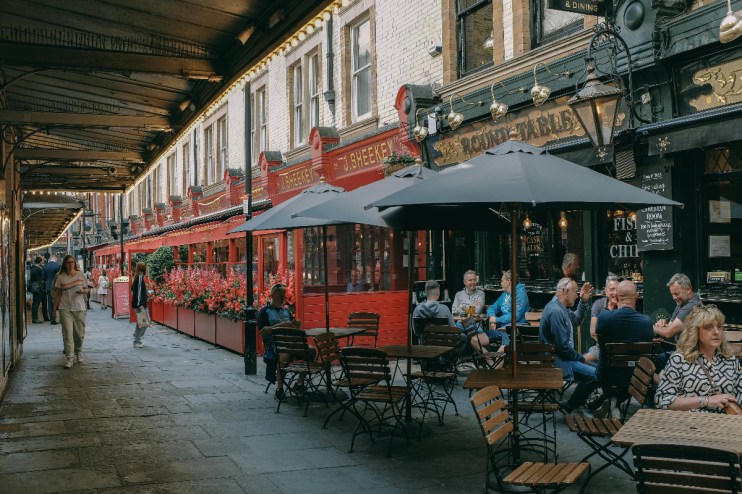
Britain’s food scene has undergone a remarkable transformation over recent decades, driven entirely by private enterprise and consumer choice. From City institutions like Sweetings that have served perfectly poached fish to pinstriped patrons since 1889 (without public subsidy we might add), to the explosion of grab-and-go outlets serving everything from poke bowls to protein-rich vegan wraps, the market has delivered astonishing variety and innovation. You can get food from all over the world in the City now, at basically any time of day, in a huge variety of forms and price points. Whether it’s a working lunch from Pret, a Friday night curry from a cloud kitchen, a liquid lunch at the Lamb, or a slap-up meal with a client contact, private enterprise has created options for every budget, diet and occasion.
‘Local farms’ in Peckham?
Yet the Autonomy Institute wants councils to leverage property rights to convert thriving cloud kitchens into state-managed facilities. They even suggest sourcing from “local farms” – apparently unaware that the fields of Brixton and parking lots of Peckham might struggle to supply commercial kitchens at scale.
Nesta’s paper, while less radical, demonstrates a concerning detachment from economic reality. They earnestly compare modern Britain’s dynamic food sector to wartime rationing, suggesting that World War II’s British Restaurants offer a template for contemporary dining. Even more remarkably, they point to Parliament’s £7m-a-year subsidised dining as some sort of model – because if there’s one thing the British public is crying out for, it’s for their local council to replicate the dining privileges of Westminster.
Both papers fundamentally misunderstand why cloud kitchens have flourished. They’ve rapidly scaled precisely because they solve real market challenges – reducing overhead costs, optimising kitchen space usage and meeting growing consumer demand for delivery options. They’ve created opportunities particularly for immigrant and minority entrepreneurs, who can start food businesses with lower capital requirements than traditional restaurants demand.
What the sector actually needs is lower priced energy, lower business rates, an end to rises in taxes, the economy to grow so their customers have money to spend and for the farmers that supply their food to not be punished by parliament
The Autonomy Institute’s proposals would actively harm this entrepreneurial ecosystem. Their suggestion that councils should use property rights to control the sector misunderstands both the economics of cloud kitchens and the capabilities of local authorities. Consider the innovation we’ve seen in the plant-based food sector alone – from the Planted Food Lab to Leon’s vegan offerings. Would municipal management have delivered such variety?
Even Nesta’s more restrained vision of public sector involvement betrays a fundamental misreading of why Britain’s food scene thrives: it’s precisely the absence of central planning that allows for innovation and diversity. The market has already created the variety and affordability they seek to engineer through state intervention. Their solution to Britain’s supposed dining crisis? More bureaucrats with clipboards deciding what constitutes an appropriately healthy lunch. No, what the sector actually needs is lower priced energy, lower business rates, an end to rises in taxes, the economy to grow so their customers have money to spend and for the farmers that supply their food to not be punished by parliament.
The only thing I’d like the state to be involved in is improving the information companies already have to register when they set up and file returns annually. When places go bust directors could have a right to submit a response for Companies House to keep on file and make public the reason they think it failed. With hospitality firms expecting huge numbers to fail we could see why they think they folded — be that difficulties hiring, inflation on core costs or tax rises putting them into the red. More information may be less comfortable to read but it’d help policy and the next guys and gals setting up shop avoid the same fate.
Rather than exploring new frontiers for state intervention, we should celebrate and encourage the entrepreneurial innovation that characterises modern British dining. The best thing the government could do is to stay out of the kitchen – and perhaps our think tank friends might do the same, at least until the festive spirits wear off.
Matthew Kilcoyne is a free market economist and commentator