Skip to content
Sunday 13 September 2026London --:--Frankfurt --:--Zurich --:--
NewslettersSearchEN · DE · FR
MorningWire

European business, markets and politics

FTSE 100
10,650.44
+0.39%
DAX
25,568.56
+0.82%
CAC 40
8,179.77
+0.78%
STOXX 50
6,325.13
+0.90%
  • Europe
  • Markets
  • Business
  • Economy
  • Regulation
  • Politics
  • Opinion
More
GermanyFranceEU InstitutionsCompetitionPublic AffairsBankingTechnologyEnergy
  • Germany
  • France
  • Europe
  • Markets
  • Business
  • Economy
  • Regulation
  • Politics
  • Opinion
  • DE
Thursday 23 August 2018 11:38 am  |  Updated:  Friday 24 May 2019 7:46 pm

Why do we flock to overcrowded tourist traps? Because of rational choice, that’s why

By: Paul Ormerod

Add as a preferred source on Google

I am in Edinburgh at the festival, where even Jeremy Corbyn has appeared. Disappointingly, he was not playing the role of Carmela Soprano, the mafia don’s wife who is always present but never involved.

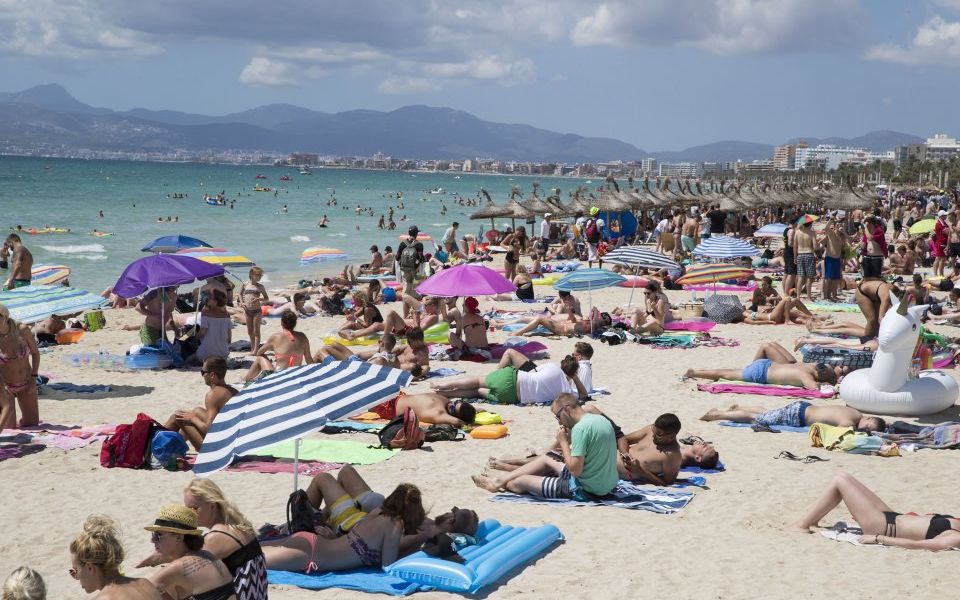
Visiting Edinburgh in the height of summer has brought home directly the problem of tourist overload. This tendency of tourists to flock to certain places, while neglecting most others, raises questions for the economic theory of rational consumer choice.

Take the Isle of Skye – it’s very attractive, but so are other Scottish islands. Or the Piazza San Marco in Venice – it’s stunning, but so are the cathedral squares in other Italian cities.

Read more: Get ready to dodge even more tourists in 2017 as the pound stays low

From a rational choice perspective, it seems hard to account for the fact that visitor numbers at these places are so much greater than their competitors.

The theory – which assumes that we base decisions on logical calculations in order to make the most of a situation – does help to explain why tourists would choose to visit places that require less time and effort to get there. For instance, Skye has a bridge, whereas islands like Mull involve travelling via ferry.

But the rational choice framework appears to struggle to explain the massive concentrations of tourist numbers at particular locations.

When visiting Skye, my wife and I decided to escape the crowds by driving down Glen Brittle – an austere and bleak glen which finishes at a dead end.

I was astonished. A few miles along, the single-track road was virtually blocked by hundreds of vehicles, both on the road and balanced precariously on the boggy verges.

The attraction was the Fairy Pools, a series of small pools and waterfalls in one of the many streams which flow down from the hills.

Now, there are hundreds of such waterfalls in the Highlands, many of which are more dramatic. From a rational perspective, there seems to be no basis for the massive popularity of the Fairy Pools.

But Sushil Bikhchandani and colleagues from the University of California published a paper in the top ranked Journal of Political Economy way back in 1992. The specific purpose was to account for “herding” behaviour within the framework of rational choice. Or, as the authors put it, to identify when it is optimal for an individual to follow the behaviour of others without regard to his or her own information.

In their model, an individual has both private and public information and assigns weights to the two when making a choice. A new piece of information arrives, and the weights are updated.

When you read on the internet that the Fairy Pools are fantastic, you increase the weight on the public information which you have.

It is easy to see how, in such circumstance, certain things can become incredibly popular. They are not necessarily popular on account of their inherent characteristics – it’s their existing popularity that makes them more popular.

It was consoling, as we pondered how to escape the massive traffic jam in remote Glen Brittle, that rational choice theory is indeed able to explain the phenomenon.

Read more: More tourists came to the UK last year than ever before

Share this article

  • Facebook
  • X
  • LinkedIn
  • WhatsApp
  • Email

Similarly tagged content:

Sections

  • Markets & Economics
  • News

Categories

  • Business
  • Markets

Trending Articles

  • Wetherspoon boss: ‘Not up to Burnham’ to choose who is on the high street 

  • Badger Beer maker Hall & Woodhouse doubles profit ahead of tie-up with James May

  • Four interest rate hikes loom despite surprise economic growth

  • Primark sales slip as owner dresses up retailer for demerger

  • Barclays faces legal scrutiny over role in £90m ‘Ponzi scheme within a Ponzi scheme’

More from Morning Wire

  • The Highland tourist tax: Is Scotland pricing out whisky tourists?

    Whisky
    Red deer stag on a heather-covered hillside overlooking a loch and mountains in the Scottish Highlands
  • Hospitality sector blasts Burnham’s uncapped tourist tax

    Economics
    Andy Burnham and Angela Rayner laughing, looking at a document in a casual meeting setting
  • Burnham urged to axe tourist tax expansion in devolution drive

    Hospitality
    Andy Burnham, Mayor of Greater Manchester, speaking outdoors with a lapel microphone on his suit jacket.
  • Holiday Inn owner IHG urges Burnham to drop tourist tax

    Hospitality
    Neetu Mistry, a smiling woman with dark hair, wearing a navy suit and white shirt, sitting on a teal couch
  • The only answers to over-tourism are prices or queues

    Opinion
    Tourists photograph the ornate white marble Trevi Fountain in Rome, Italy.
  • Is it ever ok to wear shorts to the office?

    Opinion
    Man in shorts and sunglasses walking through an office, holding a Free Palestine mug, while colleagues watch in disbelief.
  • TOURISE and Oxford Economics Release New Global Report on Tourism Resilience in an Era of Permanent Disruption

    Business Wire
  • Why Albania’s Tirana could be the city break of the future

    Life&Style
    Radisson Collection hotel in Tirana, Albania, featuring a swimming pool, palm trees, and an external fire escape.
MorningWire

Independent European business, markets and political news for decision-makers.

Morning Briefing

Europe

  • Germany
  • France
  • EU Institutions
  • Europe

Business

  • Markets
  • Business
  • Economy
  • Regulation
  • Competition
  • Public Affairs

Editorial

  • Opinion
  • Editorial Policy
  • Corrections
  • Contact

Company

  • About Morning Wire
  • Privacy Policy
  • Terms of Use
  • Cookie Policy
© 2026 Morning Wire Ltd · Published by Morning Wire Media, Bahnhofstrasse 65, 8001 Zürich, Switzerland
Privacy · Terms · Cookies · Facebook