Will carbon capture work? Nobody knows – and that’s the problem

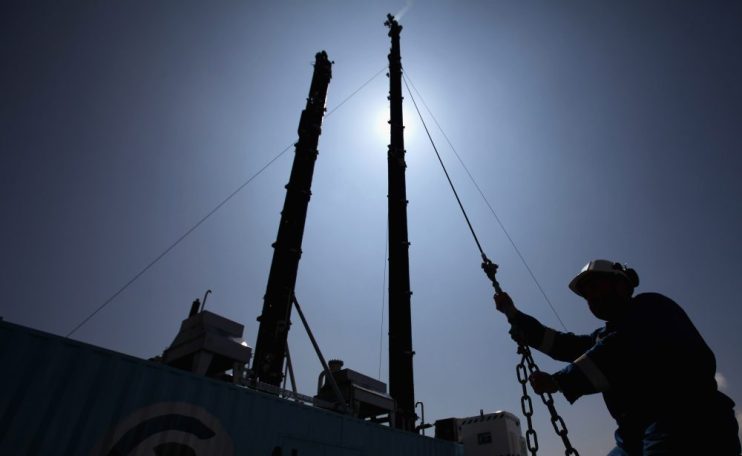
UK’s clumsy carbon capture punt is result of top down intervention – but there’s a better way, writes Paul Ormerod
The government confirmed this month the funding for the UK’s first carbon capture sites. The technology, it is claimed, captures CO2 emissions before they reach the atmosphere and stores them away safely.
Based on Merseyside and Teesside, the project will have almost miraculous powers. It will create 4,000 jobs directly, as many as 50,000 in total, and will help “turbocharge” the low carbon hydrogen sector by paving the way for the UK’s first large-scale hydrogen production plant.
If it really can do all of these things, the cost at a mere £21.7bn is a snip.
But there seems to be a serious problem with its credibility. For example, George Monbiot, a leading environmentalist, denounced the scheme in the Guardian as a “white elephant”.
Monbiot argues that the true cost of the scheme will be very much larger. The £21.7bn is for construction only, which, judging by other large public sector capital projects, is likely to be a substantial underestimate. Further, in terms of operations, the cost of carbon capture, unlike solar and wind, has not fallen for 40 years.
Great British Energy, another scheme of Ed Milliband’s, is cheap in comparison. At a cost of only £8.7bn, this company will “engage with investors and wider markets to create an investment offer that seizes the opportunities of the transition to our clean energy future”.
Again, there is widespread scepticism about the success of this project.
In a wider context, however, it is clear that the problem of emissions and climate change will only be solved by the sorts of technological innovation which both these projects aim to carry out.
The obvious alternative way of curbing energy consumption is by raising the price. But time and time again we have seen that Western electorates will simply not stand for it.
The classic example is when world energy prices doubled after the start of the war between Russia and the Ukraine. Far from welcoming this as a signal to conserve energy, governments bent over backwards to provide subsidies so that their voters could continue to use just as much energy as they were doing before the price went up.
One way of looking at both the carbon capture scheme and Great British Energy is as research and development projects. The consensus of opinion is that neither of them will necessarily succeed. This is because they are attempting to innovate in the area of clean energy. And the success or otherwise of the process of innovation is inherently uncertain.
The state does have a role to play in funding innovation, particularly where either the scale or the level of uncertainty is such that that the private sector is reluctant to take up the challenge.
The basic problem with this approach is that it does involve the public sector trying to pick the winning technology. So carbon capture has been selected, despite the reservations of outside experts.
An alternative is an approach pioneered by economics Nobel Laureate Michael Kremer of the University of Chicago.
Called Advanced Market Commitments (AMC), the concept has been applied successfully by Kremer and colleagues, mainly in developing countries.
The government specifies a desired outcome. But it is one which requires genuine innovation to deliver and where the way to achieve it is not known in advance.
Instead of trying to pick the winner, the government essentially guarantees a market to the private company which does succeed and provides sufficient incentive for companies to take part.
The design of a good AMC scheme involves many subtleties, particularly when the outcome involves, as Kremer puts it, “distant technological targets”.
But this market-based approach to innovation seems a better way to proceed than the top-down attempt to pick winners, an approach which has failed many times in the past.