‘Wind power, not windfall taxes,’ says energy sector to incoming PM Rishi Sunak

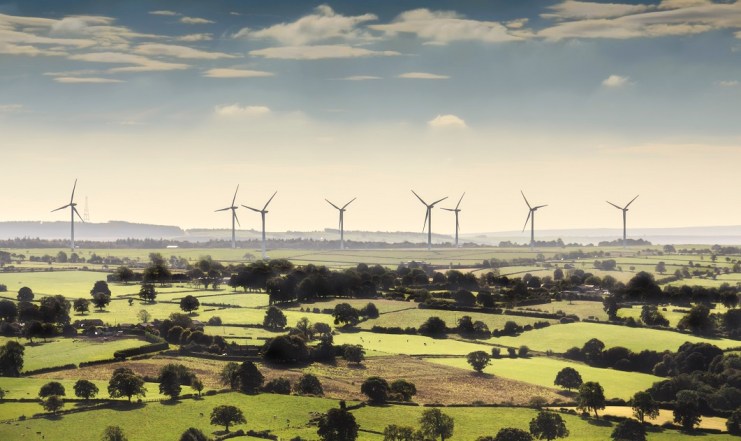
Industry bodies across the energy sector urged soon-to-be Prime Minister Rishi Sunak to boost domestic energy generation such as onshore wind power, and not jeopardise investment with new levies and legal hurdles.
Renewable UK, the leading trade association for wind, wave and tidal power called on the incoming leader to scrap Government plans to temporarily cap renewable revenues – known as the ‘cost-plus revenue limit.’
The short-lived Liz Truss administration proposed the cap earlier this month as part of the Energy Prices Bill, which would apply to renewable and nuclear electricity generators from next year.
The mechanism is intended to stop low carbon generators benefitting from abnormally high wholesale costs driven by spikes in gas prices, forcing up costs for consumers even though renewable energy is generally cheaper to produce.
However, Renewable UK feared it would incentivise funding towards fossil fuels ahead of renewables, with North Sea oil and gas operators benefitting from investment relief in the Energy Profits Levy.
It said: “We’re urging Sunak to reassess of some of the Conservatives’ recent measures which risk undermining confidence among investors, such as the energy price cap which could skew investment towards fossil fuels.”
Back onshore wind, urges Renewable UK
Alongside scrapping proposals from the Truss government, the energy body also argued that the Sunak should keep some of the supply side reforms unveiled by the former administration.
This includes its plans to liberalise planning reforms so that new energy projects can be built across the country to boost supply security and drive down bills.
It said: “We’re also urging the new Prime Minister to maintain the Conservatives’ commitment to lifting the block on onshore wind in England, as it has the support of over 70 per cent of the public and over 80 per cent of Conservative voters.”
Onshore wind projects have stagnated across the UK since the Conservative Government brought in tighter planning requirements for building new projects in 2015.
According to research from Dr Rebecca Windemer at the University of West of England, the maximum installed capacity of wind farms (in MW) granted planning permission between 2016-2021 is just 2.6 per cent of those granted permission between 2009-2014.
During the leadership hustings for the previous contest against Liz Truss this summer, Sunak pledged to keep the de-facto ban on building any new onshore wind farms if he became Prime Minister.
Sunak told The Telegraph in July: “Wind energy will be an important part of our strategy, but I want to reassure communities that as Prime Minister I would scrap plans to relax the ban on onshore wind in England, instead focusing on building more turbines offshore.”
It is unclear whether his views on the issue have since evolved.
Renewable UK also urged Sunak to reform clean power actions to boost the volume of new capacity each year, and a new remit for Ofgem so it could invest in grid infrastructure to meet an anticipated boom in renewable projects over the coming decades.
OEUK warn against windfall tax expansion
Meanwhile, North Sea industry group Offshore Energies UK (OEUK) warned against further unsettling the investment climate through more expansions to the windfall tax.
Sunak unveiled the Energy Profits Levy, in May earlier this year, which imposes a further 25 per cent levy on domestic oil and gas producers over the next three years.
This is on top of the 40 per cent special rate of corporation tax North Sea operators already pay, meaning 65 per cent of their profits are now taxed.
Labour is pushing to backdate the tax, and apply it to profits from January 2022 rather than May.
It also wants to get rid of the government’s tax relief scheme for oil and gas companies, which provides up to 91 per cent tax savings for companies that invest in domestic projects.
Deirdre Michie, OEUK’s chief executive, said that OEUK members are shielding the UK from the worst impact of supply shortages by “producing energy for the whole nation.”
The industry leader pledged to work with “politicians of all parties”, including Sunak’s incoming administration.
She said: “The UK needs to secure billions of pounds for offshore investments if it is to keep producing the gas, oil and offshore wind, plus other low-carbon energies, needed for future growth and productivity, and especially for the transition to net zero.
“The scale and longevity of that investment means it is critical to establish a sustainable and competitive fiscal regime in the timeframe of this parliament, to secure the UK’s energy future.”
The UK produces around 45 per cent of its gas domestically – and relies on Norway as its chief overseas partner, which meets 38 per cent the country’s gas needs.
The Climate Change Committee, Westminster’s independent advisory group, predicts half of the UK’s energy requirements between now and 2050 will still be met by oil and gas, and as much as 64 per cent of UK energy needs between 2022 and 2037.
Current chancellor Jeremy Hunt has refused to rule out expanding the windfall tax, confirming to Parliament that “nothing is off the table.”