Skip to content
Thursday 27 August 2026London --:--Frankfurt --:--Zurich --:--
NewslettersSearchEN · DE · FR
MorningWire

European business, markets and politics

FTSE 100
10,792.54
-0.79%
DAX
26,367.24
+0.31%
CAC 40
8,319.87
-1.68%
STOXX 50
6,424.73
-0.71%
  • Europe
  • Markets
  • Business
  • Economy
  • Regulation
  • Politics
  • Opinion
More
GermanyFranceEU InstitutionsCompetitionPublic AffairsBankingTechnologyEnergy
  • Germany
  • France
  • Europe
  • Markets
  • Business
  • Economy
  • Regulation
  • Politics
  • Opinion
  • DE
Monday 20 June 2022 6:03 pm  |  Updated:  Monday 20 June 2022 6:21 pm

Windfarms on to a windfall through delaying start of contracts

By: Nicholas Earl

Add as a preferred source on Google

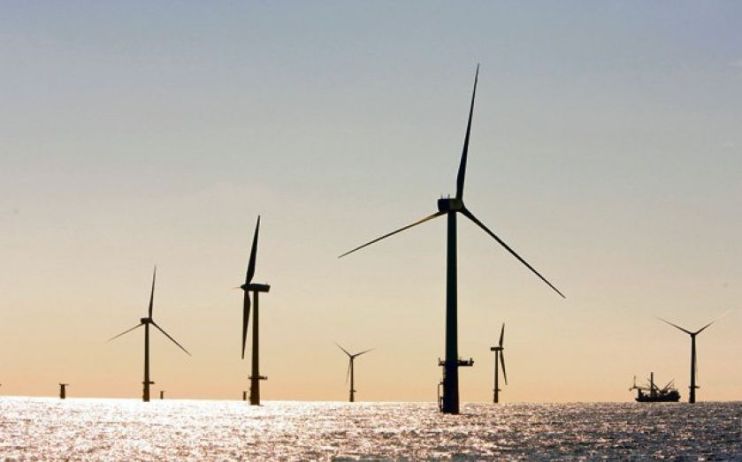
Offshore windfarms operators that delayed the start of their ‘contracts for difference’ (CfD) would have made significantly greater profits this year than other operators, revealed Cornwall Insight.

Data collected from the energy specialist suggests shows a significant commercial interest in stalling on the beginning of contracts in the sector.

Under the Government’s CfD agreement, successful generators are awarded a ‘strike price’ for every unit of power they generate through a competitive auction process.

CfD supported assets include a variety of different renewable technologies, such as offshore wind.

If power prices go above the strike price, generators pay the Low Carbon Contracts Company (LCCC) the difference, and vice versa.

There have been widespread reports operators of offshore windfarms with CfD agreements are choosing to delay the start of their CfD terms in order to take advantage of high wholesale power prices and avoid having to pay additional revenue back to the LCCC.

This is backed by Cornwall Insight’s findings, which revealed strike prices for offshore wind in Allocation Round 2 held in 2017 were set at £73.71/per megawatt hour (MWh) and £94.81/MWh.

Read more

Rehlko Defines What It Takes to Build AI-Ready Power Infrastructure as Data Center Energy Demands Evolve

This compares unfavourably with the Intermittent Market Reference Price (IMRP) – which is used to determine CfD payments in each hour for the offshore windfarms – which has averaged £187.42/MWh since the start of 2022 up to 14 May.

Of the 3,190 hourly periods from the start of the year to 14 May, the IMRP has been higher than £73.71/MWh in 3,072 (96 per cent) and higher than £94.81/MWh in 2,892 (91 per cent) of them.

If plants with these Strike Prices had activated their CfDs at the start of the year, this would have resulted in significant paybacks to the LCCC.

Under current regulations, theoretically, an offshore windfarm can commission anywhere within a three-year window, with current assets that are now operational but have not yet activated their CfD making use of this to make additional revenue on the wholesale market.

Lee Drummee, analyst at Cornwall Insight said: “The CfD mechanism is largely an effective tool for encouraging investment in renewables, whilst guarding against excess profits, and rising consumer prices. There are some fears that alternative suggestions on how to control returns, including the windfall tax, could be counterproductive to the UK’s decarbonisation efforts.”

“However, there will also be questions raised around the fairness of generators in taking such an approach to their CfD contract and whether the CfD terms should be amended for future rounds to account for commissioning during periods of very high market prices.”

Read more

Osmose Europe Ltd. Strengthens and Expands Electric Utility Infrastructure Solutions with the Acquisition of MP Power Ltd.

Share this article

  • Facebook
  • X
  • LinkedIn
  • WhatsApp
  • Email

Similarly tagged content:

Sections

  • News

Categories

  • Business

Related Topics

  • Energy

Trending Articles

  • Jamie Carragher: HMRC petitions for Sky Sports star to be declared bankrupt

  • Andy Burnham hints at tax rises in Autumn Budget

  • Brewdog founder James Watt hits out at ‘total silence’ over new venture

  • Lloyds Bank and Halifax users unable to use app in latest outage

  • Economists urge Bank of England to halt bond sales as borrowing costs climb

More from Morning Wire

  • Rehlko Defines What It Takes to Build AI-Ready Power Infrastructure as Data Center Energy Demands Evolve

    Business Wire
  • Osmose Europe Ltd. Strengthens and Expands Electric Utility Infrastructure Solutions with the Acquisition of MP Power Ltd.

    Business Wire
  • Gradiant Expands US Operations with New Leadership, Office Openings, and Long-Term Services Contracts

    Business Wire
  • Net zero and DEI targets cut from procurement rules as firms pressed to raise pay and hire NEETs

    Politics
    Louise Haigh, Andy Burnham, and another man smiling in front of a dark door with 10 visible.
  • Rehlko Expands Power Plus™ Connected-Services Capabilities, Enhancing Value Across Installed Base

    Business Wire
  • Balfour Beatty ups profit forecasts as it defies construction gloom

    Transport & Infrastructure
    Balfour Beatty construction site showcasing cranes, workers, and building progress against a city skyline backdrop
  • Supermarkets ‘actively shielding’ shoppers as food inflation falls again

    Retail
    Shopper in a supermarket produce aisle browsing various packaged vegetables and fruits.
  • Kolibri Global Energy Inc. Announces Another Record for Its Highest Quarterly Revenue of $22.5 Million With a 46% Production Increase and a 197% Net Income Increase for the Second Quarter of 2026

    Business Wire
MorningWire

Independent European business, markets and political news for decision-makers.

Morning Briefing

Europe

  • Germany
  • France
  • EU Institutions
  • Europe

Business

  • Markets
  • Business
  • Economy
  • Regulation
  • Competition
  • Public Affairs

Editorial

  • Opinion
  • Editorial Policy
  • Corrections
  • Contact

Company

  • About Morning Wire
  • Privacy Policy
  • Terms of Use
  • Cookie Policy
© 2026 Morning Wire Ltd · Published by Morning Wire Media, Bahnhofstrasse 65, 8001 Zürich, Switzerland
Privacy · Terms · Cookies · Facebook