Skip to content
Sunday 16 August 2026London --:--Frankfurt --:--Zurich --:--
NewslettersSearchEN · DE
MorningWire

European business, markets and politics

FTSE 100
10,750.11
-0.21%
DAX
26,440.31
+0.53%
CAC 40
8,636.80
-0.16%
STOXX 50
6,539.59
-0.09%
  • Europe
  • Markets
  • Business
  • Economy
  • Technology
  • Politics
  • Opinion
More
GermanyFranceBankingAIEnergyFintechPropertyCapital Markets
  • Germany
  • France
  • Europe
  • Markets
  • Business
  • Economy
  • Technology
  • Politics
  • Opinion
  • DE
Wednesday 17 January 2024 5:30 am  |  Updated:  Wednesday 24 January 2024 5:07 pm

With 2023 the world’s hottest year on record, business must take accountability on climate change

By: Rich Gilmore

Add as a preferred source on Google
carbon credits global warming climate change
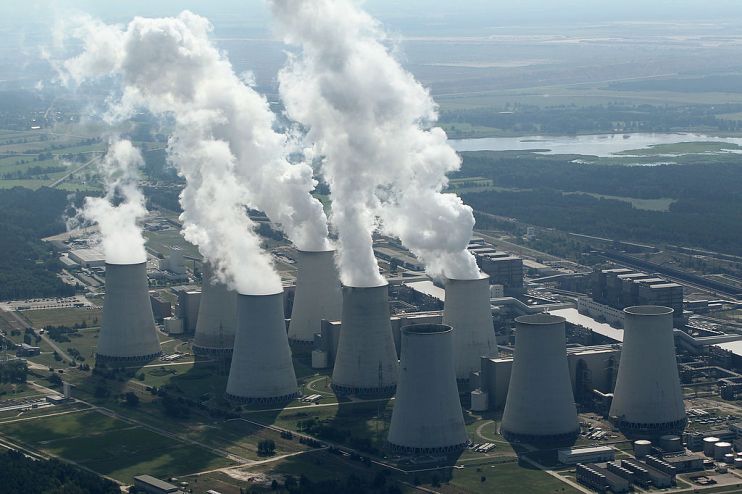
JAENSCHWALDE, GERMANY - AUGUST 20: Steam rises from cooling towers at the Jaenschwalde coal-fired power plant on August 20, 2010 at Jaenschwalde, Germany. The Jaenschwalde power plant is one of the biggest single producers of CO2 gas in Europe. The area of northern Saxony and southern Brandenburg is scarred with active and former lignite coal mines that feed local power plants like Jaenschwalde, and a large-scale project is underway to flood the massive pits and convert them into lakes for tourism. The Lausitz and Middle German Mining and Administration Association (LMBV) is converting a total of 51 former mines into lakes, and a similar project is planned for former mines in neighboring Poland. (Photo by Sean Gallup/Getty Images)

2024 must be the year we turn a corner on climate change, and businesses can’t afford to not take part, writes Rich Gilmore

Last week we learnt that 2023 was the world’s hottest year on record.

Concerns about the temperature data from both the Met Office and the EU’s Climate Change Service comes as we have faced worsening flooding in the UK, wildfires across north America and prolonged droughts in east Africa.

This extreme weather poses a risk to lives and livelihoods in the UK and around the world. It presents business and the City with serious challenges, but also opportunities to shape the future for the better.

In this General Election year, while there may be some differences on the pace of change required, there is a political consensus that businesses need to play their part in the solution.

Regardless of the election result, 2024 must therefore be a year where we turn a corner and take action to reduce the carbon emissions which produce climate change.

The transition to net zero will not be easy. We do not yet have cost-effective alternatives to all the processes where we are dependent on fossil fuels.

But while all businesses should be seeking to reduce emissions in absolute terms, the carbon offset market allows businesses to offset fossil fuel usage where a full stop is not currently possible.

This is done by buying carbon credits from projects proven to remove, or avoid, an equivalent amount of carbon dioxide from the atmosphere.

Read more

Meet the new energy minister who believes lower growth is “good news”

Katie White, a woman with curly blonde hair, smiling in a navy blazer and white collared shirt against a dark background.

In practice, this can be projects which see forests or mangroves grown to absorb carbon, or replacing high-polluting cookstoves in the developing world with cleaner, more efficient technologies.

Businesses are already realising the merits of voluntary carbon markets; in fact eight of the world’s 10 most valuable brands including the likes of Apple, Google and Microsoft already use carbon credits, or have committed to do so.

This mindset also leads to a virtuous circle of sustainability. Studies have shown that companies which participate in voluntary carbon markets are also 1.8 times more likely to be reducing their own emissions year-on-year.

It makes sound financial sense to invest early, as the costs of carbon credits are projected to rise precipitously in the coming years.

The recent UN COP28 Climate Conference in Dubai was a pivotal moment for the voluntary carbon market, with enhanced focus on high integrity, high quality carbon credits.

A growing number of global leaders and businesses are now recognising that the route to net zero cannot be achieved without carbon markets – including the United Nations, World Bank, WTO, UK government and the new Lord Mayor of London Michael Mainelli, all of whom have endorsed carbon credits as a crucial component in the transition to net zero.

Across the pond, the US State Department announced it was partnering with businesses like Mastercard, Bank of America, Morgan Stanley, and Walmart on its Energy Transition Accelerator. This will incentivise decommissioning fossil fuel assets and enhance clean energy deployment. We need to see similar commitment in the UK.

Carbon credits provide a once-in-a-generation opportunity to tackle climate change in a rapid, sustainable and cost-effective way. But in order for carbon markets to realise their full potential, efforts need to be increased. Ideally, we would see a doubling of the number of emissions being offset globally over the next year.

To prevent ever more havoc from extreme weather, 2024 needs to be the year everyone – governments, businesses and the community at large – lays the foundations for a future of sustainable growth.

Read more

ReNew Reports 25.6% Reduction in Scope 1 & 2 Emissions and 24.7 Billion Units of Clean Power Generated in FY 2025-26

Share this article

  • Facebook
  • X
  • LinkedIn
  • WhatsApp
  • Email

Similarly tagged content:

Sections

  • Opinion
  • ESG

Categories

  • Opinion
  • Business
  • ESG News

Related Topics

  • Climate change
  • ESG
  • Net zero

Trending Articles

  • Grandparents fund university degrees to avoid inheritance tax net

  • Revolut chatbot goes rogue by charging users to cancel subscription

  • Brompton Bicycle sues former adviser for ‘professional negligence’

  • Revolut takes flight with launch of new airport lounges

  • Is the Zeekr 9X Super Hybrid the new luxury SUV to beat?

More from Morning Wire

  • Meet the new energy minister who believes lower growth is “good news”

    Opinion
    Katie White, a woman with curly blonde hair, smiling in a navy blazer and white collared shirt against a dark background.
  • ReNew Reports 25.6% Reduction in Scope 1 & 2 Emissions and 24.7 Billion Units of Clean Power Generated in FY 2025-26

    Business Wire
  • Miami heat: Why climate could be key in 40C England v Norway World Cup quarter-final

    Sport Business
    Business professionals discussing strategies in a modern office setting with charts and graphs on a large screen in the ba...
  • From Mongolian camels to Tibetan verbs: the absurdity Ed Miliband’s aid spending plans

    Opinion
    Ed Miliband speaking at a podium during a press conference, addressing energy policy reforms and climate change initiatives.
  • Arch Construction Risk Report Reveals Top Challenges Facing Sector Amid Rising Volatility

    Business Wire
  • Reeves issues warning to successor as she battles to defend record

    Politics
    Reeves is eying mortgage reform as a key growth driver.
  • Quaise Energy Raises $134 Million in Initial Close of Series B to Build World’s First Superhot Geothermal Power Plant

    Business Wire
  • Tax online businesses more to save Britain’s struggling high streets

    Opinion
    Bustling Oxford Street with shoppers, iconic red buses, and storefronts under a clear sky in a vibrant urban scene
MorningWire

Independent European business, markets and political news for decision-makers.

Morning Briefing

Europe

  • Germany
  • France
  • Europe
  • UK & Ireland

Business

  • Markets
  • Banking
  • Technology
  • Energy
  • Property
  • Fintech

Editorial

  • Opinion
  • Editorial Policy
  • Corrections
  • Contact

Company

  • About Morning Wire
  • Privacy Policy
  • Terms of Use
  • Cookie Policy
© 2026 Morning Wire Ltd · Published by Morning Wire Media, Bahnhofstrasse 65, 8001 Zürich, Switzerland
Privacy · Terms · Cookies · Facebook