Skip to content
Wednesday 9 September 2026London --:--Frankfurt --:--Zurich --:--
NewslettersSearchEN · DE · FR
MorningWire

European business, markets and politics

FTSE 100
10,811.66
-0.10%
DAX
26,007.63
0.00%
CAC 40
8,317.98
0.00%
STOXX 50
6,413.17
+0.14%
  • Europe
  • Markets
  • Business
  • Economy
  • Regulation
  • Politics
  • Opinion
More
GermanyFranceEU InstitutionsCompetitionPublic AffairsBankingTechnologyEnergy
  • Germany
  • France
  • Europe
  • Markets
  • Business
  • Economy
  • Regulation
  • Politics
  • Opinion
  • DE
Thursday 18 June 2020 2:08 pm

With some flexible thinking, the government can help SMEs reopen for business

By: Caroline Plumb

Add as a preferred source on Google
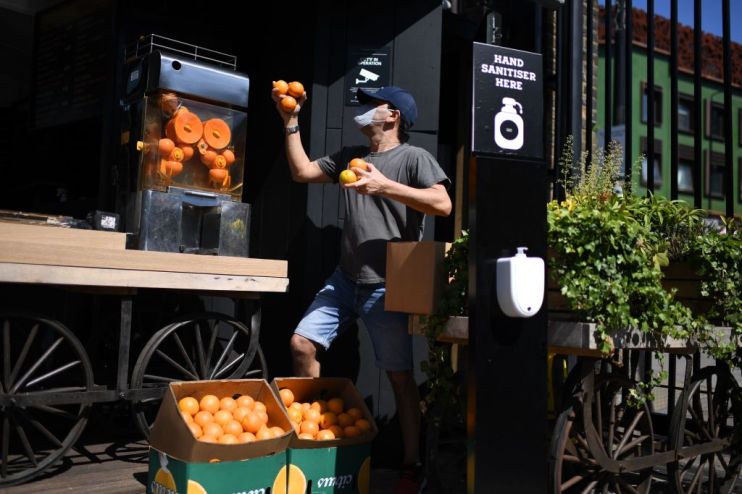
BRITAIN-HEALTH-VIRUS-MARKET
40 per cent of SMEs have managed to adapt their offerings during lockdown in order to continue trading

As shop doors opened once again this week and queues began to build, we caught a glimpse of what the coming months will be like for “non-essential” shops. 

Already, it is clear that while Brexit might mean Brexit, reopening certainly does not mean reopening for many businesses across the UK. As the next phase begins, business owners and consumers alike will be greeted by continued government rules and restrictions. Even more concerning, consumers with a nervous disposition are likely to steer clear, leading to significantly lower footfalls. 

Adaptability remains at the forefront of survival for businesses, especially SMEs, and it has been positive to see that almost 40 per cent have managed to adapt their offerings during lockdown in order to continue trading. This innovation needs to continue. 

But at the same time, we need to see new solutions from the government too, to ensure that the margins for profitability are reached to secure the survival of the UK’s SMEs. 

There are some obvious changes that can be made to increase spending, starting with the relaxation of Sunday trading rules. The government is already considering suspending the rules for a year, which is surely a no-brainer — according to YouGov, the public support the move, with 48 per cent in favour and only 31 per cent opposed. 

Another easy move for the government would be fast-tracking legislation allowing cafes, pubs and restaurants to sell food and drink from street stalls. The current social distancing rules prevent them from utilising the indoor spaces that make them profitable, so we must be as flexible as we can with outdoor spaces in order to help businesses trade at the highest level possible.

Pressure is mounting too on the government to lower the two-metre rule, as has been seen across much of Europe. Young’s Brewery, for example, has said it would be able to open its larger venues, including those with beer gardens, in mid July with a one-metre distancing rule, but this won’t be financially viable at two metres.

Many other chains are in the same position — in fact, it emerged recently that only a third of pubs would be able to reopen under the current rules. The same is true across the sector.

Read more

UK government slashes corporate red tape, cutting paperwork ‘longer than The Hobbit’

Jonathan Reynolds addressing the SMMT's annual International Automotive Summit (image courtesy of SMMT)

These short-term solutions can help ensure that as many retail, hospitality and leisure businesses stay afloat as possible, as their new way of trading begins. 

There are however, far bigger issues looming in the coming months which need greater thought. As a business owner myself, I know how resilient entrepreneurs are, but as the winding down of the furlough scheme approaches, concerns over cash flow management and long-term sustainability are causing many a sleepless night.

It would of course be unrealistic for any government to continue paying the wages of over nine million people until a vaccine is found, but there are other measures that can be taken to help incentivise businesses to keep staff on. Cutting employers’ national insurance, for example, would go some way to incentivise companies to retain their staff, and even bring in new employees. 

The months ahead will reveal just what “project restart” for small businesses really means. Business owners will need to be on their toes to pivot fast as government policy evolves and consumers decide precisely what they’re prepared to do.

Consumer spending will be down, purses tight, and social distancing measures likely to change multiple times. Businesses will have to work hard to rebuild loyalty, reduce fear, and encourage spending. 

But with a positive mindset and the right package of support, the sectors most at risk from the pandemic will be able to not only survive, but thrive in post-Covid landscape.

Main image credit: Getty

Read more

Are Labour Chancellors really still blaming Liz Truss?

John Healey speaking at a podium with the UK Royal Coat of Arms, gesturing with his left hand during his speech.

Share this article

  • Facebook
  • X
  • LinkedIn
  • WhatsApp
  • Email

Similarly tagged content:

Sections

  • News
  • Opinion

Categories

  • Business
  • Opinion
  • Retail

Trending Articles

  • Hedge fund billionaire Chris Rokos joins UK wealth exodus 

  • Iceland boss Richard Walker vows to set up shop on Falkland Islands

  • Britain ‘taxing itself to death,’ Burnham warned

  • Tesco and Boots lead 100,000 jobs pledge to tackle Neets crisis

  • £74m for branded condoms? UK must stop spaffing cash on foreign aid

More from Morning Wire

  • UK government slashes corporate red tape, cutting paperwork ‘longer than The Hobbit’

    Accountancy
    Jonathan Reynolds addressing the SMMT's annual International Automotive Summit (image courtesy of SMMT)
  • Are Labour Chancellors really still blaming Liz Truss?

    Opinion
    John Healey speaking at a podium with the UK Royal Coat of Arms, gesturing with his left hand during his speech.
  • Hammersmith Bridge is a test for Burnham’s place-based growth

    Opinion
    Hammersmith Bridge closed in 2021 with fencing, banners, and traffic cones blocking access to the walkway.
  • ‘Cost of business crisis’ as government drives up overheads by 70 per cent in a decade

    Business
    Andy Burnham, Mayor of Greater Manchester, drinking a pint of beer in a busy pub setting
  • Does the real economy care that much about AI?

    AI
    Tesco store exterior with festive decorations, highlighting its 10-year UK market share high and Q3 sales performance.
  • Healey’s adviser warns ‘you won’t grow the economy just by spending more’

    Economics
    Man in suit and red tie speaking at a podium to an audience in a modern building.
  • Burnham takes on ‘rip-off’ discounts and subscriptions in cost of living push

    Politics
    Andy Burnham, Mayor of Greater Manchester, in a suit and glasses, looking serious against a bright sky.
  • Labour’s ‘chaotic’ zero-hour crackdown could cost firms £3bn per year

    Economics
    Andy Burnham, Mayor of Greater Manchester, in a suit and glasses, looking serious against a bright sky.
MorningWire

Independent European business, markets and political news for decision-makers.

Morning Briefing

Europe

  • Germany
  • France
  • EU Institutions
  • Europe

Business

  • Markets
  • Business
  • Economy
  • Regulation
  • Competition
  • Public Affairs

Editorial

  • Opinion
  • Editorial Policy
  • Corrections
  • Contact

Company

  • About Morning Wire
  • Privacy Policy
  • Terms of Use
  • Cookie Policy
© 2026 Morning Wire Ltd · Published by Morning Wire Media, Bahnhofstrasse 65, 8001 Zürich, Switzerland
Privacy · Terms · Cookies · Facebook