Skip to content
Wednesday 19 August 2026London --:--Frankfurt --:--Zurich --:--
NewslettersSearchEN · DE · FR
MorningWire

European business, markets and politics

FTSE 100
10,743.35
+0.14%
DAX
26,091.33
-0.14%
CAC 40
8,501.91
-0.09%
STOXX 50
6,444.46
-0.37%
  • Europe
  • Markets
  • Business
  • Economy
  • Regulation
  • Politics
  • Opinion
More
GermanyFranceEU InstitutionsCompetitionPublic AffairsBankingTechnologyEnergy
  • Germany
  • France
  • Europe
  • Markets
  • Business
  • Economy
  • Regulation
  • Politics
  • Opinion
  • DE
Tuesday 27 February 2024 5:10 am  |  Updated:  Monday 26 February 2024 5:12 pm

Without reform, the UK will sleepwalk into another cost of living crisis

By: Adam Hawksbee

Add as a preferred source on Google
With the Spring Budget fast approaching, the Chancellor is engaging in a dizzying array of financial gymnastics to meet his fiscal rules. 
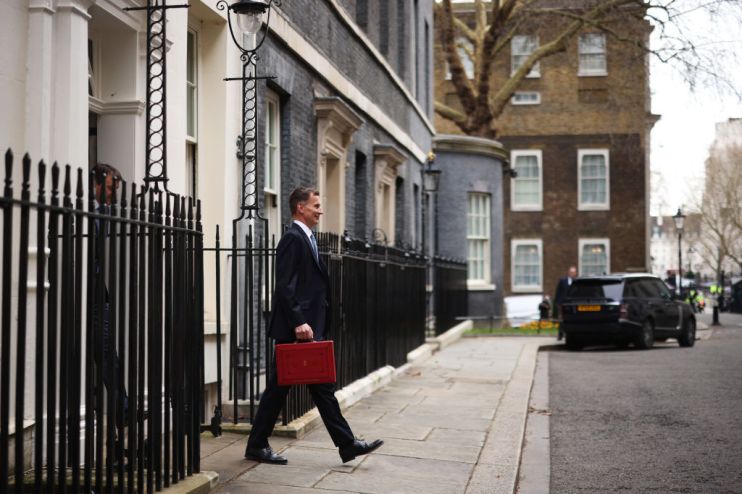
Chancellor Jeremy Hunt gets ready to present the Spring Budget.

Decades of complacency got us into the cost of living crisis, and we’ll face another one if we don’t change our ways, writes Adam Hawksbee

There’s still an air of mystery around next week’s Budget. How much fiscal headroom the Chancellor has to play with, and what he chooses to do with it, remains shrouded in speculation. But one thing is clear: there will be a heavy focus on the fall in inflation.

Ministers should curtail any celebrations. We have to ask why Britain was hit so hard by this inflationary shock in the first place, especially compared to our G7 peers. Since the end of 2021, the UK’s consumer price index has risen by 15 per cent compared to 10 per cent in the US and France. While higher interest rates have begun to restore balance, the impact has been felt by the poorest regions and most vulnerable families. And managing the fallout has not come cheap: the government’s cost of living support has totalled almost £100bn over the last two years.

The benign inflationary and low interest rate environment of recent decades has allowed our susceptibility to price shocks to be overlooked. In these good years, our economic system has prioritised efficiency at the expense of resilience. We need to act, because more inflationary shocks are coming – spurred by rising disruption from climate change, heightened global conflict and the diminishing deflationary effect of manufacturing shifts to Asia.

In short, Britain needs to be better insulated against volatile prices. Companies are making adjustments of their own, shoring up supply chains or building reserves to increase their resilience following the pandemic and Ukraine war. But the government also has a role to play in digging out the root causes of our vulnerability and developing supply-side solutions to reduce long term exposure to inflation.

Transforming the energy system is crucial. Inflationary spikes in energy prices have preceded four of the last six recessions. The UK needs to reduce its reliance on volatile natural gas by expanding home grown renewables, accelerating grid development, building out energy storage capacity and increasing interconnectedness with neighbouring countries’ electricity supply. The challenge, as always, is making sure the costs of the transition don’t fall on the poorest households who are most likely to live in draughty homes or use dated technology. 

Our food system will also need to evolve. The answer is not just to cry “buy British”, which could increase exposure to domestic shocks. Instead we need to enhance the climate resilience of domestic production, diversify imports and resolve supply chain inefficiencies such as HGV driver shortages.

Ministers must also confront the extraordinary levels of economic inactivity that are behind our tight labour market. High levels of immigration have obscured the scale of the challenge, but last week’s contrast between stagnating GDP alongside declining GDP per capita laid the problem bare. 

The big prize in reducing our susceptibility to inflation, and keeping interest rates low, is economic growth. Low levels of public investment are behind Britain’s growth challenge, but both parties remain committed to tight fiscal rules that limit their ability to borrow. Only by making that borrowing affordable can we secure the investment the economy so desperately needs.

The UK dealt swiftly with the most recent bout of inflation. But the human costs were real. This year, Britain’s poorest households will face living standards 20 per cent lower than in 2019-20 and they are not expected to recover until 2027. We cannot, once again, become complacent.

Read more

Healey revives ‘price-gouging’ threat as cost of living options narrow

Chancellor John Healey smiling, wearing a navy suit, white shirt, and red tie.

Share this article

  • Facebook
  • X
  • LinkedIn
  • WhatsApp
  • Email

Similarly tagged content:

Sections

  • Opinion

Categories

  • Opinion

Related Topics

  • Energy
  • renewable energy
  • UK inflation
  • UK interest rates

Trending Articles

  • Jobless Banquet: Youth unemployment surge ‘sends Neets to KFC’

  • As it happened: FTSE 100 drops as oil prices rise after Trump makes Hormuz threat

  • US bond market jitters spark UK economy recession warning

  • Amanda Blanc has worked her magic at Aviva

  • City law firm sues prominent Emirati business family

More from Morning Wire

  • Healey revives ‘price-gouging’ threat as cost of living options narrow

    Politics
    Chancellor John Healey smiling, wearing a navy suit, white shirt, and red tie.
  • Burnham takes on ‘rip-off’ discounts and subscriptions in cost of living push

    Politics
    Andy Burnham, Mayor of Greater Manchester, in a suit and glasses, looking serious against a bright sky.
  • ‘Cost of business crisis’ as government drives up overheads by 70 per cent in a decade

    Business
    Andy Burnham, Mayor of Greater Manchester, drinking a pint of beer in a busy pub setting
  • Pensioners hit with £8bn tax bill after government freezes allowances

    Personal Finance
    City economists have warned that the triple lock pension is unsustainable and unaffordable given the state of the UK's public finances.
  • Industry chief warns ‘resilience not enough’ for growth

    Economics
    Shevaun Haviland, British Chambers of Commerce boss, speaking at a business event, emphasizing economic growth strategies
  • Burnham scraps digital ID scheme

    Politics
    Andy Burnham speaking at a public event, emphasizing local governance and policy changes, wearing a suit and gesturing pas...
  • Oil prices return to crisis levels

    Markets
    Close-up of a petrol pump nozzle dispensing fuel at a gas station, highlighting rising fuel costs and economic impact.
  • Will Burnham take the pressure off business? Don’t bank on it

    Politics
    Andy Burnham speaking passionately at a public event, wearing a suit, highlighting his role as a prominent political figure.
MorningWire

Independent European business, markets and political news for decision-makers.

Morning Briefing

Europe

  • Germany
  • France
  • EU Institutions
  • Europe

Business

  • Markets
  • Business
  • Economy
  • Regulation
  • Competition
  • Public Affairs

Editorial

  • Opinion
  • Editorial Policy
  • Corrections
  • Contact

Company

  • About Morning Wire
  • Privacy Policy
  • Terms of Use
  • Cookie Policy
© 2026 Morning Wire Ltd · Published by Morning Wire Media, Bahnhofstrasse 65, 8001 Zürich, Switzerland
Privacy · Terms · Cookies · Facebook