Women on top: Ex-JP Morgan star Tracey Reddings on how she beat the system


When you have to work hard for something as opposed to being given it, it means more,” says Tracey Reddings, the former head of JP Morgan’s private banking arm in Britain.
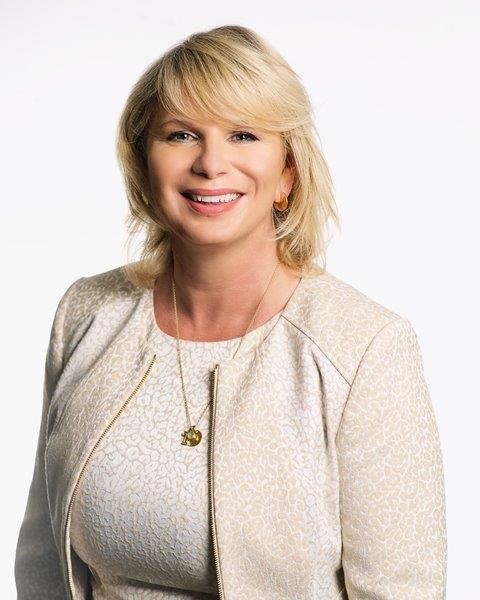
She should know. After a glittering career in which she rose from the customer service counter at Barclays bank at age 16 to the helm of both JP and Julius Baer’s British private banking arms, she is now flying the flag for women in the finance sector through her own advisory firm, Reddings Wealth Management.
And she thinks that the financial services market is missing a trick.
There is a growing consensus in the industry that advisers have failed to sufficiently cater to women for too long, leaving a huge cross-section of potential clients less inclined — and less able — to get the advice they need to manage their finances effectively.
It is an issue which Reddings hopes to tackle both through her own company and through the Wealthiher Network, an organisation set up to rebalance the scales in favour of female investors, which she is also part of. With women on course to hold more than 60 per cent of Britain’s wealth by 2025, according to some estimates, the matter will only get more important.
“Women have got more of a voice in the world than ever before,” says Reddings. “But often they still feel patronised when going into meetings with financial advisers. I still continue to hear stories about clients going into meetings — perhaps a husband and wife — and the adviser will talk to the man. They have not taken the time to realise that the person ultimately taking the decision is often likely to be the woman in the relationship.”
This industry has done a great job over the years of making itself sound cleverer than it is.
Moreover, for many potential clients, the whole world of financial services is totally inaccessible because of the language used by the industry, she tells me — immediately launching into a series of anecdotes to prove it.
“One older client of mine who sought financial advice for the first time after her husband died said she finds it impossible because there is so much jargon. Just having a conversation with her and explaining in layman’s terms what she had to think for how she invested her portfolio — that really helped her.
“Another person I know — a very successful woman — used to get her personal assistant to demystify all of the language for her before she went into meetings.
“Frankly, I think it is incumbent on us as financial advisers to do that for people. It is not about dumbing things down. We have to create an environment in which women don’t feel stupid for asking questions, and make it easier in the first place by using plain English.
“This industry has done a great job over the years of making itself sound cleverer than it is.”
This is part of the reason she left Julius Baer to start Reddings Wealth Management, where she can “control that rhetoric, that approach, and that style,” she tells me. “If a document starts off as 48 pages, I want it down to two. Nobody has got the time to read all of this — and if clients are not reading it, how are we protecting their interests?”
Climbing the ladder
Reddings herself “had no female role models” moving through her career, she recalls. “It was a completely male environment.” After leaving school in Epsom, Surrey, in 1982 aged just 16, she went straight into customer service at Barclays.
Her father, a transport manager for a laundry company, had been made redundant four years before. “His attitude was that now was the time for me to be independent and go and earn my own money, she says. “There was a limit to how much my parents would be able to support me.”
By age 19, Reddings had moved into management — something she attributes to the “bossiness” which came with being the oldest of four siblings. She tells me how she missed out on a move into the bank’s more lucrative corporate finance department to a less-able male competitor because her prospective boss suspected she would “go off and start a family.”
Enraged by this, Reddings’ resolve to move into corporate finance only hardened.
By her mid-twenties she was travelling the globe to advise clients — and starting a family at the same time. Her daughter Sophia was born in 1991, and despite going through a divorce five years later, rendering her a single mother, Reddings — now 53 — didn’t stop climbing.
After a decade-long stint as chief executive of the Charities Aid Foundation, she moved into private banking at the height of the financial crisis, first at HG Hambros in 2008 and then JP Morgan in 2011.
Vulnerable moments
Over that time, she has picked up on a number of differences in how women invest compared to men — namely that they are more wary of risk factors. “Women will not just jump in,” she says.
“They are not risk averse, they are risk aware — and it is a very different thing. Before they jump in they will want to understand entirely the implications of what they are doing.”
However, she despairs of press coverage which suggests women are afraid of putting their money where their mouth is when they do have all the relevant information they need at their fingertips.
“Actually, women do have a lot of confidence. And in fact I think a woman will take more risk if she thinks it will achieve her goals. But those goals are more likely to be around providing for the future and giving her financial independence.”
The trouble, as she sees it, is that the first time a woman seeks financial advice is at a time of vulnerability. Recent divorcees and those who are grieving family members are not uncommon clients for Reddings. “For women it is often the first time that they’re coming into money or having to control the finances,” she says. “There’s a job to be done helping educate them. I’ve been through divorce and so I get that. I understand the vulnerability and the challenge of then having to be independent.”
Diverse agenda
In an industry in which only one in six financial advisers are women, this kind of perspective is not as widespread as one might hope in 2020. But while progress is slow, it is being made.
More than 330 companies have signed up to the Women in Finance charter, which seeks to improve gender balance in the industry. And a recent Financial Conduct Authority survey found that, of a sample of 94 major institutions, diversity in senior management has doubled from nine per cent in 2005 to 18 per cent in 2019.
There is a sense that the industry is finally beginning to grapple with the simple fact that, in order to best serve a more diverse range of clients, it needs a broader range of advisers who can reckon with their experiences.
Reddings agrees. “I’ve got various experiences through my career, which means that I can be relevant to the people that I advise,” she says.
“Ensuring that we are relevant to the people that we’re advising is absolutely critical.”
The Wealthiher Network was established to champion the diversity of women’s wealth with the end goal of better servicing female investors.