Skip to content
Wednesday 19 August 2026London --:--Frankfurt --:--Zurich --:--
NewslettersSearchEN · DE · FR
MorningWire

European business, markets and politics

FTSE 100
10,743.35
+0.14%
DAX
26,091.33
-0.14%
CAC 40
8,501.91
-0.09%
STOXX 50
6,444.46
-0.37%
  • Europe
  • Markets
  • Business
  • Economy
  • Regulation
  • Politics
  • Opinion
More
GermanyFranceEU InstitutionsCompetitionPublic AffairsBankingTechnologyEnergy
  • Germany
  • France
  • Europe
  • Markets
  • Business
  • Economy
  • Regulation
  • Politics
  • Opinion
  • DE
Wednesday 05 February 2025 5:49 am  |  Updated:  Tuesday 04 February 2025 7:00 pm

Yes, AI will wipe out some jobs. But this is the story of progress

By: Paul Ormerod

Add as a preferred source on Google
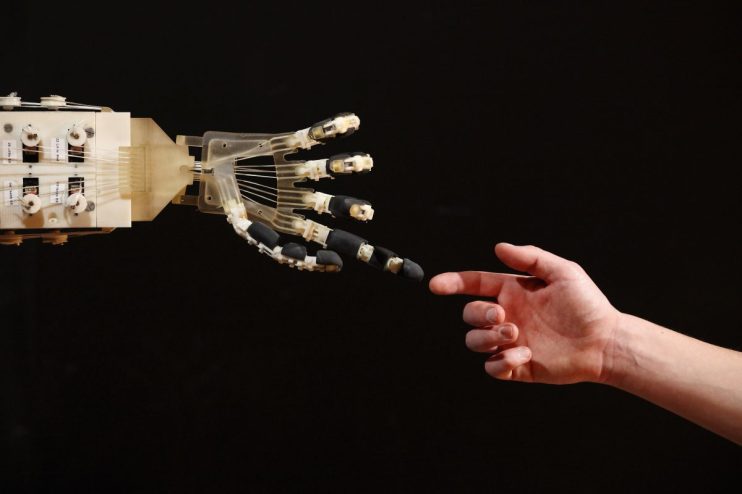
LONDON, ENGLAND - NOVEMBER 29: Robotics student Gildo Andreoni interacts with a Dexmart robotic hand built at the University of Bologna in the Robotville exhibition at the Science Museum on November 29, 2011 in London, England. The Science Museum's Robotville exhibition showcases 20 unique and cutting-edge robots from European research laboratories, it is free to enter and runs from December 1-4, 2011. (Photo by Oli Scarff/Getty Images)
(Photo by Oli Scarff/Getty Images)

AI will inevitably make some jobs redundant, but the benefits to society are far worth it, writes Paul Ormerod

The world of AI has gone through exciting times in the last couple of weeks.  

The main event of course was the launch of the Chinese AI app DeepSeek. It looks very much like ChatGPT and almost immediately shot to the top of Apple Store’s downloads.

There are still some important questions around DeepSeek which remain unanswered. But it was developed at a fraction of the cost of ChatGPT.

The developer of ChatGPT, Open AI, launched a different product only this week. If the claims around it stand up to robust scrutiny, it could prove to be at least as significant as DeepSeek.

The new tool, “deep research”, put together reports which OpenAI says match the output of a research analyst. The company claims its tool is a significant step towards the goal of developing artificial general intelligence.

How many jobs may be lost to AI?

One of the fundamental questions around AI in general is what its impact on jobs will turn out to be. By nice coincidence, a paper has just been published in the high ranking Journal of Economic Behaviour and Organization on the impact of ChatGPT on the demand for freelance workers.

In essence, tools like ChatGPT are simply another form of automation. They enable tasks to be performed by capital – a machine, an assembly line – which were previously carried out by labour.

The substitution of labour by capital has been a consistent and powerful theme since the start of the Industrial Revolution in the late 18th century. The economic system under which we live is, after all, known as “capitalism”.

Read more

Burnham’s cheerfulness could turn the economy around

Andy Burnham laughing outdoors in a candid moment, May 2026, capturing a lighthearted political event atmosphere.

We do know the answer on what the effect is, at least as far as the past is concerned. The workers whose jobs are directly impacted lose out.  

But the increase in productivity which capital investment brings benefits everyone else. The relevant product becomes cheaper and usually of better quality. The consumers benefit, if only by a small amount. But there are many more consumers than the workers who make the product. So overall, society benefits.  

The fear around AI, certainly in the public perception, is that it is potentially such a pervasive technology that it might create large numbers of workers who lose out from its application, swamping the gains made by consumers.

The issue has been the focus of intensive research in the past few years. The overall consensus is that the worst fears around AI are unlikely to be realised. For example, a well-publicised study in 2017 claimed that at least half of the US labour force could be in jobs which were at risk of automation. But subsequent refinements of the analysis suggest that less than 10 per cent of jobs are at high risk.

This is the story of progress

The study on the impact of ChatGPT on freelancers fits in neatly with the emerging view that AI will not lead to an apocalypse in the labour market.

The paper uses advanced technology to analyse 3m job postings on relevant online labour markets. Such postings are highly flexible and quick to react to changes. The authors identify 71 very finely grained skill clusters which they categorise as being either substitutable by or complementary to AI.

Following the introduction of ChatGPT, the results do indeed show a reduction in demand of approximately 24 per cent for skills deemed substitutable by the new technology compared to unaffected skill clusters. But complementary skill sets such as chatbot development and machine learning showed a distinct increase in demand.  And overall a greater proportion of skill clusters are complemented by AI rather than substituted.

It is still early days, but the evidence suggests that the ChatGPT technology will yield substantial benefits to society as a whole.

Paul Ormerod is an honorary professor at the Alliance Business School at the University of Manchester and an economist at Volterra Partners LLP

Read more

Sovereign AI is no longer a nice to have, and with open source, more achievable than ever

AI sovereignty shield with brain circuit icon and padlock, glowing lines on ground, London cityscape at sunset.

Share this article

  • Facebook
  • X
  • LinkedIn
  • WhatsApp
  • Email

Similarly tagged content:

Sections

  • Opinion

Categories

  • Opinion
  • Business

People & Organisations

  • AI
  • artifical intelligence
  • ChatGPT
  • Deepseek

Trending Articles

  • Jobless Banquet: Youth unemployment surge ‘sends Neets to KFC’

  • As it happened: FTSE 100 drops as oil prices rise after Trump makes Hormuz threat

  • US bond market jitters spark UK economy recession warning

  • Amanda Blanc has worked her magic at Aviva

  • City law firm sues prominent Emirati business family

More from Morning Wire

  • Burnham’s cheerfulness could turn the economy around

    Opinion
    Andy Burnham laughing outdoors in a candid moment, May 2026, capturing a lighthearted political event atmosphere.
  • Sovereign AI is no longer a nice to have, and with open source, more achievable than ever

    Opinion
    AI sovereignty shield with brain circuit icon and padlock, glowing lines on ground, London cityscape at sunset.
  • Devolution is the shakeup Britain needs

    Opinion
    Andy Burnham speaking passionately at a public event, wearing a suit, highlighting his role as a prominent political figure.
  • It’s not just Jason Arday, most of sociology is a scam

    Opinion
    Jason Arday smiling, wearing academic regalia with a blue cap and gown with red accents.
  • The City should hire on character again

    Opinion
    Diverse group of office workers collaborating at desks with laptops and paperwork in a modern, well-lit workspace.
  • ChatGPT to follow Claude’s watermark pledge – but Grok to swerve it

    Tech
    Grok product interface showcasing advanced AI features for efficient data analysis on a sleek digital dashboard
  • Britain has an AI minister – now it needs an AI answer

    Opinion
    Kanishka Narayan, prominent figure in the news, engaging in a public event or discussion, showcasing leadership and influe...
  • Andy Burnham will find there is a limit to tax rises

    Opinion
    At its core, an ISA is a "tax wrapper," a protective shell that shields your money from income tax and capital gains tax.
MorningWire

Independent European business, markets and political news for decision-makers.

Morning Briefing

Europe

  • Germany
  • France
  • EU Institutions
  • Europe

Business

  • Markets
  • Business
  • Economy
  • Regulation
  • Competition
  • Public Affairs

Editorial

  • Opinion
  • Editorial Policy
  • Corrections
  • Contact

Company

  • About Morning Wire
  • Privacy Policy
  • Terms of Use
  • Cookie Policy
© 2026 Morning Wire Ltd · Published by Morning Wire Media, Bahnhofstrasse 65, 8001 Zürich, Switzerland
Privacy · Terms · Cookies · Facebook