10.8m jobs set to be replaced by robots in the next 20 years but here’s where humans may have the edge

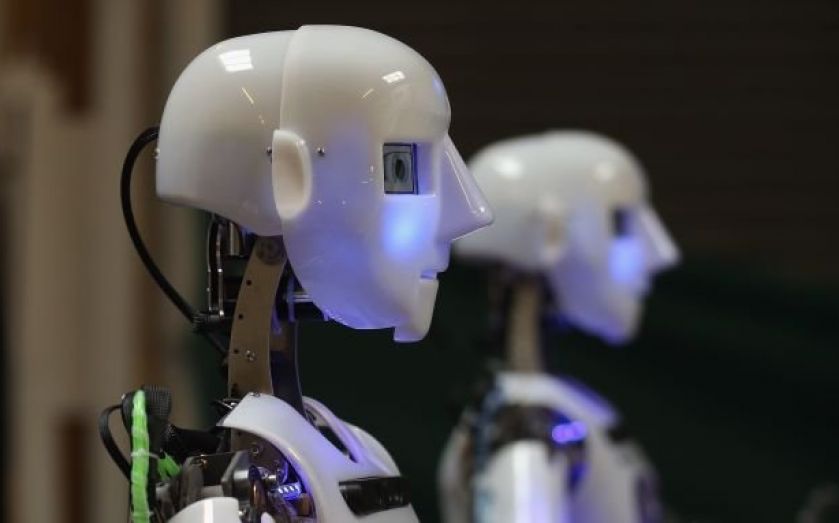
A third of Britain's jobs are under threat from technology and could be replaced within the next two decades, according to research by Deloitte and Oxford University.
The initial diagnosis appears terrifying, with 10.8m jobs set be replaced by automation and robots, with low-paid jobs being five times more likely to replaced than high paying jobs.
In London, the situation looks even bleaker for the low-paid: their roles are eight times more likely to succumb to the march of technological progress. The jobs most at risk are those in admin support, sales, transport and construction.
Those higher-income earners in financial serrvices, computing, engineering and science, the arts and healthcare will be relatively shielded from the threat of redundancy by machine.
But before we become too pessimistic and lurch toward the luddite fallacies that have been proven consistently wrong over the last couple of centuries, there is also lots of good news in the study.
The research unsurprisingly finds new jobs will be created, with new profitable industries expanding and taking advantage of the advance in technology. According to the research, two to three per cent of jobs a year in London are lost but are then replaced by more valuable higher skilled jobs.
Over the next seven years, London will create a net 300,000 jobs. Substantial investment in robotics and a high number of graduates puts the UK in a good position to benefit from the changes to the labour market.
Britain's capital has the highest number of skilled jobs of any major city in the world with close to 1.5m, well ahead of New York at 1.12m.
Angus Knowles-Cutler, London senior partner at Deloitte, said:
There is evidence that businesses are already responding and recruiting more highly-skilled positions. Deloitte also surveyed 100 businesses based, or with premises, in London on how technological and labour market changes will impact their employment, skills and property needs in the next five years. London businesses are already planning to increase head count, attract new skills and redesign their workplaces.
It should be remembered that there is already a huge amount of change that happens in the economy, with 3m jobs being destroyed every year. The rise of technology and the replacement of some jobs or the destruction of old industries shouldn't frighten us.
We should instead remember the words of the great economist Joseph Schumpeter:
Development… is then defined by the carrying out of new combinations…. New combinations are, as a rule, embodied… in firms which generally do not arise out of the old ones but start producing beside them.
Still think we should save the jobs of today? Consider this thought experiment by the Cato Institute's Swaminathan S. Anklesaria Aiyar:
To protect jobs, should we ban computers, which have displaced millions of clerical jobs? Why not ban cellphones which have killed the camera industry? Why not ban washing machines, which have hugely reduced jobs in washing? Why not abolish vacuum cleaners which substitute poor sweepers? Why not abolish luggage with wheels, which deprives coolies of jobs? Why not abolish tractors and harvest combines, which take jobs away from agricultural workers, the poorest of the poor? Why not abolish cars and motorcycles, which have displaced labour-intensive horse carts and bullock carts?
Furthermore, jobs and work are not the aim of economic progress. Jobs are a cost, that's why your employer pays you not the other way around. Jobs are the price we pay in order to attain the goods and services we desire. If robots and machines relieve us of a great deal of work and create value in the process we all come out as winners in the long-run.