Skip to content
Saturday 29 August 2026London --:--Frankfurt --:--Zurich --:--
NewslettersSearchEN · DE · FR
MorningWire

European business, markets and politics

FTSE 100
10,824.26
+0.29%
DAX
26,569.99
+0.77%
CAC 40
8,401.18
+0.98%
STOXX 50
6,485.67
+0.95%
  • Europe
  • Markets
  • Business
  • Economy
  • Regulation
  • Politics
  • Opinion
More
GermanyFranceEU InstitutionsCompetitionPublic AffairsBankingTechnologyEnergy
  • Germany
  • France
  • Europe
  • Markets
  • Business
  • Economy
  • Regulation
  • Politics
  • Opinion
  • DE
Tuesday 08 July 2014 4:29 pm  |  Updated:  Friday 07 June 2019 12:53 am

Piketty’s populism is flawed: Capitalism doesn’t mean more inequality

By: Paul Ormerod

Add as a preferred source on Google

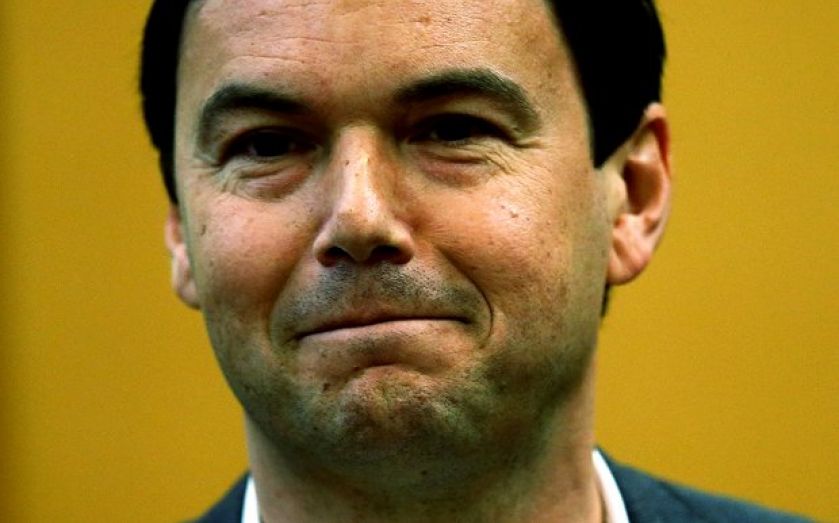
The financial crisis has undoubtedly created a demand in popular culture for works portraying capitalism in a bad light, such as the recent bestseller by Thomas Piketty – Capital in the 21st Century. Piketty’s writing has gathered increasing attention from economists, who show that his arguments do not bear scrutiny.

The focus of Piketty’s work is the long-run evolution of the ratio of capital to income. He claims that this is now very high by historical standards, and will rise even further as the century unfolds. Wealth will become more concentrated, and inequality will rise inexorably.
The message that capitalism inevitably leads to greater inequality is one that many people want to hear. Unfortunately for them, it is wrong. Piketty assembles an impressively large amount of empirical evidence. His data show clearly that from around 1910 to 1970, inequality actually declined sharply across the West.

Piketty argues that there were special factors involved in this period, which will not be repeated in the future. But modern capitalism was essentially formed in the decades either side of 1900. A truly massive merger and acquisition movement took place, and for the first time ever, companies existed which operated on a global scale. So we have had a globalised capitalist economy for approximately 120 years. For half of this period, inequality fell; in the other half, it rose. The belief that capitalism always creates inequality is nonsense.

A devastating theoretical and empirical critique of Piketty is made in a recent paper by Bob Rowthorn, former head of the economics department at Cambridge University. In his younger years, Rowthorn was an expert in Marxist economics, and so is arguably ideally placed to appraise Piketty’s work. Piketty shows that there has indeed been a sharp rise in the ratio of wealth to income in the early 21st century – the ratio has risen to around 5 or 6 for most rich countries, compared to around 2 or 3 in the 1950s and 1960s.

Rowthorn points out, using Piketty’s own data, that the whole of this increase is due to capital gains in both housing and the equity markets. In real terms, the ratio has been constant in Europe, and has actually fallen in America. This is highly relevant. A crucial part of Piketty’s argument about the future is that he believes that the rate of economic growth will be low. But if growth is low over many decades, it is very hard to believe that there will not be a reversal of the increases in real estate and share prices, and Piketty’s measure of the ratio of wealth to income will fall.

From a theoretical perspective, mainstream economics has a great deal to say about the evolution of the ratio of capital to income, and the implications for wages and profits. Piketty uses this theory. But, as Rowthorn points out, the theory is set out in real terms, not in the current price terms which Piketty uses for his empirical evidence. Economics can be very useful, not least in exposing the fundamental flaws in popular opinions.

Share this article

  • Facebook
  • X
  • LinkedIn
  • WhatsApp
  • Email

Similarly tagged content:

Sections

  • Opinion

Categories

  • Opinion

Related Topics

  • People
  • Thomas Piketty

Trending Articles

  • Pensioners to hand over bank statements in government benefits crackdown

  • Jamie Carragher: HMRC petitions for Sky Sports star to be declared bankrupt

  • Brewdog founder James Watt hits out at ‘total silence’ over new venture

  • Lloyds Bank and Halifax users unable to use app in latest outage

  • As it happened: FTSE 100 falls but Nasdaq soars after Nvidia sales boom

More from Morning Wire

  • In Jason Arday, Cambridge is discovering the dangers of DEI

    Opinion
    Jason Arday smiling, wearing academic regalia with a blue cap and gown with red accents.
  • Reform to slash HMRC officials’ pay if taxpayers wait too long

    Politics
    Robert Jenrick smiling at a podium with BRITISH WORKERS FIRST text, flanked by Union Jack flags at a press conference.
  • Elavon renews partnership with Sage to simplify payments for growing businesses

    Business Wire
  • Dolly Parton: The rhinestone capitalist

    Opinion
    Dollywood gift shop with Dolly Parton t-shirt, books, mugs, and colorful floral display. A person browses merchandise.
  • Sorry Elon, universal basic income won’t solve the AI jobs apocalypse

    Opinion
    Elon Musk smiling and waving from a podium with the Seal of the President of the United States.
  • Budget 2026: Which taxes will Burnham and Healey hike?

    Tax
    Andy Burnham, John Healey, and Louise Haigh by a doorway, discussing tax policy for a news article.
  • Bayern Munich old boys in takeover of Portuguese top-flight club

    Sport Business
    Thomas Müller in a white MLS jersey looking forward with fans in the background at a stadium event.
  • New Premier League rules could see £11bn invested into new stadiums

    Sport Business
    Architectural rendering of a vibrant, modern urban development surrounding a large football stadium
MorningWire

Independent European business, markets and political news for decision-makers.

Morning Briefing

Europe

  • Germany
  • France
  • EU Institutions
  • Europe

Business

  • Markets
  • Business
  • Economy
  • Regulation
  • Competition
  • Public Affairs

Editorial

  • Opinion
  • Editorial Policy
  • Corrections
  • Contact

Company

  • About Morning Wire
  • Privacy Policy
  • Terms of Use
  • Cookie Policy
© 2026 Morning Wire Ltd · Published by Morning Wire Media, Bahnhofstrasse 65, 8001 Zürich, Switzerland
Privacy · Terms · Cookies · Facebook