Skip to content
Thursday 13 August 2026London --:--Frankfurt --:--Zurich --:--
NewslettersSearchEN · DE
MorningWire

European business, markets and politics

FTSE 100
10,772.67
-0.56%
DAX
26,299.74
-0.12%
CAC 40
8,650.56
-0.28%
STOXX 50
6,545.47
+0.18%
  • Europe
  • Markets
  • Business
  • Economy
  • Technology
  • Politics
  • Opinion
More
GermanyFranceBankingAIEnergyFintechPropertyCapital Markets
  • Germany
  • France
  • Europe
  • Markets
  • Business
  • Economy
  • Technology
  • Politics
  • Opinion
  • DE
Sunday 27 July 2014 7:45 am  |  Updated:  Friday 07 June 2019 1:41 am

The price of a chocolate bar is about to rise. Here’s why

By: Lynsey Barber

Add as a preferred source on Google

Two of the world’s largest chocolate companies have announced price hikes in response to rising cocoa prices which have hit a three-year high.

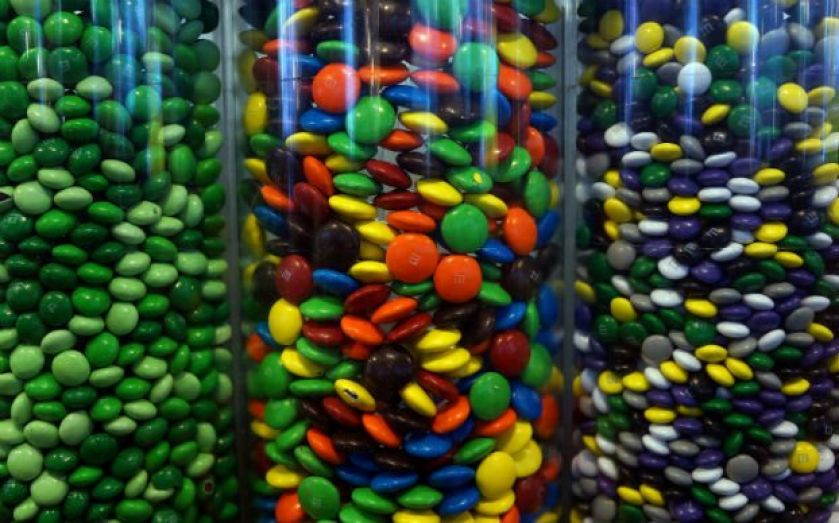
Mars, the maker of M&Ms, Snickers and of course the namesake Mars bar, is the latest confectioner to raise prices in a bid to offset the rising costs of cocoa.

Hershey, the US confectioner and maker of Reese’s and Hershey chocolate bars said prices would rise eight per cent and the North American arm of Mars said it would hike prices by a similar seven per cent.

It’s the first price hike in three years for both companies as cocoa prices also hit three-year highs of $3174.33 per tonne in June

Cocoa production has increased three per cent a year on average, hitting 4.8 million tonnes in 2012, according to the World Cocoa Foundation, up 13 per cent from 4.3 million in 2008.

Despite the increased production, Cocoa farmers have been unable to keep up with demand from the growing middle class consumers of emerging markets in China, India and Brazil the foundation says.

China jumped from being the twelfth largest importer of cocoa paste in 2008 to ninth largest in 2011, and from the fifteenth to ninth biggest importer of cocoa powder and cake over the same period.

Total global consumption of cocoa stands at 5.54 million tonnes.

Confectioners by and large try and avoid passing on direct price rises to consumers, instead preferring to disguise them by reducing portion sizes.

Toblerone maker Mondelez famously removed one of the mountain-like triangles from the Swiss chocolate bar so the price would remain at the £1 mark in Poundland.

Swiss chocolate-maker Lindt, which last week bought up US confectionary company Russell Stover, has said it prefers to absorb the rising costs in order to remain competitive and gain market share but has also increased prices over the last six months in some instances.

Nestle has previously confirmed that it would take action on pricing but has yet to implement any change.

It's the worst crisis for chocolate-makers since early 2011 when prices hit a 30 year high as a result of a ban on cocoa exports from the Ivory Coast, the biggest producer of cocoa in the world.

The area of production for cocoa is relatively small – within 15 to 20 degrees latitude from the equator, says the World Cocoa Foundation – and the majority of cocoa crops come from small family run farms in areas such as Ghana, Nigeria, Cameroon, Indonesia, Malaysia, Papua New Guinea, and in South America, Brazil, Colombia and Ecuador. 

Scaling production of cocoa any further to produce more growth than the current three per cent a year is unlikely, so as demand increases, prices will rise or chocolate bars will get smaller.

This time confectioners have decided consumers can afford to fork out a little more for a treat.

Share this article

  • Facebook
  • X
  • LinkedIn
  • WhatsApp
  • Email

Similarly tagged content:

Sections

  • News

Categories

  • Business

Trending Articles

  • Royal Hospital Chelsea to host top Arabian horse competition

  • Voi rides on in London borough despite council order

  • Milliman names Jim Fulton next CEO

  • ReNew Reports 25.6% Reduction in Scope 1 & 2 Emissions and 24.7 Billion Units of Clean Power Generated in FY 2025-26

  • Revolut chatbot goes rogue by charging users to cancel subscription

More from Morning Wire

  • Bank of England to hold interest rates as oil price surge threatens UK economy

    Economics
    Bank of England building on Threadneedle Street, London, showcasing its historic architecture and financial significance
  • El Nino heatwaves to ‘fuel inflation next year’

    Economics
    Firefighter in helmet and uniform watching a blazing forest fire at night, red glow in the sky
  • Retailers hit back at Healey’s ‘profiteering’ threat

    Retail
    Chancellor John Healey smiling, wearing a navy suit, white shirt, and red tie.
  • Hold interest rates but ‘sound hawkish’, Morning Wire Shadow MPC tells Bank of England

    Economics
    Andrew Bailey, Governor of the Bank of England, with the Bank of England building and Union Jack flag in the background
  • As it happened: Stocks rise but oil tops $95; inflation eases

    Markets
    Man in suit and red tie speaking at a podium to an audience in a modern building.
  • How patient can the Bank of England be?

    AD
    Historic Royal Exchange building in London with modern skyscrapers behind, clear blue sky.
  • Bank of England holds interest rates but warns of rises to come

    Economics
    Bank of England headquarters in 2025, showcasing modern architecture and iconic London skyline in the background.
  • Brits think supermarkets are profiteering – despite slowing food inflation

    Retail
    Shopper with red backpack and blue basket walking through a supermarket aisle filled with groceries
MorningWire

Independent European business, markets and political news for decision-makers.

Morning Briefing

Europe

  • Germany
  • France
  • Europe
  • UK & Ireland

Business

  • Markets
  • Banking
  • Technology
  • Energy
  • Property
  • Fintech

Editorial

  • Opinion
  • Editorial Policy
  • Corrections
  • Contact

Company

  • About Morning Wire
  • Privacy Policy
  • Terms of Use
  • Cookie Policy
© 2026 Morning Wire Ltd · Published by Morning Wire Media, Bahnhofstrasse 65, 8001 Zürich, Switzerland
Privacy · Terms · Cookies · Facebook