How Argentina’s struggle in the late 1990s could provide lessons to Greek leaders


As Greece teeters on the brink of default, its leaders could do worse than to look to Argentina's own tussle with default back in the late 1990s.
Why they're similar
Like Greece, the economic crisis in Argentina began against a backdrop of deregulation and financial liberalisation – although in Argentina's case, its convertibilidad policy pegged the Argentine peso to the dollar, while Greece adopted the euro.
Both established a fixed exchange rate, helping to control inflation, but both but deteriorated productive capacity. There were vast amounts of borrowing, and an increase in government debt. Both countries lived beyond their means, while tax avoidance was endemic.
What happened
In 1998, the Asian financial crisis hit, causing unemployment and the deficit to jump. The same was true of the global financial meltdown of 2008: in Greece, unemployment leaped, sparking massive anti-government demonstrations.
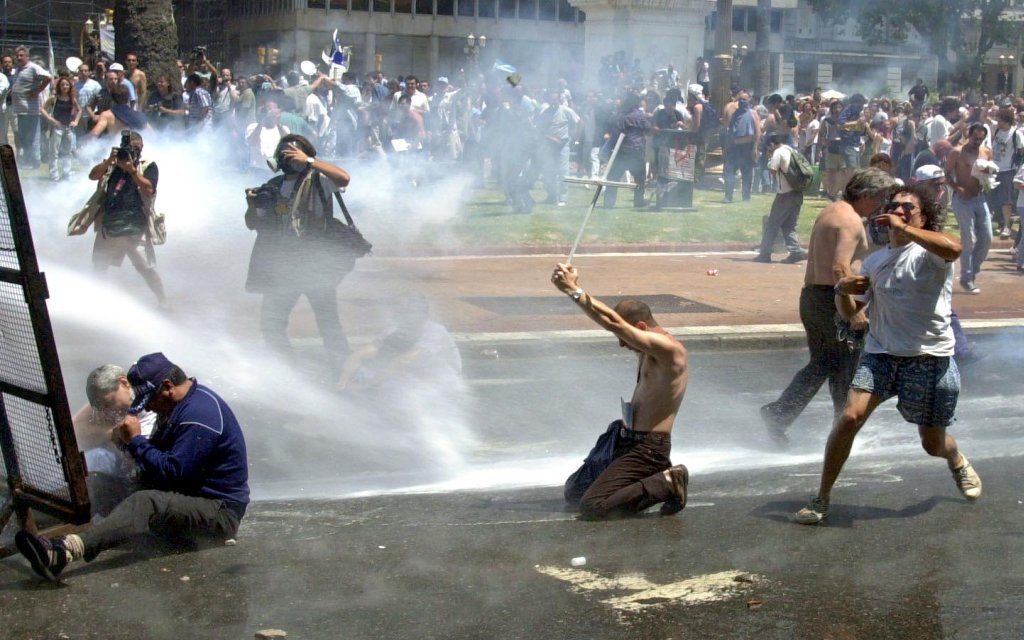
Street protests in Argentina in 2001 resemble those seen recently in Greece (Source: Getty)
Both countries borrowed heavily from the International Monetary Fund (IMF), which withheld payments when they failed to meet its deficit targets, which included deep fiscal austerity and wage contraction.
In Argentina, despite the recession, the IMF pushed for the reduction in social spending and easing of labour protections.
In Greece, the "troika" of lenders – the IMF, European Central Bank and EU – imposed unpopular adjustments like the ones in Argentina to ensure the monetary regime continued and financial sector profits were protected.

The IMF was firm with Argentina in negotiations as it has been with Greece (Source: Getty)
How they responded
The economic and social crisis in Argentina in 2001 led the country to devalue its currency and default on over 65 per cent of its debt in 2002. Inflation soared temporarily and battered standards of living as Argentina fell into a severe recession.
But, despite the distress this caused, by devaluing its currency, real wages fell and the economy began to stabilise. Combined with a boom in natural resources, the country fell into a period of unprecedented growth.
Of course there is unlikely to be a commodity boom in Greece (feta cheese futures, anyone?), but at the moment, rather than undergoing a currency devaluation, unemployment remains high , despite wage cuts. It is this that fuelled public anger, and the subsequent electoral success of Tsipras’s Syriza party.
Why Greece has to make difficult decisions
While a devaluation could help Greece, it would have to leave the euro. For Argentina, it was relatively easy to devalue the peso by severing its link to the dollar.
Convertibility would be difficult: while Argentina converted dollar-denominated savings accounts into pesos, but Greek savings are denominated in euros. Then there's the challenge of printing a new currency.
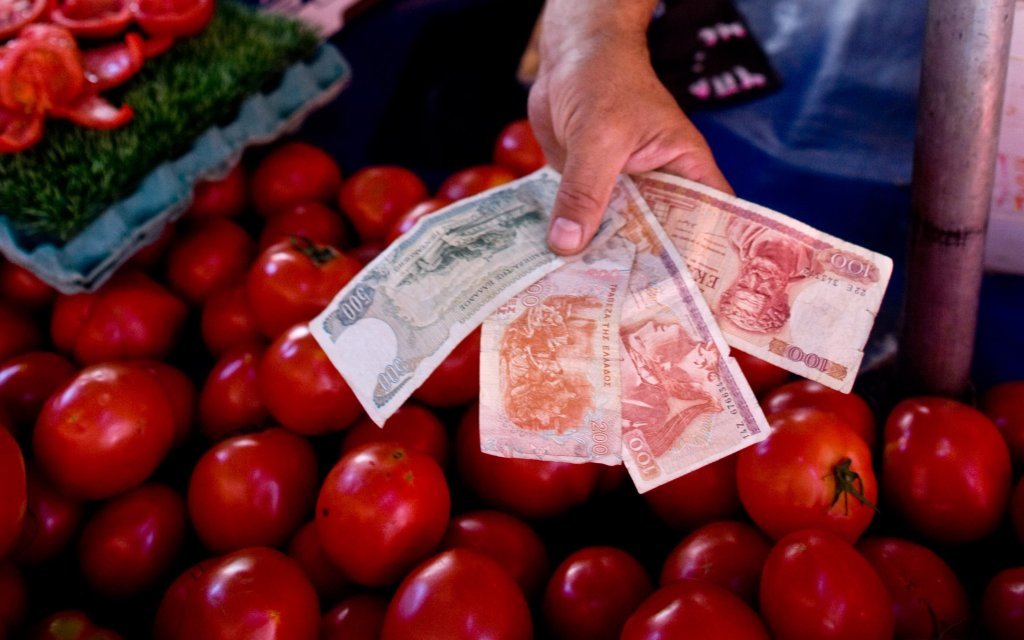
There would be difficulties while Greece reintroduced the drachma (Source: Getty)
Given all the uncertainty, there's a risk there could be even more capital flight from Greece (although withdrawals have "calmed down" in recent days, withdrawals hit nearly €4bn in May, official statistics show) – default could leave Greek banks insolvent.
And if Greece decides it wants to return to the drachma, they will face opposition from other Eurozone members: there's also a fear Greece leaving could lead to other nations, such as Spain, having similar ideas.
So what's next?
Greece leaving the euro would almost certainly be a disaster in the short term, despite the fact it may be beneficial further down the line.
But Argentina's example suggests it's not an entirely bad idea. There would be a lot of distress – but the outcome would be determined as much by politics as by economic considerations.