The terminal flaw at the heart of Saudi Arabia’s low oil strategy

“If people want to know who I am, it is all in the work.” – Alan Rickman
Like everyone I know with a soul, I find myself in genuine mourning for the great British actor Alan Rickman, who died last week. It is impossible for me to think of anyone who brought me as much happiness on the screen, be it playing a charming villain or a conflicted hero. In either case, Rickman was a master of portraying the complexity of being human, yet somehow making our very contradictory natures entirely understandable.
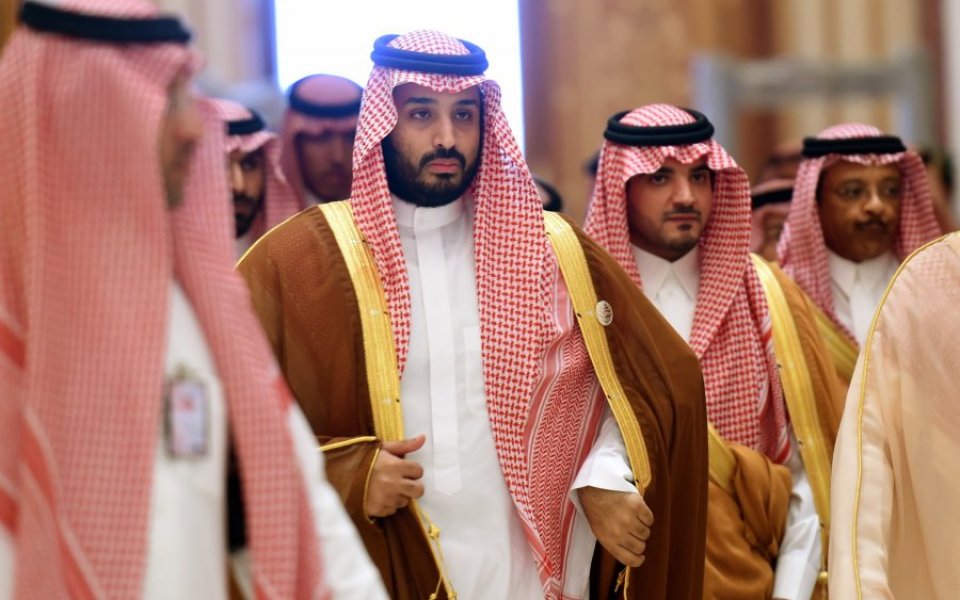
Beyond his mastery of his craft, the quotation above reveals Rickman to be a very wise man. For it is indeed in the work – in the context of foreign policy analysis, in the details of any plan – that we come to know those who propagate it. In the case of the recent public relations blitz of Saudi Arabia’s Mohammed bin Salman, deputy crown prince and favoured son of the new King, the contradictions at the heart of his newfound foreign and energy policy activism are now plainly there to see.
As we surmised ahead of the pivotal November 2014 Opec meeting, the Saudis, up until then the most predictable of countries, were about to take a walk on the wild side. Their John D Rockefeller energy strategy – forcing up oil production to drive their competitors (especially American shale) out of business and thereby boosting market share – has yet to work. While the price of oil has plummeted a dizzying 70 per cent from its June 2014 highs of $120 a barrel to the current trough of just over $30 a barrel, shale has yet to throw in the towel. Constant productivity gains have meant that US output has only just now begun to fall, from a still impressive total of over 9m barrels of day. In response, the Saudis have continued on with their game of energy chicken, forcing Opec to maintain present levels of production, despite howls of protest from countries as far afield as Venezuela and Iran.
However, the self-inflicted wounds of such a policy are driving the Saudis to economic extremes unthought-of in recent years. In 2015, the Saudi budget deficit amounted to $98bn, or a whopping 15 per cent of its GDP. While Riyadh has mountainous reserves, it needs the price of oil – the sole motor of its economy – to fetch around $85 a barrel to adequately finance public spending, a figure absolutely no one sees as remotely being on the horizon.
Worse still, Iran is about to re-join the economic world, with sanctions just set to be lifted as part of its nuclear deal with the West; at a minimum, this will place an additional 500,000 barrels per day back on the global market. With the US Congress now allowing oil exports, recently doing away with the mindless 40-year prohibition of such sales, there seem to be few signs (apart from possibly Russia) that the Saudi economic agony is about to end.
But beyond the very questionable economic rationale lying behind the Rockefeller strategy, the geostrategic contradictions of such a policy certainly doom it to failure. On the one hand, Riyadh remains entirely dependent on American strategic protection, a state of affairs that began with FDR’s wartime meeting with Ibn Saud, the founder of the country’s present dynasty. When I am in the region, Saudi decision-makers complain bitterly to me about President Obama’s disregard for their country, his pulling back from the Middle East to concentrate on a far more hopeful Asia. Deputy crown prince Mohammed shares this view, characteristically saying it is time for the US to remember it is a superpower, and act like one in the Middle East. Presumably, the prince wants America to “do more”.
That is hardly likely to happen when America’s supposed allies, the Saudis, are endeavouring to drive its energy industry out of business. In other words, the Saudi energy policy strategy is completely at odds with its foreign policy strategy. You simply cannot have it both ways: either America is your protector or it is your primary economic rival, it cannot be both for long. This is the contradiction the Saudis have yet to face up to; until they do, there is precious little chance either plan will be crowned with success.
Alan Rickman understood that who we are resides in the detail of what we do. Looking at the Saudis by that telling measure, their newfound activism merely masks endemic strategic confusion.