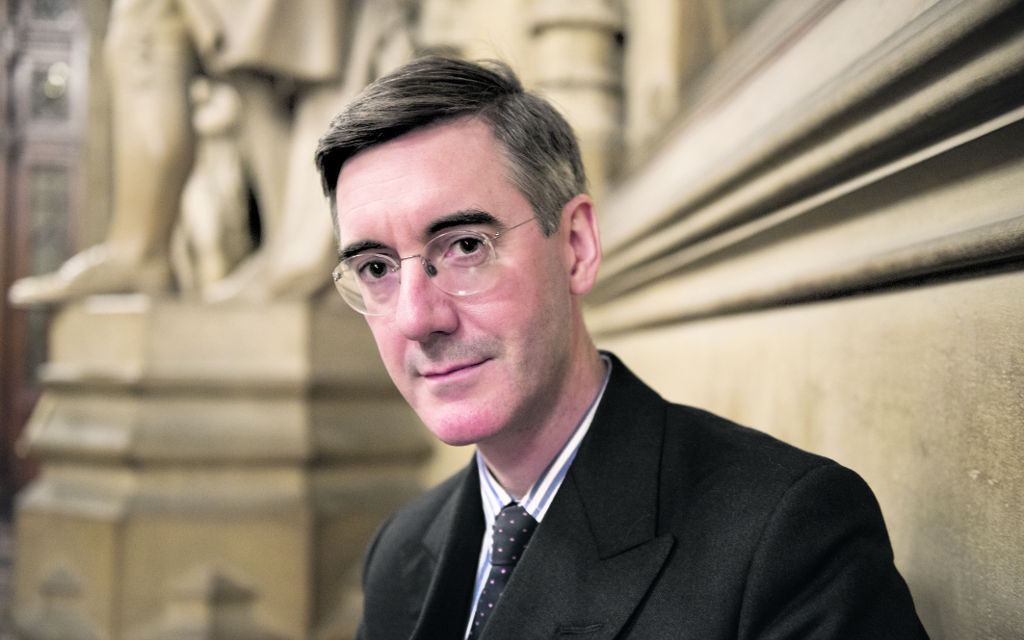
Tory MP Jacob Rees-Mogg discusses David Cameron and the proposed EU reforms in an interview with Morning Wire

Thin gruel is hardly an appealing image, yet that’s how Tory MP Jacob Rees-Mogg first described David Cameron’s proposed EU reforms.
As the Prime Minister outlined the details of his EU deal on Wednesday, the North East Somerset MP suggested that the gruel had been watered down yet further. I spoke to this colourful, popular Old Etonian MP shortly before he delivered his damning verdict in the Commons.
“David Cameron is not a stupid man,” he tells me. “Even he can’t consider his EU reforms as fundamental change.”
Instead of battling for real change, Rees-Mogg thinks, Cameron made a decision that it’s better for the United Kingdom to stay in the EU, “and the only way to do that was to have a patsy renegotiation”.
In fact, given Cameron previously said he wouldn’t rule out campaigning to leave if he didn’t get the reforms he wants, Rees-Mogg now thinks he should lead the Leave campaign.
“Of course he should, he hasn’t got what he set out to achieve,” said Rees-Mogg.
The MP has known for months that he would vote to leave, after the Prime Minister’s letter to Donald Tusk in November. He tells me why. “It became clear that we weren’t asking for anything. In any negotiation, you don’t get more than what you first asked for – unless you’re negotiating with Bertie Wooster, who always seems to get the wrong end of any negotiation he’s in.”
Cameron is an incredible PM
That’s not to say Rees-Mogg doesn’t like Cameron. He thinks that he’s been an incredible Prime Minister, enthusiastically pointing out the scale of welfare reform, the cut in public expenses and improvements in services, as well as the transformation in education.
“It’s a really successful, good prime ministership. If only – if only – he’d been a bit more robust on Europe. It’s a great sadness actually,” he says.
What might be more difficult for Cameron is whom he appoints in a post-referendum world to lead negotiations.
For Rees-Mogg the answer is clear: If the UK goes for Brexit, the renegotiation “has to be left to people who have campaigned to leave, because people who campaigned to stay would simply have been on the wrong side of the argument”.
“They have to accept that. As we have to accept it the other way around and walk away gracefully,” he adds, demonstrating why he’s dubbed by many as Westminster’s most polite MP.
His view demonstrates his respect for those with other political positions.
Yet while he expresses a love for history and political figures – his heroes range from John Locke to Benjamin Disraeli and Robert Walpole – as I probe him on the Google tax row it becomes apparent that he understands the importance of context.
“Judicious politicians will not jump on bandwagons of retrospective taxation, but we may campaign to change the tax code to make it more effective,” he said.
“Is it fair Google is under scrutiny? Yes. It’s a public company, it’s a very visible company and it’s perfectly reasonable to ask questions.
“We have to find the right person to criticise, however. Businesses will pay the amount of tax that the law requires of them, no more and no less and it is just as wrong for HMRC to collect a penny extra of tax as a penny too little.”
He added: “If you think the law is wrong, then it is for parliament to change the law.”
Rees-Mogg relishes these tough and controversial political questions and the debates that ensue. The joy he gets from the job comes not just from the “terrible fun it is to give speeches”, but the importance the role holds.
Scrutiny is crucial
He considers the work of the Treasury Select Committee, on which he sits, to be of particular importance: “We’ve set up this system of very powerful individuals taking decisions affecting all our lives, with the committee as the democratic accountability.
“I think the most important meetings are those with the governor of the Bank of England and the head of the Financial Conduct Authority.
“It is a crucial part of parliamentary scrutiny of regulators who otherwise aren’t accountable to anyone. If the Treasury gets involved everyone squeals and says how outrageous it is.”
True enough, it wasn’t long ago that there was speculation Treasury pressure led to the dropping of an inquiry into banking culture. Rees-Mogg said the evidence showed the decision to be right, but the cancellation of the inquiry was mishandled.
“The decision to cancel the inquiry was a perfectly reasonable one, to focus on individual banks and how they operate rather than another overarching inquiry, of which there have been a lot.
“As does sometimes happen, people get to the right answer by the wrong route.”