Skip to content
Saturday 22 August 2026London --:--Frankfurt --:--Zurich --:--
NewslettersSearchEN · DE · FR
MorningWire

European business, markets and politics

FTSE 100
10,816.56
+0.64%
DAX
26,136.56
+0.59%
CAC 40
8,484.43
+0.37%
STOXX 50
6,462.22
+0.63%
  • Europe
  • Markets
  • Business
  • Economy
  • Regulation
  • Politics
  • Opinion
More
GermanyFranceEU InstitutionsCompetitionPublic AffairsBankingTechnologyEnergy
  • Germany
  • France
  • Europe
  • Markets
  • Business
  • Economy
  • Regulation
  • Politics
  • Opinion
  • DE
Thursday 18 February 2016 2:35 pm

Uber, Airbnb, eBay and Etsy: 2.5m people a month are now part of the online sharing economy, finds JP Morgan


By: Lynsey Barber

Add as a preferred source on Google

From selling items on eBay to renting out a spare room on Airbnb, 2.5m people each month are now earning money from the sharing economy, according to one of the most comprehensive studies of the new and fast-growing part of the economy to date.

Those participating, who are more likely to be young and on lower incomes, earn around 20 to 30 per cent of their income from these platforms and are more likely to experience income volatility.

Overall the rate of participation in the sharing economy doubled every six months, according to JP Morgan, which conducted the study analysing six million customer transactions over the last three years, however, reliance on this income remained steady.
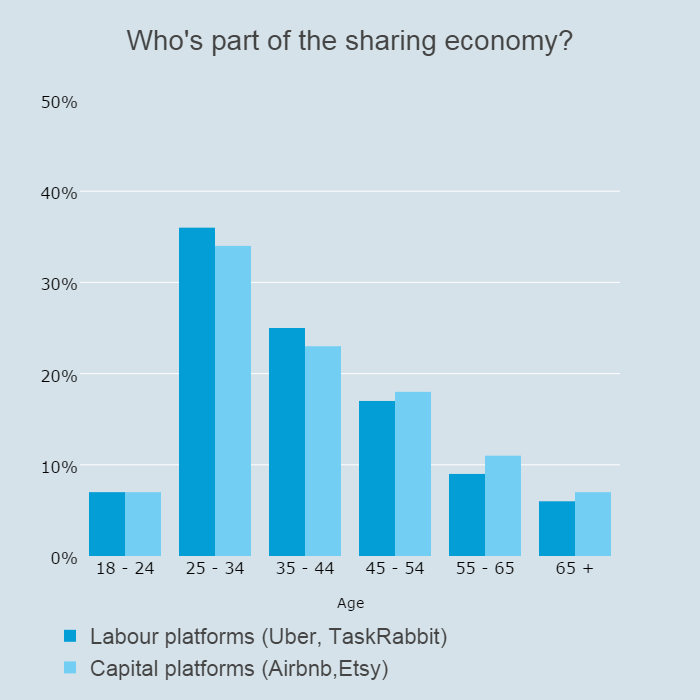
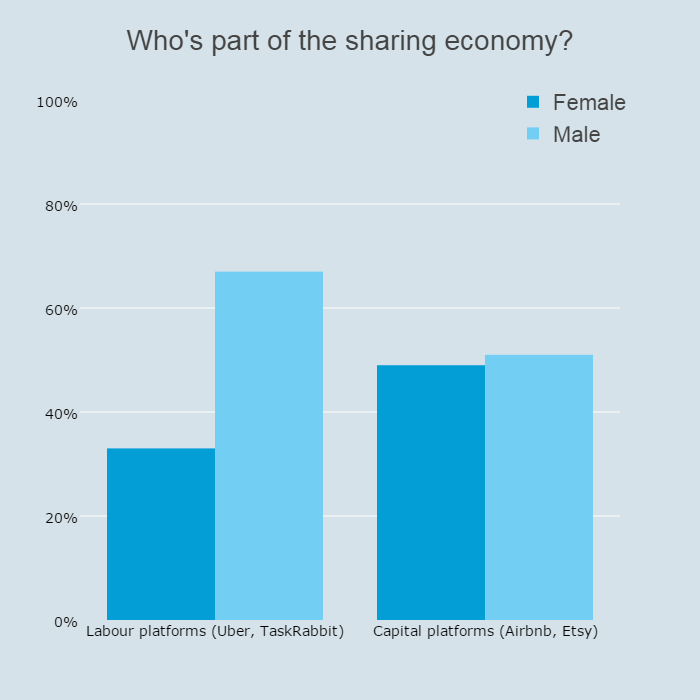
The research identified that people are using what JP Morgan calls labour platforms – offering services on Task Rabbit or driving an Uber – to offset dips in their regular earnings, while capital platforms – selling an item on Etsy for example – are being used to supplement regular income.

Read more: How Uber and Airbnb can win over hostile regulators

The breakdown of the sharing economy into labour and capital platforms has implications for policy making.

"These facts provide an essential, data-driven foundation for policymakers debating proposals for new labour laws, such as the creation of a new class of workers, portable benefits for independent contractors, and eligibility for social safety net programs like unemployment insurance," said JP Morgan. 

The speed and ease of landing a job through the sharing economy means people can turn to these type of platforms to weather tough financial times rather than reducing spending or turning to credit, the bank said.

In the first month of people participating, the split between labour and capital platforms is 40 per cent and 62 per cent. However, that split switches to 56 per cent and 32 per cent for those participating beyond the first month, indicating selling items or renting out rooms is more occasional and a one-off occurrence, while providing a service such as transport is longer-term.

Read more: How to navigate taxes if you work in the sharing economy
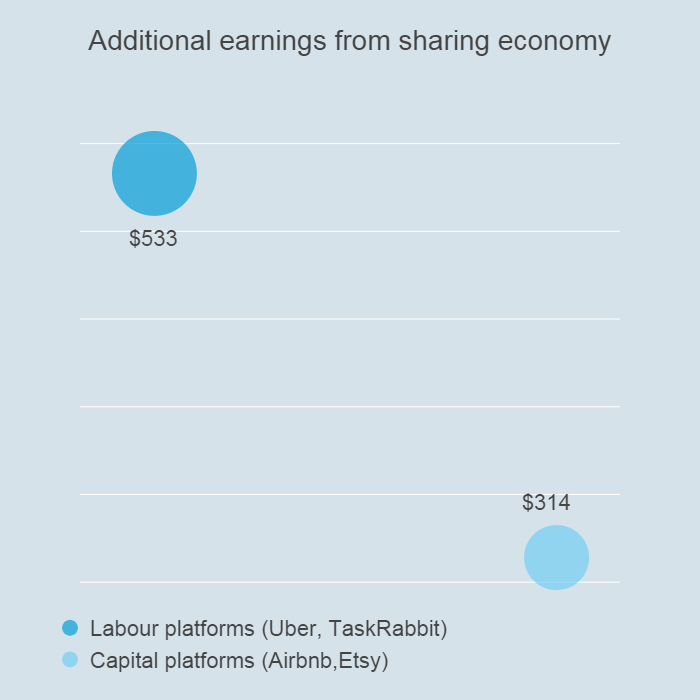
"We distinguish between labour platforms and capital platforms and find that, although labour platforms grew more rapidly than capital platforms, participation on capital platforms was more than 60 percent higher than participation on labour platforms. Although the sheer number of people participating grew rapidly, platform earnings remained a secondary source of income, and reliance on platform earnings did not increase for individuals over time," said the report.

The research shines greater light on the contribution of new platforms to the overall economy and job market. There have been calls in the UK for the sharing economy to be included in official economic figures.

Share this article

  • Facebook
  • X
  • LinkedIn
  • WhatsApp
  • Email

Similarly tagged content:

Sections

  • News

Categories

  • Tech

Trending Articles

  • House prices in wealthy London boroughs fall by up to £300,000

  • Ratcliffe’s Ineos saves Runcorn plant

  • Amazon says it buys books in bulk to ‘improve products’

  • Mike Ashley’s Frasers offers to pay personal shoppers in Harvey Nichols takeover

  • As it happened: FTSE 100 rallies after JD Sports drags on blue chips; oil jumps again

More from Morning Wire

  • JP Morgan boss issues bank tax warning to John Healey

    Banking
    JPMorgan Chase CEO Jamie Dimon
  • War and tax: How the UK economy could get knocked off course

    Economics
    Andy Burnham speaking at a public event, emphasizing local governance and policy changes, wearing a suit and gesturing pas...
  • Healey told tax rises for fiscal remedy are ‘not required’

    Economics
    Massachusetts Attorney General Maura Healey, smiling and gesturing, speaks at a podium.
  • Big bank bosses on alert as tax noise gets louder under Burnham

    Banking
    Two men, one in a white shirt and red tie, the other in a navy jacket, conversing outdoors.
  • Exclusive: Blackstone set to back AI ‘droid’ firm at $3.5bn valuation

    AI
    Blackstone skyscraper with modern architecture under clear blue sky, symbolizing financial power and urban development.
  • Cut student loan repayments to get youths out of chicken shops 

    Retail
    Three young adults enjoying chicken burgers and drinks from a food truck, casually dining outdoors.
  • Ten bold ideas to fire up the British economy

    Economics
    Morning Wire
  • UK economy weathers Iran war shocks but slowdown incoming

    Economics
    Chancellor John Healey smiling, wearing a navy suit, white shirt, and red tie.
MorningWire

Independent European business, markets and political news for decision-makers.

Morning Briefing

Europe

  • Germany
  • France
  • EU Institutions
  • Europe

Business

  • Markets
  • Business
  • Economy
  • Regulation
  • Competition
  • Public Affairs

Editorial

  • Opinion
  • Editorial Policy
  • Corrections
  • Contact

Company

  • About Morning Wire
  • Privacy Policy
  • Terms of Use
  • Cookie Policy
© 2026 Morning Wire Ltd · Published by Morning Wire Media, Bahnhofstrasse 65, 8001 Zürich, Switzerland
Privacy · Terms · Cookies · Facebook