War and tax: How the UK economy could get knocked off course

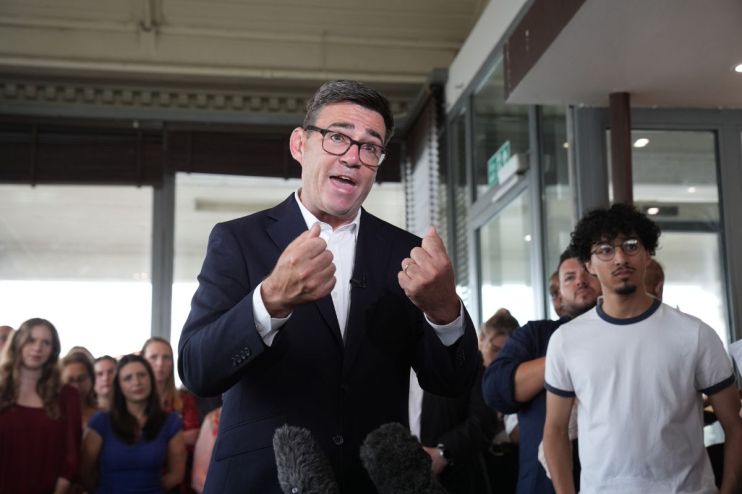
Labour ministers may have some reason to be cheerful about the UK economy’s performance. Torsten Bell, the pensions minister who has long desired top jobs in the Treasury, lambasted “gloomsters” shortly after official data revealed growth in the second quarter of the year was 0.4 per cent.
Even Rachel Reeves, who has remained largely silent on policy affairs since being replaced as Chancellor and kicked out of the Cabinet, took credit for the positive results as she said they were “not inevitable”.
At the beginning of 2026, economists widely expected growth to stagger by the middle of the year. KPMG and Berenberg bank were some of the City forecasters believing growth this year would fall under one per cent.
Data on Thursday revealed that, in the first half of the year, the UK economy expanded by about one per cent. It makes the UK the fastest-growing economy in the G7. Growth watchers might also be positively surprised by GDP per capita improving by one per cent over the year. It might seem like a modest figure but the largest change in any of the last 20 years was 1.1 per cent in 2023 (a rebound from the pandemic) followed by one per cent over 2025. Of course, this run of low growth also speaks for itself.
It’s when the recent set of data is investigated that things might look a little more worrying.
Business investment was 1.7 per cent in the last quarter, much higher than previous expectations. But a boost in the UK economy has largely been driven by investment in the technology sector, a sub-section of services. This might be explained by mostly professional services firms and other company bosses across different sectors putting all their faith on AI. Warnings from the likes of IMF’s Kristalina Georgieva and the Bank of England’s deputy governor Sarah Breeden show that there is a trepidation that such investments could backfire.
Parts of the economy are running on fumes
Production was also flat in the second quarter as electricity, gas, steam and air conditioning supply held UK industry back. While positive contributions to manufacturing activity in areas such as pharmaceuticals and mining should bring some cause for optimism, weaknesses across the energy sector are likely to keep investors and economists monitoring the UK economy’s potential more nervous.
Construction output is also still about two per cent lower than at the same time a year ago, further dampening hopes that a nationwide re-industrialisation programme is underway.
In many ways, quarterly GDP print on Thursday is simply confusing. RB Capital Markets analysts pointed out that S&P Global purchasing managers’ index scores, seen as the top indicator for business activity, pointed to GDP growth of around just 0.1 per cent on a three-month basis, rather than 0.6 per cent and 0.4 per cent in the first two respective quarters. Researchers at the top City firm said it showed the Office for National Statistics’ estimate had become “much more volatile”. The Wales-based body revised down its growth figure for May in the last release, proving just how routine it has become for the crucial figures to be tweaked and revised on a regular basis.
The ONS’ own researchers put down much of the UK economy’s recent gains down to “sporting events”, code for England’s anticlimactic run in the World Cup that kept people coming back to pubs and venues over June. Sunny weather was also highlighted as a top factor prompting Britons to spend more. Thomas Pugh, the economist at the accountancy RSM, said such a boost to growth figures were “temporary” while Schroders’ George Brown said jumps in spending were “seasonal quirks”.
UK economy’s tough road ahead
The coming months are likely to be far more difficult. In the worst case, perhaps KPMG and Berenberg’s pessimistic forecasts before the Iran war do come to light if the UK economy suffers contractions over the next six months of data.
Economists have widely put the fate of the UK economy’s next six months down to two major events. First, the outcome of peace and trade negotiations in the Middle East and, secondly, John Healey’s first Budget.
For a government searching for savings wherever it can, there is likely more value for money for the Treasury to invest in a cheap monitor showing President Donald Trump’s Truth Social feed, rather than Bloomberg terminals, which are laughably scarce in Whitehall. The knock-on effects of continued disruption across the Strait of Hormuz off the coast of Iran are stark.
Should supplies remain trapped in the Gulf region into the middle of next year, leaving the wider world economy without a fifth of oil and gas supplies, some independent forecasters believe the UK economy could slide into a recession. Disruption lasting just a few more months could also force the Bank of England to hike interest rates, tightening monetary flows and weakening demand. According to Bloomberg, Andy Burnham and Healey have been warned by Treasury advisers that GDP growth would come to just 0.3 per cent in 2027 if the strait remained blocked this year while inflation would peak at 4.3 per cent.
It therefore makes the Budget all the more important, with the current government doubling down on their commitment to make the UK economy “more resilient” and better able to withstand shocks. Capital Economics has estimated that, given the assortment of spending pledges made on the cost of living and defence, tax rises and spending cuts may have to total a further £25bn by 2030. Cue government opponents and top business executives bringing out Laffer curves showing the impact that tax rises could have on growth and government income, or fresh calculations showing just how new capital gains taxes or other wealth levy ideas could stifle investment and damage confidence.
Just over two months out from the 28 October statement, lobbying on key Budget policies relating to business taxes, energy and even bingo halls is well underway.
Perhaps more importantly for the UK economy’s hopes of maintaining its six-month run of modest momentum is how the Treasury manages speculation. Last year, as government sources floated ideas on everything from pension tax overhauls to income tax hikes, the UK economy stumbled to lower and lower growth rates. Andy Haldane, the former Bank of England chief economist who was later claimed as a Burnham adviser, said a pre-Budget “fiscal fandango” had led to “paralysis” in investment.
Inflation is set to peak around the winter period, so the pressure on Healey and Burnham to provide some energy support relief will likely build up. But the UK’s growth prospects is set to be the bigger unknown. KPMG economist Yael Selfin warned that pre-Budget nerves would slow down consumer spending while an expected slowdown in wage growth would “squeeze” spending powers.