Negative interest rates are a bad idea – even if they do stimulate the economy

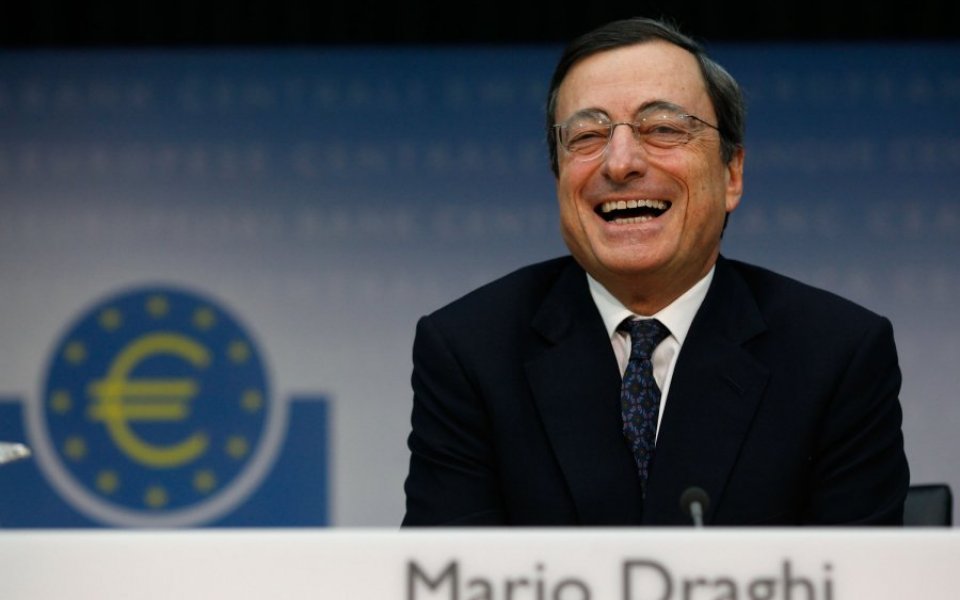
Negative interest rates are the economic hot topic du jour. The Bank of Japan recently moved to join the club of central banks that charge commercial banks for depositing excess reserves. The European Central Bank, already a member of the Negative Interest Rate Policy (NIRP) club, is widely expected to drag rates deeper into negative territory at its upcoming meeting on 10 March.
The rationale behind this lies with the power of rate cuts to stimulate the economy. NIRP is thus advertised as an extension of conventional monetary policy: lower interest rates ease the burden on debtors, creating incentives for households to spend and for businesses to invest. In reality, it is a marriage of conventional (using the interest rate as a tool) and unconventional (moving into negative territory) elements of monetary policy.
There are two important questions to ask: is this going to work and do we want it to work?
Unconventional policy measures are by definition a leap into the unknown and hence difficult to judge ex ante. So far, the evidence has been mixed when it comes to the NIRP’s record in helping raise inflation expectations and restore market confidence.
While it is too soon to draw any meaningful empirical conclusions, however, what we have seen in the short aftermath of the introduction of negative rates is not encouraging. Equity prices and inflation expectations have fallen steeply in the Eurozone, Switzerland, and Japan. This is not least because markets are interpreting these moves as an act of desperation from policy-makers, thus fuelling – rather than soothing – worries about the global economy.
There are, of course, multiple factors at work here and NIRP is not the only one to blame: rising economic and geopolitical uncertainties and continued oil price weakness are certainly playing a role. One could even say that NIRP hasn’t gone far enough to change behaviour. Banks have not yet passed on the charges to their customers and are instead choosing to let their profitability take the hit (hence the collapse in bank stocks).
But even if the public itself were faced with negative rates, there are still doubts over whether this would impact behaviour: households might choose to store cash under the proverbial “free” mattress to avoid storing it in “costly” banks. The most straightforward way to prevent this would be to abolish cash – but this is not for central bankers to decide. The same could be said for corporates, although the storage cost for higher cash amounts could quickly prove unmanageable.
All this suggests that negative rates probably need to be cut further if they are to be effective. This would be a mistake. As we’ve spent over seven years following the Great Recession trying to discourage banks from making risky loans and investments, engineering policy to encourage more lending seems dangerous to say the least. It would likely attract exactly those risky borrowers that would have otherwise struggled to access funding.
Moreover, encouraging households to take on more debt would reinforce the existing disproportionate dependence of economic recoveries on consumers, risking sustainability. Not to mention the problems that lower returns on savings would create in ageing societies.
Finally, at the heart of the impotency and the undesirability of NIRP lies an important policy contradiction: policy-makers are lowering rates to encourage lending with the one hand, while using the other to tighten regulation through, for example, the introduction of capital requirements for lending to SMEs.