Skip to content
Saturday 12 September 2026London --:--Frankfurt --:--Zurich --:--
NewslettersSearchEN · DE · FR
MorningWire

European business, markets and politics

FTSE 100
10,650.44
+0.39%
DAX
25,568.56
+0.82%
CAC 40
8,179.77
+0.78%
STOXX 50
6,325.13
+0.90%
  • Europe
  • Markets
  • Business
  • Economy
  • Regulation
  • Politics
  • Opinion
More
GermanyFranceEU InstitutionsCompetitionPublic AffairsBankingTechnologyEnergy
  • Germany
  • France
  • Europe
  • Markets
  • Business
  • Economy
  • Regulation
  • Politics
  • Opinion
  • DE
Wednesday 18 December 2019 4:03 am  |  Updated:  Tuesday 17 December 2019 5:35 pm

A lesson in cognitive dissonance for the Corbynites

By: Paul Ormerod

Add as a preferred source on Google
BRITAIN-EU-POLITICS-BREXIT
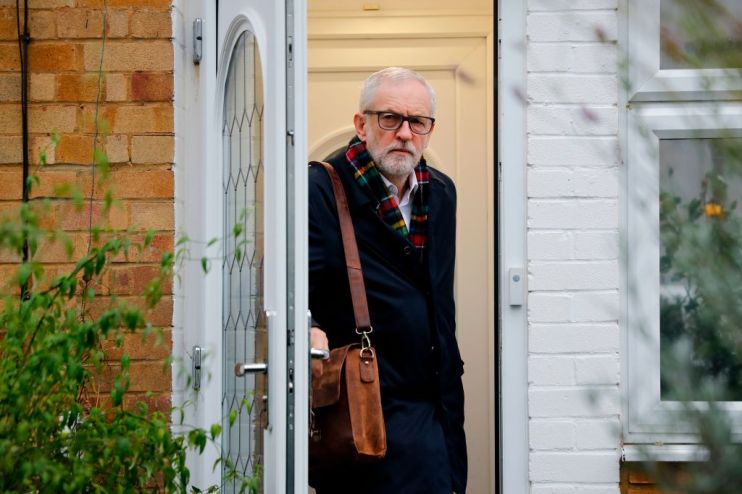
Information about Jeremy Corbyn’s unpopularity with voters was ignored by the Labour party.

Behavioural economics — which extends the ability of economics to explain the world — has become very fashionable.

Richard Thaler, Nobel Prize winner for his work in this area, observed that most of the time, the rational choice model of standard economics works well. People gather information on the various alternatives open to them, and choose the one which fits their preferences most closely.

Behavioural economics comes into play when people are observed to deviate from the predictions of this model. To explain this, Thaler points out that economists borrow bits from psychology and add them on to their basic rational choice theory. He has shown how various psychological concepts, such the so-called “endowment effect” and the “sunk cost fallacy”, can be used to explain why people make irrational choices.

Yet one important piece of psychology which economists have not used so far is the concept of cognitive dissonance. 

The US psychologist Leon Festinger encountered a classic example when he infiltrated a group which believed that a catastrophic flood would end the world on 21 December 1954. The appointed day came and went, and the world was still there. Rather than processing this information rationally and abandoning their discredited beliefs, group members adhered to them even more strongly. The fervour of their proselytising increased. 

Another important instance is seen in the Ukrainian famine of the early 1930s. On Stalin’s instructions, the Soviet military and armed members of the Communist Party seized the grain in the Ukraine. Millions died as a result.

The ardent young Communists turned on the Ukrainians and accused them of terrorism.  The peasants were, despite all the evidence to the contrary, deliberately starving themselves to death in order to discredit socialism. Any Party member who disagreed was shot.

Read more

What are we to make of John Healey? Time will tell.

John Healey - Chancellor

A much less harrowing example is given by Jeremy Corbyn and his cult during the General Election here. 

The Friday before polling day, I was in my home town of Rochdale, having a drink with a couple of long-standing friends, both very experienced local Labour members. They were certain that Labour would lose. Brexit was certainly being mentioned on the doorsteps as a reason why voters weren’t supporting Labour, but the main reason was Corbyn.

My friends made specific predictions on the basis of rational analysis of the evidence. The neighbouring seat of Heywood and Middleton (majority 8,000 in 2017) would be lost. It was.  Elsewhere in Greater Manchester, the Tories would win Leigh, Labour since 1922. They did.

Information of this kind, gathered on the ground by experienced agents, was fed back to the Labour leadership throughout the campaign from all over the country. It was pointedly ignored, possibly on the grounds that the informants were right-wingers trying to discredit the Dear Leader.

The electorate took some time to discover the reality of Corbyn. But once they had done so, far from displaying cognitive dissonance, they made a rational choice.

Now Labour, if it is ever to recover from defeat, should learn the same lesson.

Main image credit: Getty

Read more

TOURISE and Oxford Economics Release New Global Report on Tourism Resilience in an Era of Permanent Disruption

Share this article

  • Facebook
  • X
  • LinkedIn
  • WhatsApp
  • Email

Similarly tagged content:

Sections

  • Markets & Economics
  • News
  • Opinion

Categories

  • Economics
  • Opinion
  • Politics

Trending Articles

  • Wetherspoon boss: ‘Not up to Burnham’ to choose who is on the high street 

  • Primark sales slip as owner dresses up retailer for demerger

  • Badger Beer maker Hall & Woodhouse doubles profit ahead of tie-up with James May

  • Crystal Palace owner Blitzer part of £1bn mega stadium redevelopment

  • Barclays faces legal scrutiny over role in £90m ‘Ponzi scheme within a Ponzi scheme’

More from Morning Wire

  • What are we to make of John Healey? Time will tell.

    Economics
    John Healey - Chancellor
  • TOURISE and Oxford Economics Release New Global Report on Tourism Resilience in an Era of Permanent Disruption

    Business Wire
  • The only answers to over-tourism are prices or queues

    Opinion
    Tourists photograph the ornate white marble Trevi Fountain in Rome, Italy.
  • Hedge fund billionaire Chris Rokos joins UK wealth exodus 

    Wealth
    Chris Rokos, a man with glasses and a beard, smiling in a dark zipped sweater against a grey background.
  • Investors risk losing life savings with unregulated services, watchdog warns

    Regulation
    The FCA has introduced new proposals to close the financial advice gap.
  • Fifa crisis: Is it possible to defend Infantino’s World Cup sell-off plan?

    Sport Business
    Gianni Infantino speaks near the FIFA World Cup trophy as Donald Trump sits, wearing a red Trump Was Right About Everythin...
  • Hospitality sector blasts Burnham’s uncapped tourist tax

    Economics
    Andy Burnham and Angela Rayner laughing, looking at a document in a casual meeting setting
  • Jenrick: Welfare cuts worth £50bn allows us to ‘sustainably pay’ triple lock pension

    Politics
    Robert Jenrick speaking at a podium with BRITAIN NEEDS REFORM sign, delivering a speech.
MorningWire

Independent European business, markets and political news for decision-makers.

Morning Briefing

Europe

  • Germany
  • France
  • EU Institutions
  • Europe

Business

  • Markets
  • Business
  • Economy
  • Regulation
  • Competition
  • Public Affairs

Editorial

  • Opinion
  • Editorial Policy
  • Corrections
  • Contact

Company

  • About Morning Wire
  • Privacy Policy
  • Terms of Use
  • Cookie Policy
© 2026 Morning Wire Ltd · Published by Morning Wire Media, Bahnhofstrasse 65, 8001 Zürich, Switzerland
Privacy · Terms · Cookies · Facebook