A regulated journey in the cryptoasset world

Throughout Archax’s journey to create a regulated, global, digitally-native exchange, we have been constantly monitoring the evolution of regulators and regulations throughout the world of cryptoassets – and when we say ‘world’ we literally mean it, as it is a global evolution that is taking place.
Any business seeking to operate in this new, exciting, ever-evolving world needs to closely consider a few key things though – their business model, their activities and how regulations will affect their own evolution. What instruments do you intend to operate with? What regions do you intend to operate in? What services are you planning on offering? And to whom are you planning on offering them? Once those factors are decided, you can start your journey of discovery.
In the first instance, you need to understand whether the jurisdiction you are looking to be based in considers cryptoassets to be a new instrument type or an existing instrument type on a new technology, and how they are then regulated. For example, Bitcoin may be a new instrument type to some, whereas a digital security may be considered as just an existing security on a new technology.
Outside of your ‘home’ jurisdiction, you then have the complication of how cryptoassets are defined and regulated in every other jurisdiction in which you intend to operate. Do they cover cryptocurrencies? Do they include securities? Do they cover commodities, currencies or anything else? As an extra complexity, this definitional element will differ by region too.
When this has been done for each jurisdiction, the business can start considering how the chosen business model can operate across borders. For example, as a UK exchange, how can I allow a German issuer to admit their security to be traded on a UK venue, settled in Euroclear and traded between participants from the US and Denmark?
As one can imagine, trying to search on Google for “Can I trade a German issuance on a UK exchange with participants from the US and Denmark”, would probably yield low results! And anyway, once you throw in the “in a digital security form” too, you are definitely in unchartered territory. At this point, you must dig deep into relevant legislation and regulation, and often approach people in the traditional space to understand how these things operate in the pre-digital world too. When you do this, what you will find is that there is a wealth of information and a good number of knowledgeable people who can help shortcut a lot of these questions. When you strip out the digital element, a lot of these questions have actually been asked before.
Sometimes, going along this journey can feel like you are swimming uphill and that the financial markets are simply just not built to evolve. However, by digging into the detail you can start to really understand how the market operates, where it doesn’t function efficiently and where the opportunities really are. You start to see how the power of distributed ledger technology and smart contracts can really bring about a fundamental and beneficial shift in the way in which financial services and capital markets operate. These improvements and efficiency gains will ultimately result in an increased accessibility to markets for all those looking to raise money, as well as for those looking to invest too. If ever there was a time to be considering improving access to capital markets for companies, it is right now.
Throughout our journey at Archax we have found ourselves often having to look at compromising on where we think the world should go, what the technology is capable of and what regulations and institutions expect. That does not mean that we cannot see a capital markets world with reduced centralised players, increased non-custodial solutions and greater automation. But rather that we appreciate that regulation exists for a reason and that unless those controls can be considered in the new world, the proposed solutions will not gain true mainstream adoption or traction.
Despite the unprecedented challenges of 2020 that we have all felt, it has also been an interesting year for developing an increased understanding of the benefits that digital financial services can bring. And as the regulators see increased digital prominence in society, there has been an increased level of scrutiny on those who operate in the space as well. The Cryptoasset designation in the UK is an example of this, and the recent statements by the Bank of England show that not only are Central Bank Digital Currencies being discussed openly, but also that regulators are starting to realise the risk that stablecoins could bring to financial markets if not regulated properly.
As with a lot of the innovation in the crypto space, there appear to be cycles of innovation, realisation and, finally, regulation.
For example:
- Digital securities feel like they have moved through the ‘realisation’ phase and into ‘regulation’.
- Stablecoins are gradually shifting towards increased regulation.
- DeFi is still largely in the ‘innovation’ phase, but there are signs of regulation, such as the recent approval of Aave as an Electronic Money Institution.
From Archax’s point of view, we do not view regulation as a necessary evil. We think of it as inevitable when operating in the area of financial services. Thinking about how innovation can be structured to work hand in hand with regulations builds a moat in preparation for the time when regulation is more widespread across the cryptoasset world.
The journey is really only just beginning…
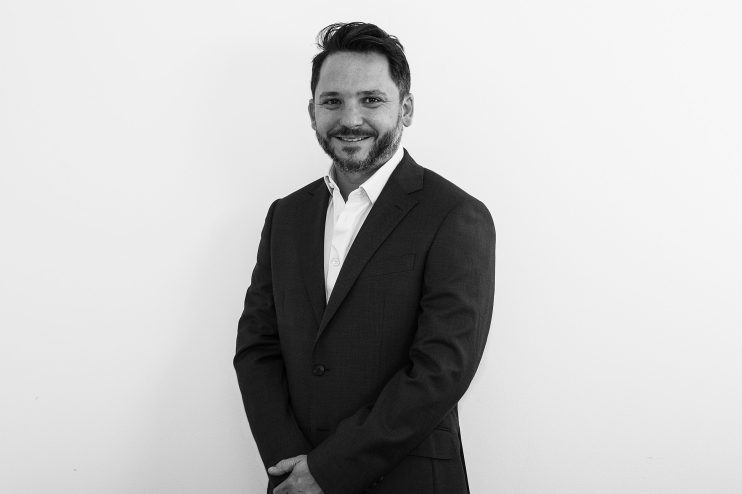
Graham is a qualified accountant, with over 18 years’ experience in financial services. Prior to Archax, Graham was COO, CCO and Partner of Omni Partners, a $1.4billion hedge fund based in London, where he was responsible for all operational activities and compliance.
Before Omni, Graham held several senior operational, finance and compliance roles in the asset management and banking space, including HSBC, Caliburn Capital, Leo Fund Managers and Coutts Bank.
Graham has worked in both digital asset and traditional markets and has been responsible for funds across a wide range of investment strategies – including macro, event driven, long short, systematic and private equity. He has also run operations for an $8billion alternative investments business and has worked throughout his career in various regulated environments, including the FCA, SEC and NFA/ CFTC. Graham has a BA (Hons) Accounting from the University of Bournemouth.