Adair Turner: Crypto? It’s like buying tulips in 1635

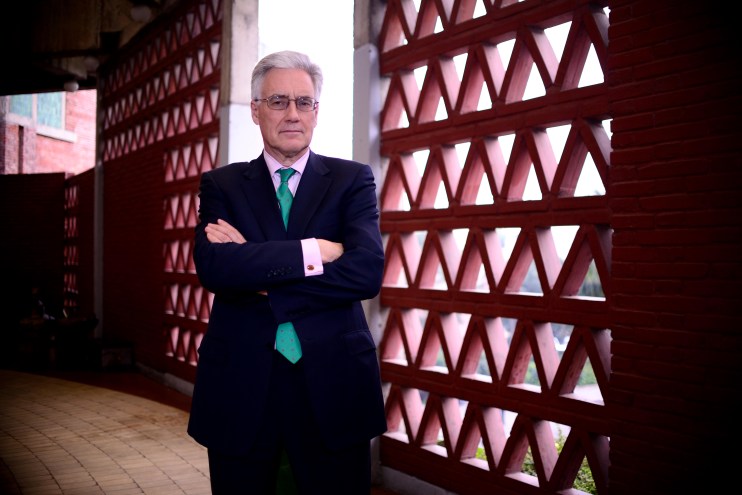
As chair of the FSA at the height of the 2008 financial crisis, Adair Turner knows all about the anatomy of a global crash. Over 15 years on, exuberance in AI and opaque private credit markets have set warning systems flashing. Ali Lyon, spoke to the arch-technocrat to see whether the fears are justified, and what – if anything – we can do about it.
Despite it being more than 15 years ago, Adair Turner can still recount – in exacting detail – the month that defined his career.
It was September 2008, and the City luminary – whose senior posts at the CBI, Climate Change Commission and George Soros’s Institute for New Economic Thinking have earned him the moniker, ‘the technocrat’s technocrat’ – was about to take on one of the biggest roles in the Square Mile at the most pivotal juncture in UK financial history.
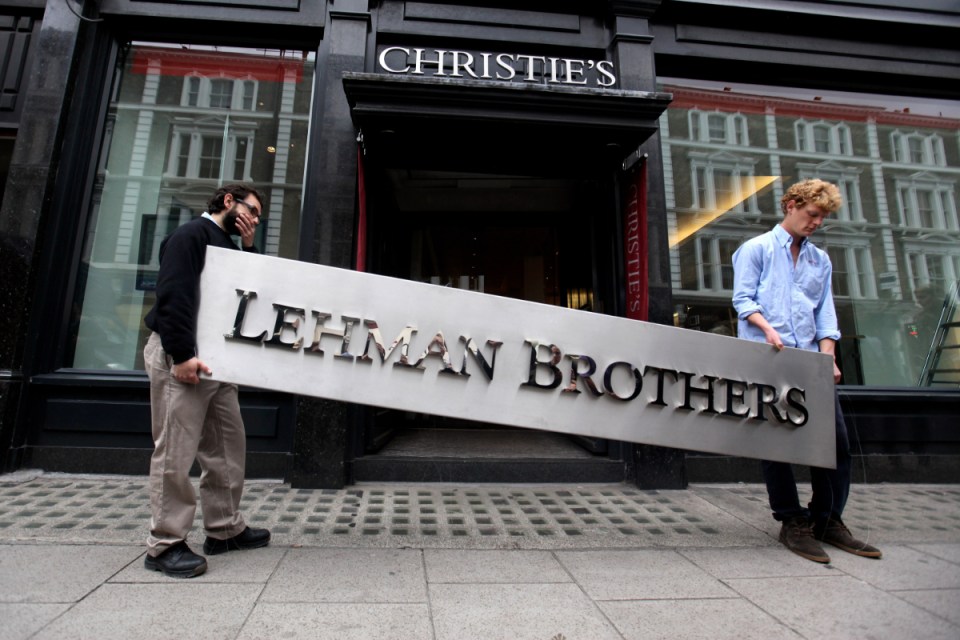
Five days before his first official day as chair of what was then the Financial Services Authority (FSA – now the FCA), Lehman Brothers, the American banking colossus with $600bn under management, collapsed. Turner received a phone call.
“The previous chair rang me and told me to move my starting date from Monday to the previous Saturday,” he recalls, in an interview with Morning Wire, “because we couldn’t have a weekend with nobody in charge.”
It was just as well they did. That very Sunday, the former Merrill Lynch vice chair’s morning was interrupted by the failure of the Bradford and Bingley building society, an early portent of what the rest of his five-year term had in store. The following weekend, the Icelandic banks toppled. Then it was the turn of Ireland’s lenders.
“You could just see it was like one of those giant snowballs rolling down a hill,” he says, “and it just gets bigger and bigger as you push it down the lawn.”
The baptism of fire culminated – about a fortnight later – in a face-off that will go down as one of the defining moments in UK financial history. On one side of the table, sat then Chancellor, Alastair Darling, Bank of England governor Mervyn King, and Turner. On the other, were the chief executives of all of Britain’s biggest banks – including the notorious Fred ‘the shred’ Goodwin – whose RBS was facing financial oblivion.
One by one, they revealed how much liquidity they would need from the Bank of England and the government. And one by one, agog, the Square Mile’s three most senior policemen listened.
“It was two and a half weeks of extraordinary history, adrenaline – and a huge crisis,” he says.
Turner: Crypto is basically financial engineering
In the years that have followed, Turner’s FSA – and his colleagues at the Bank of England’s Prudential Regulation Authority – brick by brick rebuilt the regulatory consensus. They enhanced supervision, and foisted higher capital and liquidity requirements and enormous reporting restrictions on an industry that had been used to decades of light-touch policing.
That period, unsurprisingly, served to forge his entire subsequent worldview: one which at simultaneously marvels at markets’ ability to drive innovation, and reflexively detests the mass financialisation of the global economy. He famously declared the work done by much of the City’s financiers was “socially useless“, and in 2015 was equally inflammatory with the choice of the title for his best-selling book: Between Debt and the Devil.
And yet – despite all that – I am speaking with the arch technocrat to mark his two year anniversary as chair of one of the UK’s most celebrated fintechs, Oaknorth. The firm isn’t one of the many fast-growing payments firms the capital can lay claim to. Nor is it an ‘insurtech’ or ‘prop-tech’ or other corner of financial innovation with a -tech suffix. Rather, as a mid-market bank, it is part of the very system whose excesses Turner so passionately, and ruthlessly, reined in 15 years ago.
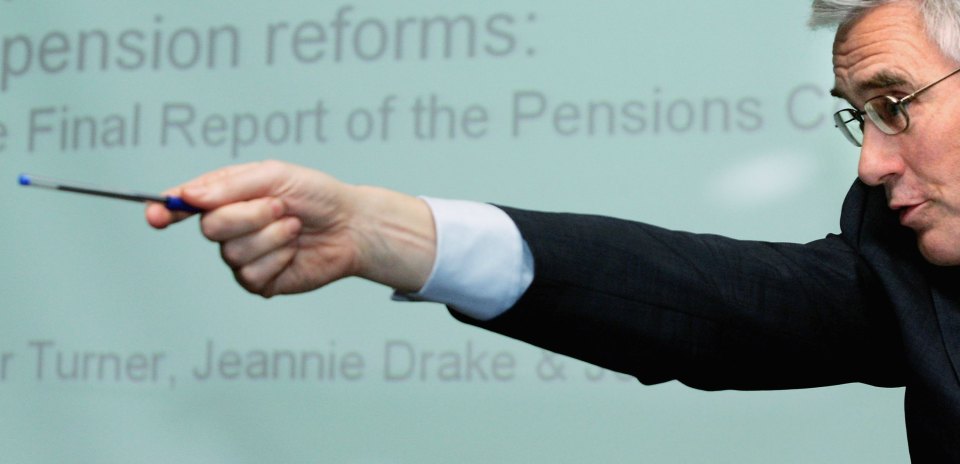
But according to my interviewee, Oaknorth – which recently made its first foray into the US with its acquisition of a regional bank in March – practices an altogether different, more valuable, style of lending. Unlike the lucrative financial arbitrage or fast-paced FX trading practiced by many of the industry’s swashbuckling giants, in Turner’s eyes, Oaknorth exists to provide companies with the means to produce “restaurant meals, good manufacturing plants and good property developments”.
The precise opposite, he says, of the vast quant houses like Jane Street and Citatel or, to an even greater extent, another fledgling area of finance that has long been Turner’s ultimate bete noir: cryptocurrencies.
His laser focus on the ultimate goal of finance being to creating value – and not “to have fun and do financial engineering to make money for yourself” – leaves little room for any sympathy towards the blockchain-based financial innovation. Indeed, over a three-minute diatribe against the speculation that investing in bitcoin or XRP encourages, his disdain for the intellectual and electrical resource that is piled into it is palpable.
“I think cryptocurrency is pure financial engineering for its own sake,” he says. “It won’t help us deliver an improved health service… or better property developments. What it is, at its core, is a new arbitrary asset – and we’ve always had a big arbitrary store of value asset; it’s called gold.”
But what about the increasingly mainstream view that – penned in by their astronomic debts – governments will quietly give up on interest rate targeting, debase their respective currency (known generally as fiat currencies) and inflate away their debt? Do crypto or gold play a role for society then?
“Well, property is a natural hedge against devaluation of fiat currency because it’s a real asset, he counters. “And unless the world blows up in 50 years time, equities will have gone up with GDP. That’s what they’re bound to do. Whereas crypto is just a free floating thing. It’s a tulip in 1635.”
Oaknorth ‘keeping a close eye’ on US credit market
Far from being vehicles for speculation, midsized lenders like Oaknorth, help finance the very farms that grow them, providing the capital – and thus wherewithal – to create jobs, value, and things like actual tulips to buy, not bulbs to speculate on.
“What we do is a combination of incredibly intense mathematical, analytical credit analysis, tearing apart every figure you can get your hand on,” he says. “And that, we combine, with good, old fashioned, visit the site, kick the tires and look-at-the-borrower-in-the-eyes banking.”
The Oaknorth approach is one that, on paper at least, has worked. In just 10 years, the bank has lent £12.5bn to medium-sized businesses, netted a $2.8bn valuation in 2019, all while boasting one of the lowest default rates in the industry. And while its leadership is at pains to say an IPO remains a distant aspiration, it remains one of the most anticipated listing contenders in London.
That track record – and a recent revelation that Trump son-in-law Jared Kushner bought an eight per cent stake in the lender – will both be pivotal if it wants to make a success of its foray into the world’s largest economy. And – as a keen student of financial crises – Turner is all too aware that recent tremors in the US credit markets across banking and private credit mean they will have to be hypervigillant.
“We’re keeping a close eye on the changing nature of the US credit market,” he says. “It does look like there is a danger that it could go off in that overheated direction. But if you’re the disciplined guy you can still make good money.”
Turner highlights the $150m hit disclosed by JP Morgan – “one of the best-run banks in the world” – over its exposure to Tricolor Holdings, a US subprime auto lender whose collapse in September coincided with two other debt-related failures.
The trio of bankruptcies, which also comprised the failures of Primalend and auto parts maker First Brands – triggered a stream of warnings. Like Turner’s own experience with Icelandic banks and Bradford and Bingley, the firms’ ballooning debts were harbingers of looming systemic crisis.
No repeat of 2008… yet
For now, though, Turner doesn’t see these murmurings of disquiet building into anything bigger, this time round.
“I’m not expecting to see a big systemic financial crisis,” he says. “And so far, if you think about the last few years, most of the things that have happened have been idiosyncratic.”
He lists the 2023 collapses of Silicon Valley Bank and Credit Suisse as well as the more recent failures, as all successfully avoiding the kind of mass contagion redolent of the height of the GFC, with people queuing outside banks, desperate to get their life savings out.
He is equally sanguine about the systemic threat posed by an AI boom; the markets megatrend of today that many investors, including Michael Burry of ‘Big Short’ fame, fear is teetering on the brink of a major correction. In Turner’s eyes, even if we do see a crash on the scale of the dot com bubble , its fallout will likely be restricted to an equity market bloodbath, without many real economy consequences.
“All big financial crises we’ve ever seen over the last 50 years are about credit cycles in property and complicated, unmonitored interconnectedness between different bits of the system,” he says. “We’re not seeing that in AI yet.”
There are signs that may be changing. In the days after our conversation, two major gear shifts in the AI arms race occurred. First, Meta unveiled plans to issue a record-breaking $30bn bond sale. Then Google-owner Alphabet tapped European fixed income investors for billions of Euros. Larry Ellison’s Oracle has also lent heavily on debt markets.
But if Turner’s logic is to be applied even to those decisions, we still don’t need to fear an imminent repeat of 2008, thanks to the fact the regulatory scrutiny on, and requirements for, banks is such that any fallout should – in theory – be manageable.
Ultimately, the foundations of that belief can be traced directly back to those early days he had in post at the FSA, looking into the whites of Fred ‘the shred’ and Santander boss Antonio Horta-Osorio’s eyes alongside Darling and King. Decisions made in that room and in the years that immediately followed them mean that today, banks should be able to weather most storms that hit them. That is, he adds, on the condition – and it is a big condition – nothing changes to the amount of liquidity and, crucially, capital that lenders are obliged to have.
“Capital in banks is a bloody good thing,” he smiles. “I played my role in making sure that we have a hell of a lot more capital in banks than we had before. And if they put nothing on my gravestone other than that, I’d be happy.”