Airlines are so high up the pyramid of capitalism they no longer compete on price

In November last year, an inverted pyramid of conspiracy theories went viral. Those at the bottom, at the tip of the upside down triangle, – those most grounded in reality – include “Big Tobacco lied about lung cancer” and “NSA mass surveillance”. The top, labelled the “antisemitic point of no return”, stretches from reptilian overlords, Holocaust denial, Illuminati and Nazis on the moon.
It’s a useful illustration of how extremism works, and builds, one layer creating the building blocks for the next. You could use a similar model for a less pernicious C word – capitalism. Right at the very top of a capitalist pyramid would be airlines. Since the pandemic, the cost of flying has soared, and the quality has plummeted.
The world’s first low-cost airline was Pacific Southwest Airlines, which started flights between Dallas, Houston and San Antonio in the US. It turned a profit for 47 consecutive financial years from 1973. The first year it made a loss was in the first year of the pandemic.
Since then, Virgin Air, Ryanair, Wizz Air, and almost countless others have been spawned from Southwest.
The quality of airlines like Wizz or Vueling is now so unreliable, so liable to be delayed or cancelled, that Easy jet, once fondly nicknamed “sleazy jet” for its cheap flights at ungodly hours from periphery airports, has almost been elevated to the likes of British Airways, which, itself, is long past its prime.
And yet, the costs keep going up. The airlines blame the pandemic, they blame the cost of fuel, they blame the airports, the striking staff.
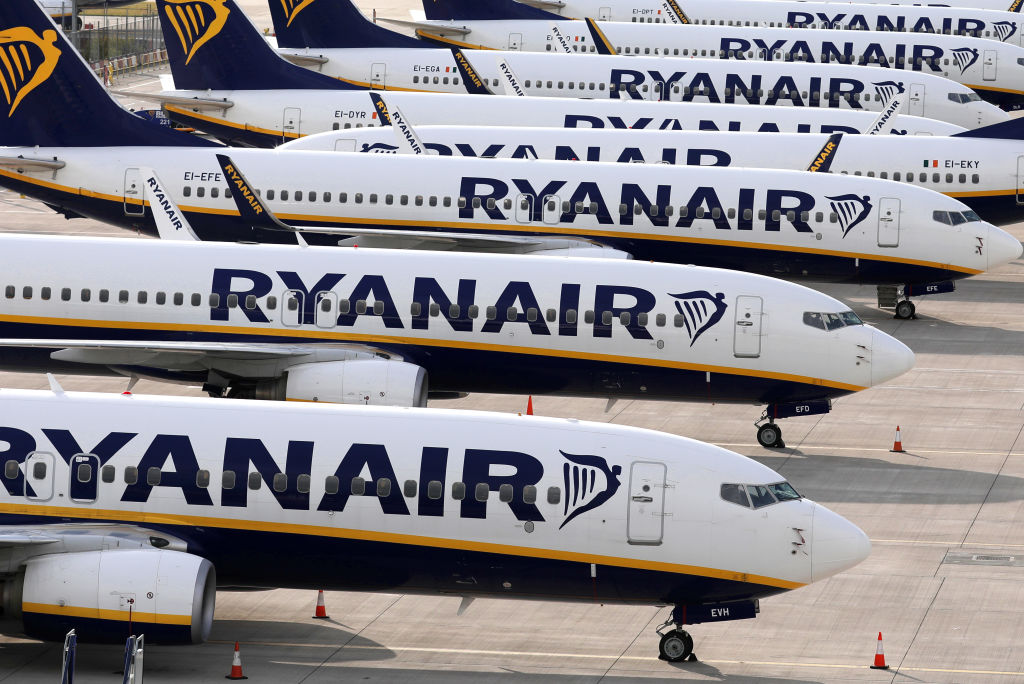
Last week, in the same breath that they posted record profits of £1.26bn, Ryanair warned about a higher fuel bill and delays on new Boeing planes.
Michael O’Leary, the chief executive, said the cost of flights would rise by 15 per cent over the summer.
Airlines aren’t so much as milking it as making their own-brand cool-aid and make us drink it (for a cost, of course). Where a carry-on bag was once a given, anything bigger than a handbag can now add £70 onto the cost of a flight to Europe.
Families, refusing to shell out to sit next to one another, frequently cause a mini-upheaval as they ask air hostesses to move everyone around to seat them together once they board.
This “unpackaging” model was once actually quite convenient. It meant those to whom large-carry on baggage or aisle seats was important, could pay to include it, without meaning the cost of all of this was bundled into the one set cost of a flight, allowing them to charge cheap prices for the basic rate. In other words, it enabled flexibility and consumer choice, all the things capitalism is known for achieving through competitive markets.
But the airlines have, in unison it seems, decided to treat this not as a useful model, but a kind of endless cash cow. The undercutting which was once the bread-and-butter of low-cost airlines has given way. I have little doubt there are rooms in the hallways of all the HQs of airlines where people semi-regularly pile in to figure out what they can charge extra for next.
Enter Qantas, the national carrier of Australia, and one of the most upmarket airlines, on par with British Airways or some of the better Asian carriers.
Qantas has said it expects to post a record underlying profit of up to AU$2.48bn, almost a billion dollars higher than its previous record in 2018.
Last week, the airline also announced a new feature: neighbour free flying. Instead of staring, fingers crossed, at the empty seat next to you, you can simply pay for it – like everything else on a plane. Between two days to an hour beforehand, customers can pay AU$65 (£35) to choose a seat without a neighbour. If the airline ends up filling the seat, they will issue a refund.
On one level, it’s ingenious. Where Qantas can’t fill the seats, they can still make some cash.
On the other hand, it’s a signal of just how far up the capitalism pyramid we have climbed.
Monopolies have long been blamed for high costs to consumers or unfair terms. The airline industry is rife with competition, especially in Europe. And yet, no one seems to be competing on price anymore. The big names seem to have tacitly accepted they no longer need to fight for customers where they can charge for extras. The creep of prices will continue until, eventually, we find ourselves being charged to have a tray table. God only knows all we want is to be able to pay for a plane which arrives at all, let alone on time.