Skip to content
Friday 21 August 2026London --:--Frankfurt --:--Zurich --:--
NewslettersSearchEN · DE · FR
MorningWire

European business, markets and politics

FTSE 100
10,816.56
+0.64%
DAX
26,136.56
+0.59%
CAC 40
8,484.43
+0.37%
STOXX 50
6,462.22
+0.63%
  • Europe
  • Markets
  • Business
  • Economy
  • Regulation
  • Politics
  • Opinion
More
GermanyFranceEU InstitutionsCompetitionPublic AffairsBankingTechnologyEnergy
  • Germany
  • France
  • Europe
  • Markets
  • Business
  • Economy
  • Regulation
  • Politics
  • Opinion
  • DE
Wednesday 26 July 2023 6:36 am

Alison Rose: How the first woman to lead a major British bank ran Natwest

By: Morning Wire Reporter

Add as a preferred source on Google
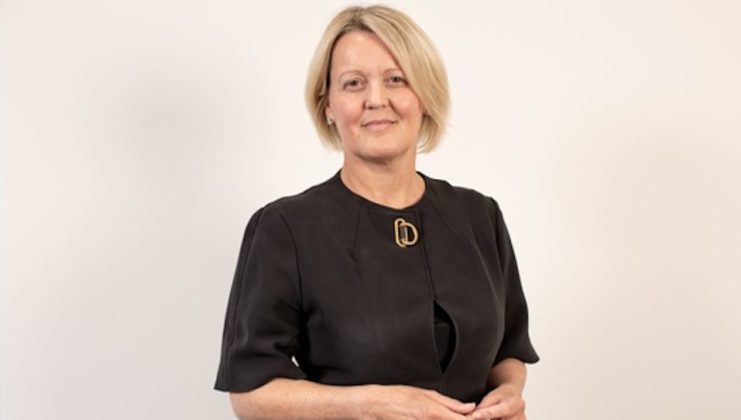
Natwest former chief executive Alison Rose was cleared of misconduct
Alison Rose, Former Natwest boss Alison Rose

Dame Alison – or just Ms Rose as she was at the time – made history in 2019 when she became the first woman to take the top job at one of the UK’s big four banks.

She took over a bank from New Zealander Ross McEwan, which had stabilised after the financial crisis nearly killed it.

But there were still major challenges for the then 49-year old as she took the reins of the Royal Bank of Scotland (RBS) Group.

Seen as a details-oriented chief executive, in private her employees would say that her grasp of what was going on at the bank could leave them scrambling in response to her questions.

After the massive change under Mr McEwan, Dame Alison was seen as a continuity candidate whose consistency and reputation as a reliable banker would help steer the bank through a less turbulent time.

In the six years preceding her appointment, the group had seen its headcount reduce from 109,000 to 66,600 and it had withdrawn from 26 of 28 countries.

But as she took charge for the first time, it was clear Dame Alison wanted to make an impression, complaining that the bank was still “far too complex” and that it was “difficult to get things done”.

However, one of her first big marks on the bank was, fairly cosmetically, to change its name from the scandal-ridden RBS brand to NatWest.

RBS Group had briefly become the world’s biggest bank prior to the 2008 financial crisis thanks to a spending spree which included buying NatWest in 2000 and Dutch bank ABN Amro in 2007.

But by 2020 the eponymous bank had been outshone by NatWest within the group.

By then 80% of RBS Group’s customers banked with NatWest, not at RBS branches. It did not escape eagle eyes that Dame Alison had also risen up in a 27-year career at NatWest before being appointed chief executive.

One of the other key tasks for the chief executive was to oversee a slow transition back to private ownership.

When her appointment was announced, the Government still owned 62% of RBS Group, a legacy of the company’s financial crisis bailout.

It was a steady process and by March last year the Treasury finally reduced its stake in NatWest Group to less than half.

Read more

As it happened: FTSE 100 climbs as markets digest Bessent buyback

Scott Bessent, a man with gray hair and glasses, wearing a blue suit and striped tie, looking to the side.

Perhaps two outside issues came to dominate much of Dame Alison’s time as NatWest Group boss.

The first was a gradual switch away from the bank’s more carbon-intensive business.

Just three months into her tenure the group said it would no longer provide funding to oil majors unless they had a “credible plan” to ensure their businesses were in line with the Paris climate agreement.

It followed just days after BP announced a plan to move to net zero, and pre-dated Shell’s own similar promise.

Since then NatWest has announced a series of further ultimatums to its business customers to set in place decarbonisation plans or find another lender. It has also promised billions of pounds in green funding.

Dame Alison probably expected to deal with climate issues when she took the top job, but her big unforeseen challenge was the Covid-19 pandemic.

Alongside other lenders, NatWest was at the forefront of the Government’s plan to prop up the economy during lockdowns.

By July 2020, NatWest had already lent £5.8 billion to smaller businesses through the bounce back loan scheme, and a further £2.3 billion in coronavirus business interruption scheme loans.

That month NatWest posted a £770 million loss for the first six months of the year, after it set aside a mammoth £2.1 billion to cover loans it thought might go bad largely as a result of the economic shocks of the pandemic.

In 2021 NatWest announced it would exit Ireland, eventually deciding to sell Ulster Bank to PTSB.

Later in the year it was hit with a £264 million fine in the first-ever criminal prosecution of a bank under UK anti-money laundering laws.

In the 2022 New Year Honours list, Dame Alison was recognised for services to financial services.

Press Association

Read more

As it happened: FTSE 100 rallies after JD Sports drags on blue chips; oil jumps again

Londons Stock Exchange orb with FTSE 100 display, symbolizing business and market updates

Share this article

  • Facebook
  • X
  • LinkedIn
  • WhatsApp
  • Email

Similarly tagged content:

Sections

  • News

Categories

  • Banking

Related Topics

  • NatWest

Trending Articles

  • House prices in wealthy London boroughs fall by up to £300,000

  • As it happened: Miners fuel FTSE 100 recovery; oil jumps as Trump claims Strait of Hormuz

  • City law firm sues prominent Emirati business family

  • Amanda Blanc has worked her magic at Aviva

  • As it happened: FTSE 100 rallies after JD Sports drags on blue chips; oil jumps again

More from Morning Wire

  • As it happened: FTSE 100 climbs as markets digest Bessent buyback

    Markets
    Scott Bessent, a man with gray hair and glasses, wearing a blue suit and striped tie, looking to the side.
  • As it happened: FTSE 100 rallies after JD Sports drags on blue chips; oil jumps again

    FTSE 100 Live
    Londons Stock Exchange orb with FTSE 100 display, symbolizing business and market updates
  • Monzo faces outage as thousands of users unable to make payments or transfers

    Fintech
    UK fintech Monzo is ramping up its lifestyle reach.
  • American Express tees up golf’s St Andrews as it expands its sports portfolio

    Sport Business
    Golf course with the Old Course Hotel and town buildings in St Andrews, Scotland, under cloudy skies.
  • As it happened: Miners fuel FTSE 100 recovery; oil jumps as Trump claims Strait of Hormuz

    FTSE 100 Live
    FTSE 100 stocks rise as Brent crude oil prices jump 1.8% to $104.98 amid Strait of Hormuz tensions and Trumps Iran stance
  • Klarna cuts revenue target as it forecasts softer European volumes

    Fintech
    Klarna IPO announcement showcased on Times Square billboard, highlighting fintech growth and market anticipation
  • As it happened: FTSE 100 mixed; oil breaks $91 as Trump rules out new US-Iran ceasefire

    FTSE 100 Live
    Donald Trump speaking emphatically at a podium, wearing a navy suit and blue tie, with a microphone and lights visible.
  • Monzo chair makes early exit after boardroom rift

    Fintech
    The valuation would cement Monzo's status as one of Britain's biggest tech start-ups.
MorningWire

Independent European business, markets and political news for decision-makers.

Morning Briefing

Europe

  • Germany
  • France
  • EU Institutions
  • Europe

Business

  • Markets
  • Business
  • Economy
  • Regulation
  • Competition
  • Public Affairs

Editorial

  • Opinion
  • Editorial Policy
  • Corrections
  • Contact

Company

  • About Morning Wire
  • Privacy Policy
  • Terms of Use
  • Cookie Policy
© 2026 Morning Wire Ltd · Published by Morning Wire Media, Bahnhofstrasse 65, 8001 Zürich, Switzerland
Privacy · Terms · Cookies · Facebook