Skip to content
Sunday 13 September 2026London --:--Frankfurt --:--Zurich --:--
NewslettersSearchEN · DE · FR
MorningWire

European business, markets and politics

FTSE 100
10,650.44
+0.39%
DAX
25,568.56
+0.82%
CAC 40
8,179.77
+0.78%
STOXX 50
6,325.13
+0.90%
  • Europe
  • Markets
  • Business
  • Economy
  • Regulation
  • Politics
  • Opinion
More
GermanyFranceEU InstitutionsCompetitionPublic AffairsBankingTechnologyEnergy
  • Germany
  • France
  • Europe
  • Markets
  • Business
  • Economy
  • Regulation
  • Politics
  • Opinion
  • DE
Thursday 08 October 2020 4:11 pm  |  Updated:  Thursday 08 October 2020 4:19 pm

Almost a fifth of ALL US dollars were created this year

By: Harry Robertson

Add as a preferred source on Google
Almost a fifth of US dollars were created this year
The US Federal Reserve created around $3 trillion in the spring and pumped it into the economy as coronavirus struck

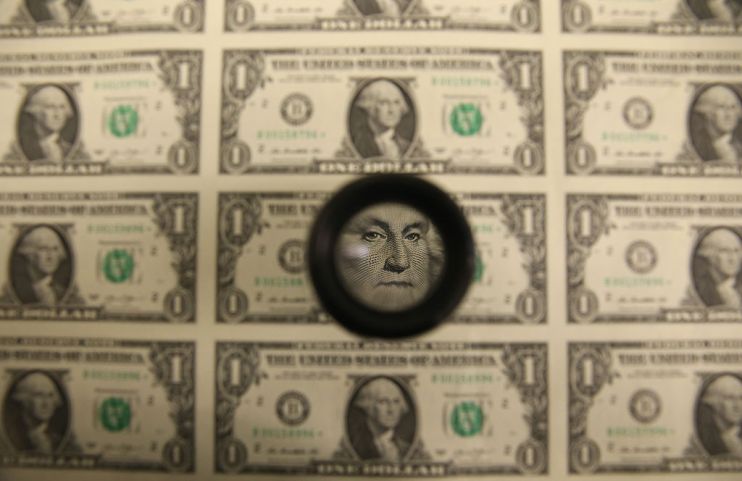
About 20 per cent of all US dollars were created this year.

The Federal Reserve has printed unprecedented amounts of money to support the coronavirus-stricken economy. It has sparked debates about inflation and helped asset prices soar.

Data from the Fed shows that a broad measure of the stock of dollars, known as M2, rose from $15.34 trillion (£11.87 trillion) at the start of the year to $18.72 trillion in September. 

The increase of $3.38 trillion equates to 18 per cent of the total supply of dollars. It means almost one in five dollars was created in 2020.

M2 includes physical notes and coins, banks reserves held at the Fed, accounts at banks, and money market mutual funds.

A narrower measure of money known as the monetary base or M0 – which is physical money and bank reserves at the Fed – rose from $3.44 trillion in January to $4.8 trillion in August, the latest available figures. That is a 28 per cent jump.

Fed pumps more than $3 trillion into economy

The huge growth in the stock of dollars reflects the massive interventions in the economy by the Fed, which is in control of the US’s money supply. 

In the spring, as markets crashed and normal life was paused, it pumped around $3 trillion into the economy.

Although it is often described as printing money, the Fed in practice creates digital dollars to buy up government bonds and other securities in the secondary market. The policy, known as quantitative easing (QE), aims to flood the markets with cash to keep borrowing cheap.

Banks also create money when they lend. Most money in the economy is created this way. Only about $2 trillion are in circulation as physical currency.

Read more

Trump speaks up for Infantino at last as Fifa boss fights world football rebellion

Donald Trump in a white USA hat, blue suit, and white shirt, making a fist, with a presidential seal visible

“What the Federal Reserve did is in no way unique,” said Erik Norland, senior economist at CME Group. He said the Bank of England, the European Central Bank and others created money at a similar rate.

Norland said they were reacting to a contraction in credit, which is the lifeblood of the economy. “In order to offset a contraction in credit, the central bank has to create a lot of money… to make sure the economy keeps functioning.”

Will the dollar supply surge make prices jump?

The Fed’s unprecedented actions have sparked a debate about whether the surge in dollars will lead to inflation.

Many economists are skeptical. Andrew Hunter, senior US economist at Capital Economics, said the relationship between the money supply and inflation has “in reality” been “pretty weak or arguably non-existent for a few decades now”.

“We had these same concerns back in 2008/9, that it was going to trigger a surge in inflation. Clearly that didn’t happen.”

Norland said it could be argued that there has been inflation in other parts of the economy.

He pointed to booming prices in stocks, bonds, and commodities such as gold and silver. The US S&P 500 stock index, for example, hit a record high in August before falling back slightly.

The Fed’s government bond purchases have led some to accuse the bank of funding the huge amounts of government spending. They say this erodes the Fed’s independence.

But the Fed – like central banks around the world – has been unapologetic. Chair Jay Powell last month pledged economic support “for as long as it takes”.

Norland said he expected the Fed to create more dollars at some point via QE. He said the bank could expand the money supply “on and off” for a while like it did after the 2008 financial crisis.

Read more

Civil service reform? Burnham is rearranging deck chairs

Andy Burnham in a dark suit and glasses, standing before a 10 NORTH graphic display.

Share this article

  • Facebook
  • X
  • LinkedIn
  • WhatsApp
  • Email

Similarly tagged content:

Sections

  • Markets & Economics
  • News

Categories

  • Business
  • Economics

Trending Articles

  • Wetherspoon boss: ‘Not up to Burnham’ to choose who is on the high street 

  • Badger Beer maker Hall & Woodhouse doubles profit ahead of tie-up with James May

  • Four interest rate hikes loom despite surprise economic growth

  • Primark sales slip as owner dresses up retailer for demerger

  • Barclays faces legal scrutiny over role in £90m ‘Ponzi scheme within a Ponzi scheme’

More from Morning Wire

  • Trump speaks up for Infantino at last as Fifa boss fights world football rebellion

    Sport Business
    Donald Trump in a white USA hat, blue suit, and white shirt, making a fist, with a presidential seal visible
  • Civil service reform? Burnham is rearranging deck chairs

    Opinion
    Andy Burnham in a dark suit and glasses, standing before a 10 NORTH graphic display.
  • Fifa crisis shows that fans must get a say in who succeeds Infantino as president

    Sport Business
    Gianni Infantino, FIFA President, in a dark suit and red tie, looking right with a serious expression.
  • ReNew Announces Results for the First Quarter for Fiscal Year 2027 (Q1 FY27), Ended June 30, 2026

    Business Wire
  • A global tram renaissance is underway. Why isn’t London jumping on board?

    Opinion
    London tram 1925 with Last Tram Week sign in front of the Houses of Parliament and Big Ben, 1952.
  • Octopus boss Greg Jackson calls for ‘urgent reform’ on energy as bills rise

    Politics
    Octopus Energy, which was founded by Greg Jackson, is to spin-off Kraken. Chris Ratcliffe/Bloomberg via Getty Images
  • Domestic policies are choking UK businesses

    Opinion
    London skyline with The Shard, Walkie Talkie, and Gherkin skyscrapers towering over residential buildings and autumn trees.
  • Net zero and DEI targets cut from procurement rules as firms pressed to raise pay and hire NEETs

    Politics
    Louise Haigh, Andy Burnham, and another man smiling in front of a dark door with 10 visible.
MorningWire

Independent European business, markets and political news for decision-makers.

Morning Briefing

Europe

  • Germany
  • France
  • EU Institutions
  • Europe

Business

  • Markets
  • Business
  • Economy
  • Regulation
  • Competition
  • Public Affairs

Editorial

  • Opinion
  • Editorial Policy
  • Corrections
  • Contact

Company

  • About Morning Wire
  • Privacy Policy
  • Terms of Use
  • Cookie Policy
© 2026 Morning Wire Ltd · Published by Morning Wire Media, Bahnhofstrasse 65, 8001 Zürich, Switzerland
Privacy · Terms · Cookies · Facebook