Fifa crisis shows that fans must get a say in who succeeds Infantino as president

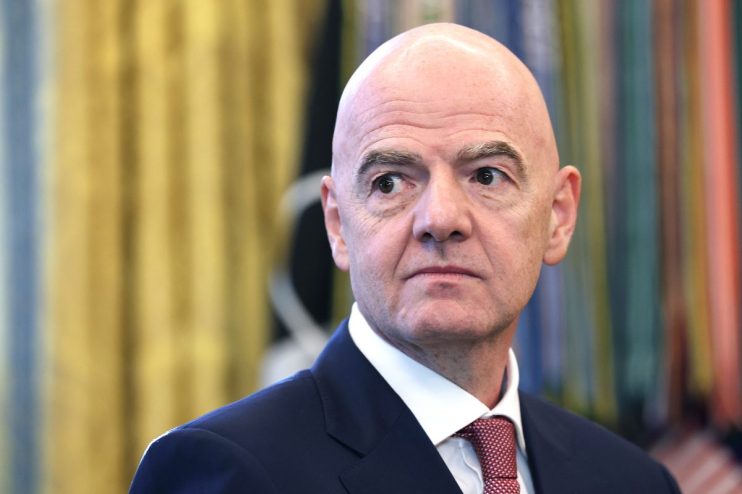
Gianni Infantino has inadvertently shown fans that the Fifa president matters, so maybe we should rethink how we elect one, argues Matt Readman.
A year ago, I wrote an article arguing that the role of a sports leader was to be a caretaker, not a king. The warning was simple: make the story about yourself and you risk flying too close to the sun. The higher you climb, the harder the fall.
It wasn’t aimed exclusively at Gianni Infantino, but you won’t be surprised to hear that he featured heavily. A year on, it is tempting to say: I told you so.
Infantino’s attempt to open the World Cup to private investment has produced the biggest crisis of his increasingly controversial presidency.
The plan was designed to raise around $4.2bn but collapsed within days after furious opposition from Uefa, the Asian Football Confederation and Concacaf, alongside a growing revolt from national associations and clubs.
It also cost Infantino one of his most senior executives. Fifa’s chief operating officer, Kevin Lamour, publicly attacked the proposal before his employment was terminated. Senior adviser Carlos Cordeiro resigned over it, too.
The pattern of increasingly autocratic behaviour is alarming. The warning signs were already there when Infantino stated his intention to run for a fourth term, arguing that his first should not count because he was completing Sepp Blatter’s interrupted mandate.
It’s the sort of re-engineering of the rules that we’ve come to expect from political dictators, not administrators.
Infantino would no doubt be appalled with that comparison. He would claim that he was elected. He has delivered spectacular financial growth. He expanded the World Cup from 32 to 48 teams.
Fifa has poured billions into development through its Forward programme. And, as he will repeatedly remind you, he has spent a decade insisting that his mission is to “serve” football.
Infantino has created his own potential downfall
He is, however, the product of a system in which a president can accumulate enormous personal authority while facing remarkably few meaningful checks.
In 2023, he was re-elected unopposed. Fifa’s 211 member associations may have the votes, but ordinary supporters have none.
Surrounded by people whose careers depend, at least in part, on your good will, it becomes easy to confuse loyalty with agreement. The longer you remain in office, the easier it becomes to believe that your interests and the institution’s interests are the same thing.
There is a wonderful irony in how Infantino has created his own potential downfall.
He has spent years making himself and the Fifa presidency more famous than ever. He has become a household name, instantly recognisable for the average football fan. But not only do they know who he is, they now know exactly what he does.
They know the Fifa president can put his name on the Club World Cup trophy. They know he can launch a Fifa Peace Prize and personally present the inaugural award to a national president.
They know he can introduce hydration breaks at every match of a World Cup. They know he can expand tournaments, create new competitions and turn the global calendar upside down.
And now they know that the Fifa president can attempt to sell a slice of the commercial future of the World Cup to private investors.
Make Fifa president accountable to fans
That is quite an education. The more Infantino has promoted himself, the more he has opened football fans’ eyes to the power of the presidency.
And once people understand where power sits, they tend to start asking why they have no say over who gets to wield it.
There is an interesting parallel in political science. Modernisation theory, in its simplest form, suggests that authoritarian regimes can sometimes preside over rapid economic and social development.
But once the population is more educated, more connected and more politically engaged, they increasingly question the authority that delivered success in the first place.
Perhaps Infantino has fallen into the same trap himself. He has unwittingly created a more engaged global football audience. Fans now understand that the Fifa president matters, so maybe we should rethink how we elect one?
Technically, Fifa’s presidential election is democratic. In practice, it is a democracy of football associations rather than football supporters. There has never even been a female candidate for the presidency, something called out by the campaign 10th Fifa President.
So why not change the system? Give fans a vote. Publish the results. Make national associations explain why they voted. Let presidential candidates campaign not just in hotel conference rooms, but in front of the people who actually watch the sport.
It would cost almost nothing. But it might change the psychology of the job. A Fifa president who knows that they are accountable to millions of fans around the world might think differently about what success means.
Infantino has inadvertently demonstrated just how serious a job it is, so perhaps it’s time we also started taking it seriously.
Matt Readman is chief strategy officer at sports creative agency Dark Horses.