Skip to content
Friday 14 August 2026London --:--Frankfurt --:--Zurich --:--
NewslettersSearchEN · DE
MorningWire

European business, markets and politics

FTSE 100
10,772.67
-0.56%
DAX
26,299.74
0.00%
CAC 40
8,650.56
0.00%
STOXX 50
6,545.47
0.00%
  • Europe
  • Markets
  • Business
  • Economy
  • Technology
  • Politics
  • Opinion
More
GermanyFranceBankingAIEnergyFintechPropertyCapital Markets
  • Germany
  • France
  • Europe
  • Markets
  • Business
  • Economy
  • Technology
  • Politics
  • Opinion
  • DE
Thursday 13 February 2020 4:31 am  |  Updated:  Wednesday 12 February 2020 5:32 pm

An inclusive market economy is well within reach post-Brexit

By: Jim McConalogue

Add as a preferred source on Google
The Conservatives must generate prosperity for the people, writes Jim McConalogue

In his Greenwich speech last week, the Prime Minister persuasively set out how the Brexit process must carry with it a Canada-style free trade agreement, resting on the “indispensable principle of comparative advantage.”

For Boris Johnson, this means embracing free trade to raise living standards and lift people out of poverty, while casting aside the EU’s obsessive rules on competition, subsidies, social protection and the environment.

But “free trade” fast becomes nothing more than an ideological wish when it fails to guarantee domestic prosperity across the UK regions. The government’s political reputation now depends on that.

The Conservatives won the election on a platform of “getting Brexit done” and “one nation conservatism”. That means government for all, both on delivering Brexit and generating prosperity for the people.

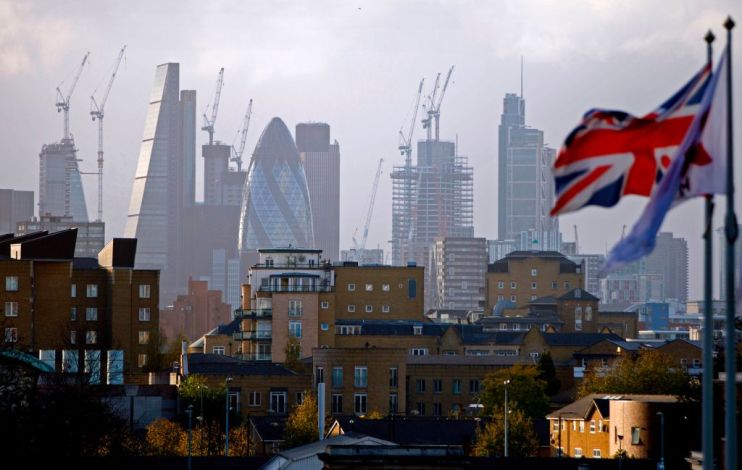
Those pledges inevitably mean rejecting a past of “crony capitalism” which allowed a small London elite to use political power to extract wealth and avoid taking responsibility for how markets functioned.

Modern capitalism provides vast wealth for the few and too little for the many. This is not because some people took risks which paid off, but because casino-like practices rigged the market. The cards are often stacked against investors and businesses outside the clique. But a more inclusive market economy is well within the realms of our post-Brexit world.

As our research at Civitas sets out, a more moral, national and inclusive capitalism requires the government to enhance personal freedom and enable free enterprise. Then, all members of society can improve the common welfare through mutual cooperation.

Read more

Singapore on Thames or the Sick Man of Europe?: The Economics of Brexit Ten Years from the Referendum 

UK-EU Brexit negotiations meeting with officials discussing trade agreements and policy impacts in a formal conference room

The government must ensure sound money and tax private companies fairly to pay for public services. As economist John Maynard Keynes identified in the 1930s, prosperity for British citizens ought to be the primary objective of economic policy — and achieved through national self-sufficiency.

In our chief executive David Green’s challenge to the old world view of free market fundamentalism — in his book, Inclusive Capitalism — it is apparent that commitments to trade in a post-Brexit market economy should not be based on a lack of state intervention. Instead, they should be founded on carefully-crafted policies that support domestic business, entrepreneurialism, and commerce.

Unlike ever before, the government must consider retaining existing enterprises and reshoring production across the regions. Future state investment in car makers and civil aircraft production needs to be reclaimed by the people, for the people. Ministers must look back to steel (including Redcar), the ceramics of Stoke on Trent and chemicals industries in Teesside, and stop undermining their advantage by imposing costs or failing to safeguard them with trade rules.

In trade, if we are to genuinely regain the principle of comparative advantage, we will need to be intelligent about policymaking and address dumping practices in the global trading environment. Moreover, we must close down our own home-grown competitive disadvantages — such as the cost of energy — that have made our industries uncompetitive.

If we are to reorient our economy to focus on prosperity for all in an independent country, it must support a renewed trading culture. The change in emphasis means that we must create wealth by investing in localised productive assets and employing a national workforce.

That way, Britain can make things and deliver services which work for ourselves at home, and which can be exported across the globe.

Read more

Brompton Bicycle sues former adviser for ‘professional negligence’

Six Brompton folding bicycles in various colors displayed in individual black cubbies.

Share this article

  • Facebook
  • X
  • LinkedIn
  • WhatsApp
  • Email

Similarly tagged content:

Sections

  • Markets & Economics
  • News
  • Opinion

Categories

  • Business
  • Economics
  • Opinion

Related Topics

  • Brexit
  • UK trade

Trending Articles

  • Britain should back the North Sea if it wants energy security and net zero

  • Exclusive: City giants tighten trans policies

  • Pre-season tours: Inside the economics of football’s summer money-spinners

  • Tory and Labour councillors spar over £300m Hammersmith Bridge plans

  • The Works activist investor hits back at retailer’s ‘absurd’ claims 

More from Morning Wire

  • Singapore on Thames or the Sick Man of Europe?: The Economics of Brexit Ten Years from the Referendum 

    Opinion
    UK-EU Brexit negotiations meeting with officials discussing trade agreements and policy impacts in a formal conference room
  • Brompton Bicycle sues former adviser for ‘professional negligence’

    Lawsuit
    Six Brompton folding bicycles in various colors displayed in individual black cubbies.
  • UK inks trade deal with Switzerland – despite shouting match

    Politics
    UK and Switzerland officials signing a trade deal, highlighting international services agreement and bilateral cooperation
  • Making free trade a reality: The UK-GCC strategic dialogue

    Partner
    Alexey Fedorenko credited image showing a relevant scene or subject matter related to the General news article content
  • Apple sues Open AI accusing them of stealing ‘trade secrets’

    Tech
  • Tale of two cities: London leaps ahead in global finance but domestic growth stalls

    Economics
    Getty Images number 2154617464 depicts a relevant scene for the articles unidentified content, suitable for business context.
  • The GCC’s AI strategy: Inside the region’s $150bn race

    Partner
    Crowd of diverse attendees at GITEX GLOBAL DUBAI tech exhibition, with GITEX signage visible.
  • Warehouse tax could threaten high street businesses, Burnham warned

    Retail
    Amazon logo on a building, representing the e-commerce giants brand and corporate presence.
MorningWire

Independent European business, markets and political news for decision-makers.

Morning Briefing

Europe

  • Germany
  • France
  • Europe
  • UK & Ireland

Business

  • Markets
  • Banking
  • Technology
  • Energy
  • Property
  • Fintech

Editorial

  • Opinion
  • Editorial Policy
  • Corrections
  • Contact

Company

  • About Morning Wire
  • Privacy Policy
  • Terms of Use
  • Cookie Policy
© 2026 Morning Wire Ltd · Published by Morning Wire Media, Bahnhofstrasse 65, 8001 Zürich, Switzerland
Privacy · Terms · Cookies · Facebook