Skip to content
Monday 14 September 2026London --:--Frankfurt --:--Zurich --:--
NewslettersSearchEN · DE · FR
MorningWire

European business, markets and politics

FTSE 100
10,650.44
+0.39%
DAX
25,568.56
0.00%
CAC 40
8,179.77
0.00%
STOXX 50
6,325.13
0.00%
  • Europe
  • Markets
  • Business
  • Economy
  • Regulation
  • Politics
  • Opinion
More
GermanyFranceEU InstitutionsCompetitionPublic AffairsBankingTechnologyEnergy
  • Germany
  • France
  • Europe
  • Markets
  • Business
  • Economy
  • Regulation
  • Politics
  • Opinion
  • DE
Tuesday 28 September 2021 6:30 am  |  Updated:  Saturday 30 October 2021 6:11 pm

Ancient Rome taught us a lesson in destroying our digital footprint
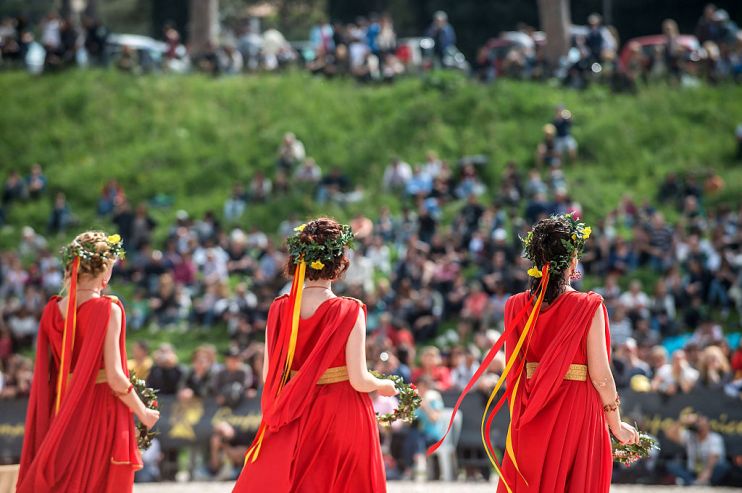
The People Of Rome Hold Their Annual Celebrations On The Anniversary Of Its Founding
Ancient Romans had an established practice of obliterating former Emperors from the public memory; we could learn a lesson or two from them. (Photo by Giorgio Cosulich/Getty Images)

During the Roman empire, former emperors and elites had their image destroyed from the public memory through vandalised statues or even removal of names from official documents. The practice was known as Damnatio Memoriae or the condemnation of memory.  The images of former emperors and elites were vandalised or their names removed from official records.

A confidante of the Roman emperor Tiberius, Lucius Aelius Sejanus, had his statues desecrated and his name obliterated from all public records after a failed conspiracy to overthrow the leader in AD31. This happened on a prolific scale: around half of all Roman emperors received some form of condemnation, according to archeological records. 

We now live in a largely digital world: most information is stored and accessed by us in digital form; we focus on automating operations; we speak with no small degree of reverence about AI and data analytics and things being “in the cloud”. In this brave new digital world, public memory of elites can be bolstered and even created through online repositories of news and op-eds, long after the figure in question is no longer in power.

These digital identities are the statues of today and the consequences for politicians can be disastrous. Take Donald Trump’s eventual suspension from Twitter or the proliferation of memes of Canadian Prime Minister Justin Trudeau wearing blackface. 

Much like the state-sanctioned desecration of image or “condemnation of memory” issued by the Romans, digital condemnations can completely change the narrative of a figurehead and alter their legacy. This erasure can also be found in academia. It has been the genesis, in many ways, of the so-called “culture wars”, with professors losing out on research projects or museum gigs if they stray into the “wrong” territory.

Can we ever have our very own “damnatio memoriae”? In 2014, Google created the “right to be forgotten”, after a ruling of the European Court of Justice. But people whose deeds and misdeeds are considered “in the public interest” are carved out of this right. Tech giants will “keep information about them available for historical purposes” if they are “still in the public eye”. 

As is often the case, the first lesson is an acceptance of the circumstances beyond our control. As Mary Beard writes in SPQR: A History of Ancient Rome, “the politics of regime change had a major influence on how each emperor went down in history”. Leaders in power “reinvented” the history of their forebears to serve their own interests, she says. 

In the Roman example, ostracising public figures in the history books often had the adverse effect of making their absence all the more present in the public consciousness. In our own modern world, the heads of state we wish we could forget (Donald Trump, anyone?), tend to live the longest in our collective memory. Trump’s legacy was one of conflict, his online presence sowed digital divisiveness which has already outlived his own Twitter account. 

According to some neuroscientists, there is now a new class of memory cells which might mean we forget people we see on screen, rather than in real life, quicker than those we interact with. So, perhaps there is hope yet for those who wish to be forgotten. But a better tack would be relinquishing control over our future images. Insisting people remember to forget us, might just be a sure-fire way of keeping our presence in place. 

Read more

Ex-UK minister Robertson rubbishes Ukrainian claims he aided Russia’s Olympic return

Sir Hugh Robertson, British Olympic Association, wearing a poppy and name tag, at an event

Share this article

  • Facebook
  • X
  • LinkedIn
  • WhatsApp
  • Email

Similarly tagged content:

Sections

  • Opinion

Categories

  • Opinion

Trending Articles

  • Wetherspoon boss: ‘Not up to Burnham’ to choose who is on the high street 

  • Four interest rate hikes loom despite surprise economic growth

  • Reform hits back at Tory plan to ‘abolish inheritance tax’

  • Lotus, Porsche and Corvette: the best sports cars to buy in 2026

  • Primark sales slip as owner dresses up retailer for demerger

More from Morning Wire

  • Ex-UK minister Robertson rubbishes Ukrainian claims he aided Russia’s Olympic return

    Sport Business
    Sir Hugh Robertson, British Olympic Association, wearing a poppy and name tag, at an event
  • Banning vape shops won’t fix scuzzy high streets

    Opinion
    High street vape shop Ecigwizard next to Costa Coffee and Subway, with people walking and sitting outside.
  • Regit and Morning Wire join forces to drive automotive engagement

    Motoring
    Blue Aston Martin Vantage parked on a sandy beach, ocean and sunset sky in background.
  • On this day: Animal Farm is published

    Opinion
    Black and white image of pigs in wooden pens, facing each other across a narrow, muddy aisle on a farm.
  • FCA bans wealth manager trio behind £35.5m investor visa scam

    Investing
    An all-party parliamentary group said on Tuesday that the FCA's treatment of both internal and external whistleblowers was “alarming”.
  • Apple and Google defend safety records as UK clamps down on explicit teen content

    Tech
    Smartphone screen displaying a folder of social media app icons including Facebook, Instagram, WhatsApp, and YouTube.
  • Star Wars Zero Company™ Now Available On PC, PlayStation 5 and XBOX Series Consoles

    Business Wire
  • Monzo chair makes early exit after boardroom rift

    Fintech
    The valuation would cement Monzo's status as one of Britain's biggest tech start-ups.
MorningWire

Independent European business, markets and political news for decision-makers.

Morning Briefing

Europe

  • Germany
  • France
  • EU Institutions
  • Europe

Business

  • Markets
  • Business
  • Economy
  • Regulation
  • Competition
  • Public Affairs

Editorial

  • Opinion
  • Editorial Policy
  • Corrections
  • Contact

Company

  • About Morning Wire
  • Privacy Policy
  • Terms of Use
  • Cookie Policy
© 2026 Morning Wire Ltd · Published by Morning Wire Media, Bahnhofstrasse 65, 8001 Zürich, Switzerland
Privacy · Terms · Cookies · Facebook