Art vs AI: British Council vows to keep humans in the loop in the digital age

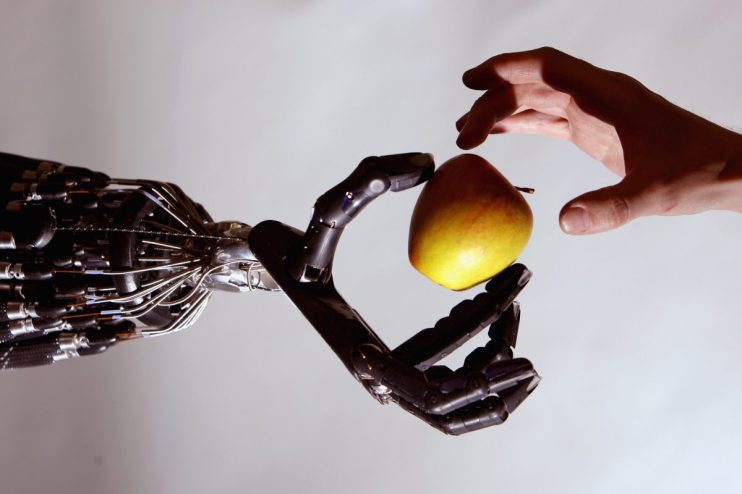
As AI continues to reshape the creative sector, a crucial debate is unfolding around the role of human agency in this new digital landscape.
The British Council is staking its claim firmly on the importance of artists not just as users of AI, but as vital shapers of its development and influence.
This marks a shift away from viewing AI as an external force acting on art, toward recognising art’s power to redefine AI.
Hannah Andrews, the British Council’s director of digital innovation in the arts, announced at a SXSW London panel: “It’s all about flipping that question, which is asked all the time – ‘what is the impact of AI on art?’ to ‘what is the impact of art on AI?'”
This reversal, she argued, is not merely rhetorical but structural.
“Artists do in real terms change technologies”, Andrews added, “not just by piloting, but by changing public opinion”.
This reflects a deeper evolution in the nature of creativity itself. The current AI disruption parallels the upheaval when photography and film first emerged as art forms, raising questions about what counts as human creativity.
If photography’s art lies in framing and subject choice, AI’s creative art now centres on curating, prompting, and selecting variables.
Much like the artistic expansions triggered by the likes of Marcel Duchamp’s ‘readymades’ , AI-generated content invites us to broaden the definition of art and, more importantly, the artist’s role in it.
Adobe and co-design
Dr Laura Herman, Adobe’s head of AI research who sat on the panel with Andrews, described the software company’s approach as co-creation at its core.
“It’s not just saying, ‘here’s some shiny new prototypes our engineers came up with, what do you think?'”.
Instead, she claimed that her team embeds artists early in the design process. “The best things our team has accomplished are some of the things we haven’t launched because the creative community told us that it wouldn’t serve them”.
This human-first ethos has trickled down to how the company trains data, Herman insisted, with Adobe using only licensed content to address artists’ intellectual property concerns.
These issues are far from trivial: AI systems have typically trained on vast datasets containing copyrighted works, triggering thorny legal questions around authorship and compensation that far exceed the challenges early photography faced.
Recent UK legislative attempts to require transparency and consent for AI training data, championed by Baroness Beeban Kidron, have been blocked by the government.
The backlash on the public sector was instant, with creatives like Elton John and Dua Lipa dubbing the policy “criminal” and accusing ministers of enabling theft.
Artists as critical voices
Both Herman and Andrews agreed that artists bring more than aesthetics to the sector.
“They’re imaginative, critical, and culturally aware”, Herman said. “I want people to criticise our tools so that we can make them better”.
Andrews added: “When you’re looking at designing technologies that are resilient and sustainable in the long term, they have to be representative of people – and that means being representative of the full diversity of cultural expression, histories, stories, understandings and values.”
Herman highlighted her work with the ‘inclusive AI lab’, which aims to co-create AI systems with civic actors from the Global South, reflecting an emerging understanding in UK cultural institutions that building AI is about intentional design, as much as it is about avoiding harm.
For Andrews, supporting AI innovation means investing in artists as individuals first, not just as developers of various projects. “This human infrastructure is critical for fostering a sustainable AI future”, she said.
AI: “a dangerous force”?
Yet, the relationship between AI and art is far from uncontroversial, with designers like Andy Blackmore warning that it poses an existential crisis for the art world.
“AI isn’t just a tool”, he says, “it’s a dangerous force that threatens to erase human creativity, intent, and presence for art entirely”.
He also points to AI’s unpredictable behaviour and tendency to hallucinate, ignore parameters, and sometimes even violate ethical boundaries – fears that have multiplied across the sector in recent years.
Many have also raised concerns over mechanised production eventually rendering human creators obsolete.
Whilst the British Council and Adobe are staking their claim firmly on the importance of artists not just as users of AI, but as vital founders of its development, the broader ecosystem remains unsettled.
IP disputes rage, government inertia has frustrated creators across the industry, and AI’s ethical dilemmas loom large.
Balancing booming innovation with respects for artists’ rights and preserving human agency will define the UK’s cultural success in the arts.